ABT ASSOCIATES
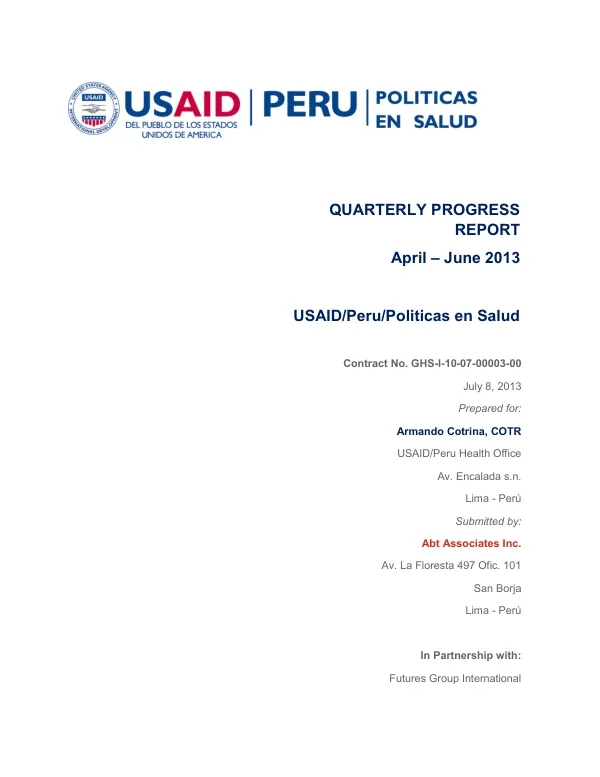
Quarterly Progress Report April-June 2013
Health Sector Governance in Peru began with the decentralization of the health sector in 2013.
2013 · 110 pages
Sign in to readA free account is required to download.
Abstract
The goal was to strengthen and expand decentralization by supporting the Ministry of Health (MoH) and regions in adapting to their new roles. This involved developing a regulatory framework for the MoH's new stewardship role, improving the capacity of regional and local authorities to manage their health systems and programs, and continuing the decentralization process by extending responsibilities to lower levels of the political structure. Key activities included supporting the MoH and regions in adapting to their new roles, developing a regulatory framework for the MoH's new stewardship role, and improving the capacity of regional and local authorities to effectively and efficiently manage their health systems and programs. Additionally, the project aimed to improve monitoring and reporting of how the health system addresses gender, culture, and stigma and discrimination issues in health. Health Sector Financing and Insurance was another key area of focus. The project aimed to improve health coverage of poor and vulnerable populations by ensuring that health sector resources are complementary to promote equitable access to health services. This involved enhancing financing and health insurance coverage through the implementation and scale-up of pilot programs for providing universal access to a basic health care package. The project also focused on ensuring efficiency and equity in health resource allocation. This involved designing and implementing a system for results-based budgeting, assessing the current system for financing health service provision under decentralization and universal health insurance, and developing payment methods and resource allocation models based on the health needs in different regions. Health Information was another critical area of focus. The project aimed to strengthen the capacity to collect, analyze, and use data in the health sector by promoting the use of information in decision making at national, regional, and local levels. This involved improving data collection methods, monitoring and evaluating the quality of health services and programs, and streamlining and improving the Health Information System (HIS) as a whole. The project also focused on the Health Workforce, with the goal of supporting the design and implementation of a broad-based system for planning and managing the health workforce to ensure competency of workers in the health sector. This involved building consensus regarding health civil service reform, developing long-term plans for Human Resources, and developing competency profiles for health managers at the regional and health network levels. Overall, the project aimed to improve the health sector in Peru by strengthening governance, financing, information, and workforce systems. The project's activities were designed to support the decentralization of the health sector, improve health coverage and access to health services, and ensure the competency of workers in the health sector.
Related documents