ABT ASSOCIATES
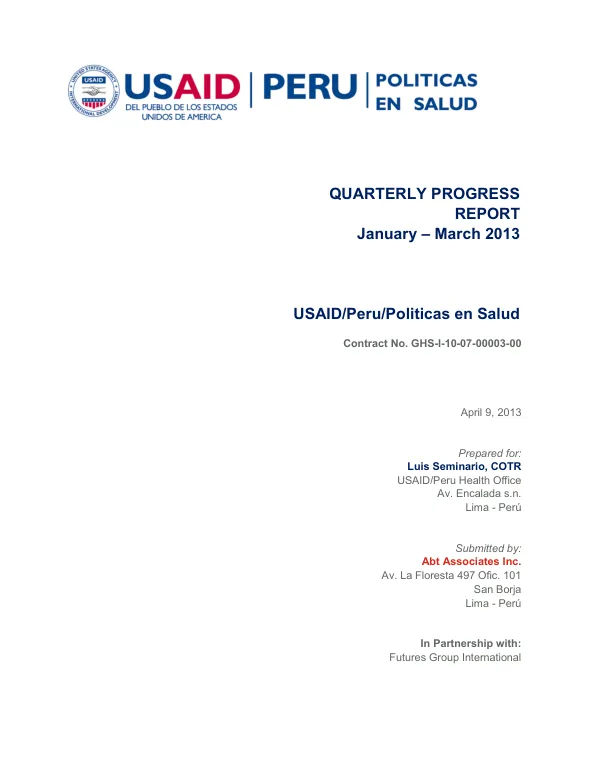
Quarterly Progress Report January – March 2013
Health Sector Governance in Peru began in 2013 with the goal of strengthening and expanding decentralization of the health sector.
2013 · 436 pages
Sign in to readA free account is required to download.
Abstract
Initial efforts focused on supporting the Ministry of Health (MOH) and regions in adapting to their new roles under a decentralized health sector. This involved developing a regulatory framework for the MOH's new stewardship role, continuing the decentralization process by extending responsibilities to even lower levels of the political structure, and improving monitoring and reporting of how the health system addresses gender, culture, and stigma and discrimination issues in health. Key interventions included strengthening intergovernmental coordination mechanisms for health policy, increasing monitoring and enforcement of governing regulations and standards in the Health Sector by regional authorities, and ensuring health sector resources are complementary to promote equitable access to health services. The project also aimed to enhance financing and health insurance coverage through the implementation and scale-up of pilot programs for providing universal access to a basic health care package. Health Information systems were strengthened to collect, analyze, and use data in the health sector. This involved promoting the use of information in decision making at national, regional, and local levels, improving data collection methods, and monitoring and evaluating the quality of health services and programs as guaranteed under universal health insurance law in no less than one priority region. The project also aimed to streamline and improve the Health Information System (HIS) as a whole, ensuring compliance with appropriate national data quality standards at regional and local levels. The Health Workforce was a key area of focus, with efforts aimed at building consensus regarding health civil service reform, developing long-term plans for Human Resources, and developing competency profiles for health managers at the regional and health network levels. The project also aimed to develop policies and tools for ensuring continued staffing of health services, develop and implement workforce management policies with incentives and salary guidelines, and strengthen policies for continuous education and on-the-job training to improve quality of care. Medical Products, Vaccines, and Technologies were also a key area of focus, with efforts aimed at improving access to essential medicines, vaccines, and technologies. The project worked to strengthen the supply chain management system, improve the quality of medicines, and increase access to vaccines and technologies. The project made significant progress in the first quarter of 2013, with notable achievements including the development of a regulatory framework for the MOH's new stewardship role, the implementation of pilot programs for providing universal access to a basic health care package, and the strengthening of health information systems. However, challenges were also encountered, including difficulties in implementing decentralization and strengthening health workforce capacity. The project's results were reported in a Results Reporting Table, which provided an overview of the project's progress and achievements. The table highlighted the project's success in strengthening health sector governance, improving health information systems, and enhancing health workforce capacity. The project also reported on its challenges and lessons learned, including the need for continued support and resources to sustain progress. The project's planned activities for the next quarter included the continuation of decentralization efforts, the implementation of health workforce development programs, and the strengthening of health information systems. The project also planned to conduct a midterm evaluation to assess its progress and identify areas for improvement. The project's quarterly financial reports provided an overview of its financial performance, including income and expenses, and a list of upcoming events provided information on upcoming meetings and activities. The project's appendices included a range of supporting documents, including changes in the San Martin Regional Health Directorate's organization, a monitoring matrix for effective interventions, and a report on regional budget 2013.
Related documents