USAID DEC
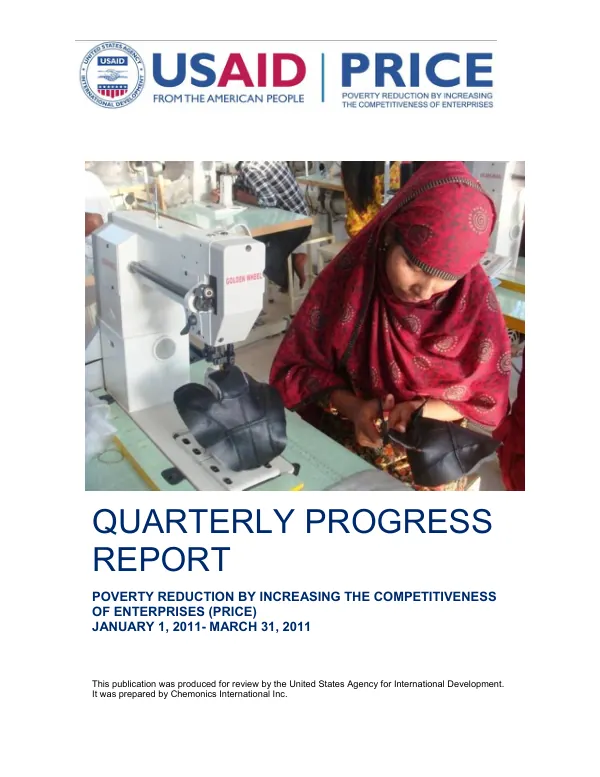
Quarterly Progress Report: Bangladesh Poverty Reduction by Increasing the Competitiveness of Enterprises (PRICE)
Sign inCHEMONICS
Quarterly Progress Report: Bangladesh Poverty Reduction by Increasing the Competitiveness of Enterprises (PRICE)
The horticulture sector in Bangladesh experienced a critical period for mango production during the second quarter of 2011.
2011 · 84 pages
Sign in to readA free account is required to download.
Abstract
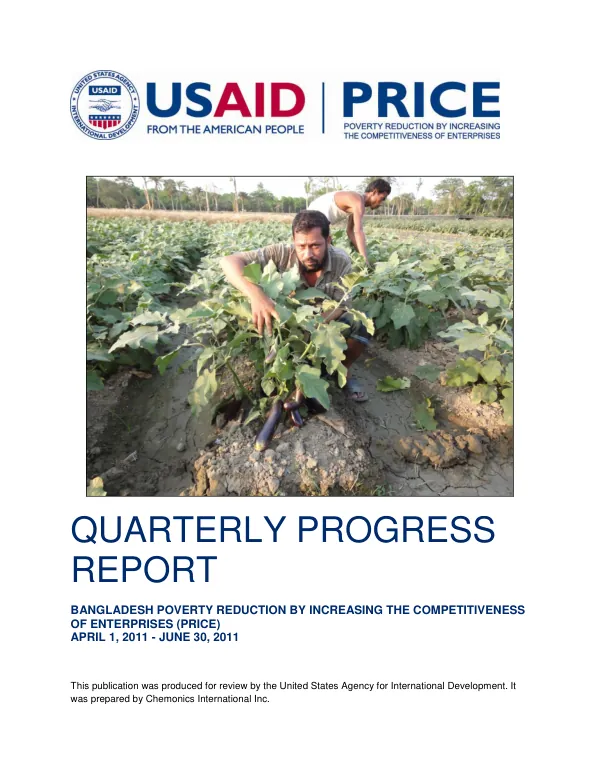
Mango yields were lower than in the previous year, but PRICE supported mango farmers in the Chapainwabganj and Jessore areas with post-harvest mango handling techniques, resulting in better yields and reduced post-harvest losses. PRICE also assisted potato farmer associations and enterprises in storing seeds and table potatoes in cold storage, utilizing efficient technology and management capacity. The organization provided technical assistance for exporting table potatoes to Malaysia, including curing, sorting, grading, cleaning, and packing according to importers' orders. In addition, PRICE supported small eggplant farmers in the Jessore and Bogra areas by identifying and solving production-related problems, such as seedling raising techniques, pest management, and harvesting. This helped farmers minimize production costs and market their produce more effectively. As a result, horticulture sector partners increased their sales by USD 2.3 million during the quarter, created 717 jobs, and generated USD 16.6 thousand in new investment. In the aquaculture sector, PRICE linked aquaculture partners to institutional credit sources in South-Western and North Bengal regions, facilitating access to quality grade brood sources, nursery owners to quality seed-producing hatcheries, and fish farming associations to quality seed-producing centers, nurseries, and quality grade feed producing and marketing centers. The organization also provided classroom and hands-on trainings on farm management for different fish species, covering pond preparation, farming management, harvesting, and marketing. This quarter marked the beginning of the monsoon season in Bangladesh, and farming preparations were underway. The aquaculture sector partners reported significant progress, with increased fish production and improved market access. PRICE supported the development of fish hatcheries, nurseries, and feed producing and marketing centers, which contributed to the growth of the sector. The organization also facilitated the establishment of quality control systems, ensuring that fish and shrimp products met international standards. In the leather products sector, PRICE continued to support small and medium enterprises (SMEs) in developing their capacity and improving their competitiveness. The organization provided training and technical assistance to SMEs in the leather industry, focusing on quality control, product development, and market access. PRICE also facilitated the establishment of partnerships between SMEs and international buyers, enabling them to access new markets and increase their exports. Overall, the second quarter of 2011 was marked by significant progress in the horticulture, aquaculture, and leather products sectors. PRICE continued to play a key role in supporting the growth and development of these sectors, with a focus on improving the competitiveness of SMEs and enhancing market access. The organization's efforts contributed to increased sales, job creation, and new investment in the horticulture sector, while also promoting the development of the aquaculture and leather products sectors.
Related documents