USAID DEC
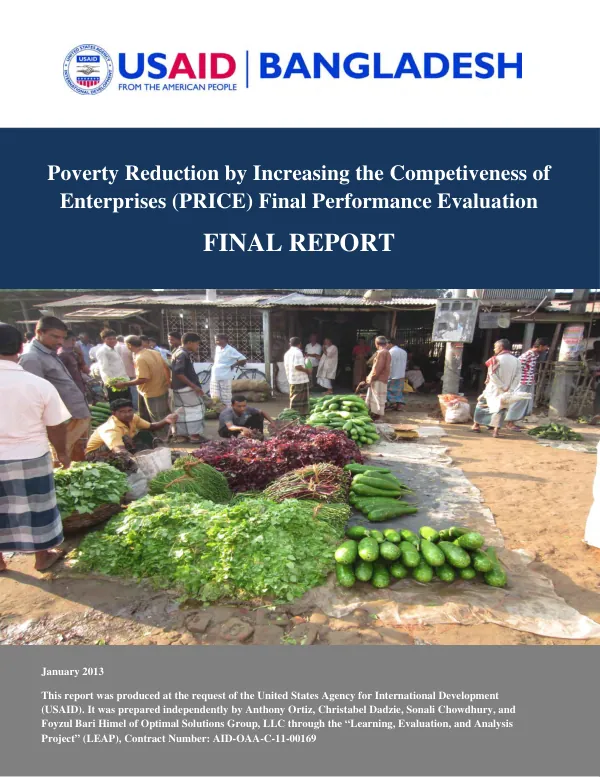
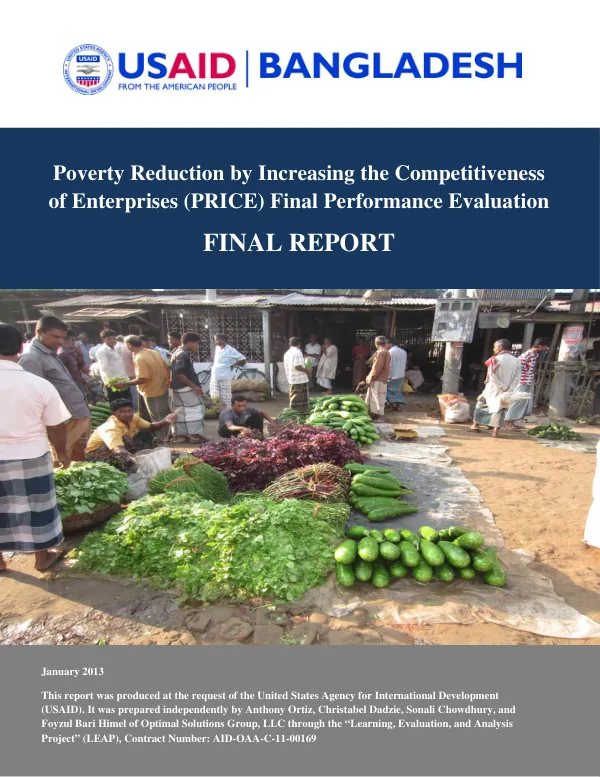
Poverty Reduction by Increasing the Competitiveness of Enterprises (PRICE) Final Performance Evaluation
Sign inCHEMONICS
Poverty Reduction by Increasing the Competitiveness of Enterprises (PRICE) Final Performance Evaluation
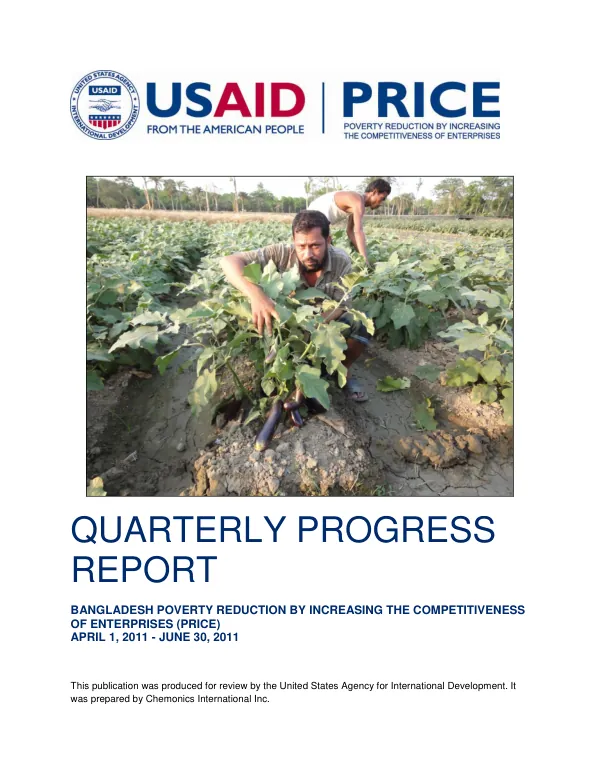
The Poverty Reduction by Increasing the Competitiveness of Enterprises (PRICE) project was implemented in Bangladesh between 2008 and 2013 with a total funding of $12.9 million.
2014 · 97 pages
Sign in to readA free account is required to download.
Abstract
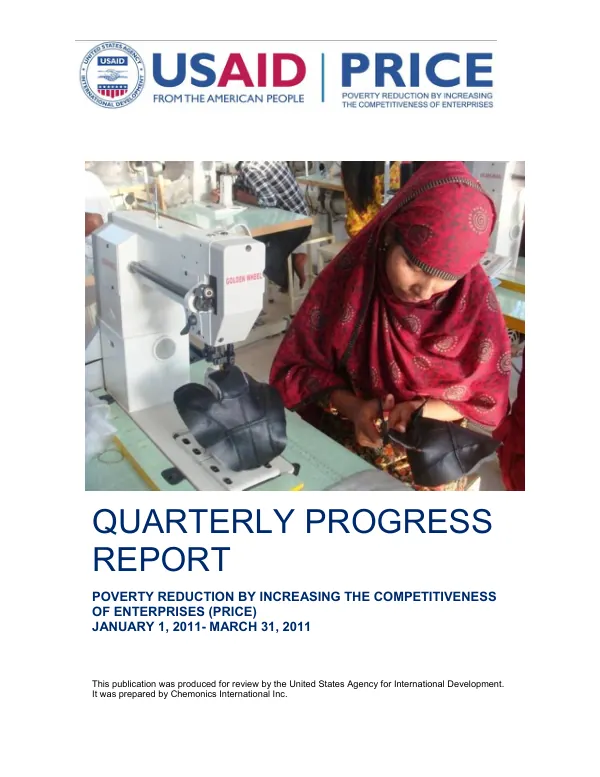
The project's main mission was to reduce poverty sustainably by increasing enterprise competitiveness across three main sectors: horticulture, aquaculture, and leather. Chemonics International was the implementing partner for the project. The PRICE project aimed to achieve several specific objectives across the three sectors, including improving pro-poor economic opportunities, workforce skills, social compliance practices, governance practices related to economic growth and poverty reduction, small and medium enterprise (SME) development, growth of the non-textile private sector, and the capacity and use of knowledge management systems. The final performance evaluation of the PRICE project was conducted by Optimal Solutions Group, LLC through the Learning, Evaluation, and Analysis Project (LEAP) contract. The evaluation aimed to assess the effectiveness of the PRICE project in achieving its program objectives, evaluate any constraints to achieving expected results, and provide recommendations and lessons learned for future private-sector competitiveness and value chain development programs. The evaluation process was guided by six key evaluation questions provided by USAID/Bangladesh. The evaluation findings indicate that the PRICE project made significant contributions to improving the competitiveness of enterprises in the three sectors. The project's interventions, including farmer training programs, infrastructure development, and market linkage facilitation, led to improved crop yields, increased household income, and enhanced food security among program participants. The evaluation also highlights the importance of women's empowerment in achieving the project's objectives. The project's effectiveness in promoting women's empowerment is attributed to the inclusion of gender-sensitive interventions and the engagement of women in decision-making processes. The evaluation findings also suggest that the project's SME and workforce development initiatives were effective in improving the skills and productivity of small and medium enterprises. The project's interventions in the leather sector, in particular, led to significant improvements in the quality and quantity of leather products, resulting in increased exports and revenue for participating enterprises. Overall, the evaluation findings indicate that the PRICE project was successful in achieving its program objectives and making a positive impact on the competitiveness of enterprises in the three sectors. The project's lessons learned and recommendations provide valuable insights for future private-sector competitiveness and value chain development programs. The evaluation also highlights the importance of continued support for the leather sector, which has shown significant potential for growth and development. The project's interventions in the leather sector have led to improved productivity, quality, and exports, and continued investment in this sector is likely to yield significant returns. In conclusion, the PRICE project has made a significant contribution to reducing poverty sustainably by increasing enterprise competitiveness in Bangladesh. The project's lessons learned and recommendations provide valuable insights for future private-sector competitiveness and value chain development programs, and continued support for the leather sector is likely to yield significant returns.