DELOITTE CONSULTING, LLP
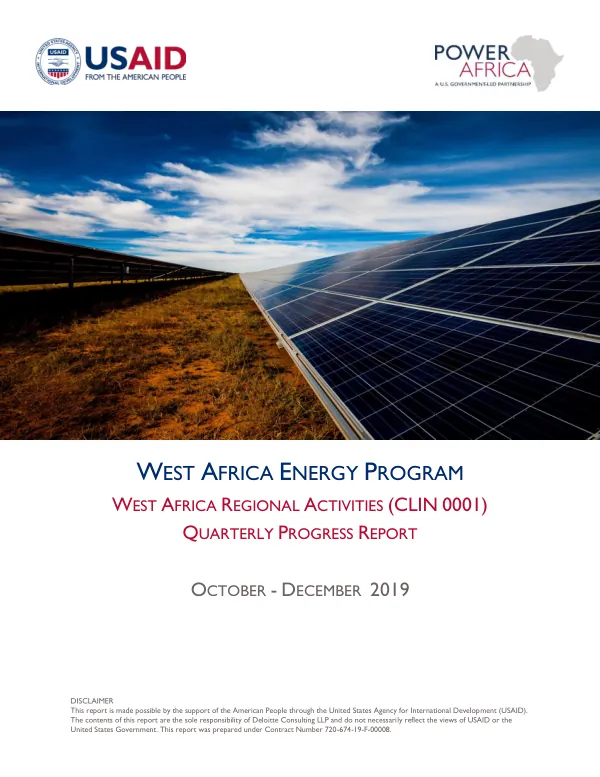
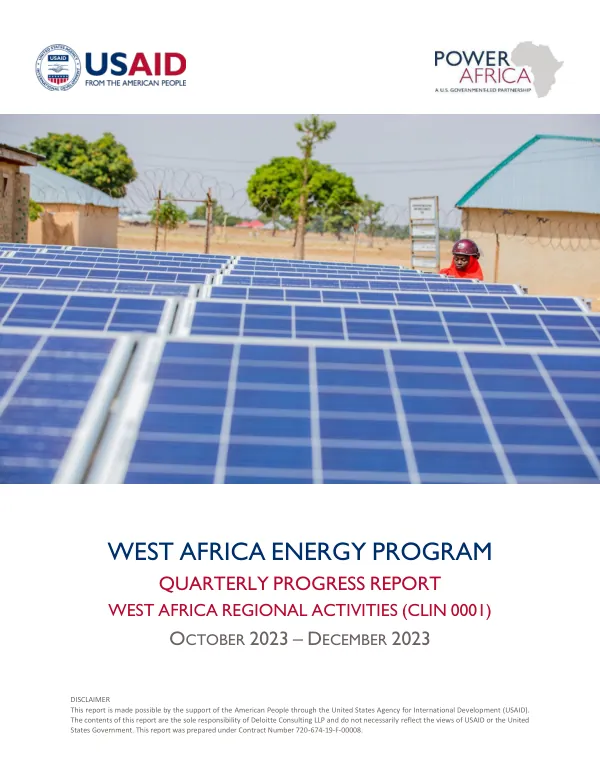
Quarterly Progress Report: West Africa Energy Program (WAEP)
The Power Africa West Africa Energy Program (WAEP) is a regional initiative aimed at increasing access to energy in West Africa.
2024 · 89 pages
Sign in to readA free account is required to download.
Abstract
The program is implemented by Deloitte Consulting LLP under Task Order No. 720-674-19-F-00008, with the United States Agency for International Development (USAID) as the primary funder. The program's primary objective is to increase access to energy in West Africa, with a focus on off-grid and renewable energy solutions. To achieve this goal, WAEP is working with governments, private sector companies, and civil society organizations to develop and implement energy projects that are sustainable, reliable, and affordable. One of the key activities of WAEP during the reporting period was the implementation of country-level activities in several West African countries, including Ghana, Nigeria, and Senegal. These activities included the development of energy sector strategies, the implementation of renewable energy projects, and the provision of technical assistance to governments and private sector companies. At the regional level, WAEP is working to promote regional energy cooperation and integration. This includes the development of regional energy policies and regulations, the facilitation of regional energy trade, and the provision of technical assistance to regional energy institutions. The WAEP program management office (PMO) is responsible for overseeing the implementation of the program's activities and ensuring that they are aligned with the program's objectives. The PMO is also responsible for monitoring and evaluating the program's progress, as well as identifying and mitigating risks and challenges. The program's finance and operations team is responsible for managing the program's budget and ensuring that it is aligned with the program's objectives. This includes the management of contracts, the procurement of goods and services, and the provision of financial management and accounting services. The program's monitoring, evaluation, and learning (MEL) team is responsible for tracking the program's progress and identifying areas for improvement. This includes the development of performance indicators, the collection and analysis of data, and the provision of recommendations for program improvement. The program's gender strategy and integration team is responsible for ensuring that the program's activities are inclusive and equitable, and that they benefit both men and women. This includes the development of gender-sensitive policies and procedures, the provision of technical assistance to governments and private sector companies, and the monitoring and evaluation of the program's gender-related outcomes. The program's risks, challenges, and mitigation measures team is responsible for identifying and mitigating risks and challenges that may impact the program's implementation. This includes the development of risk management plans, the provision of technical assistance to governments and private sector companies, and the monitoring and evaluation of the program's risk-related outcomes. The program's key activities for the next quarter include the implementation of country-level activities in several West African countries, the promotion of regional energy cooperation and integration, and the provision of technical assistance to governments and private sector companies. The program's appendices include organizational charts, success stories, program travel information, contractual and major technical deliverables submitted, detailed activity progress, performance indicator tracking charts, generation portfolio analysis, power Africa coordination tables, social media posts and success stories, and off-grid company updates.