USAID DEC
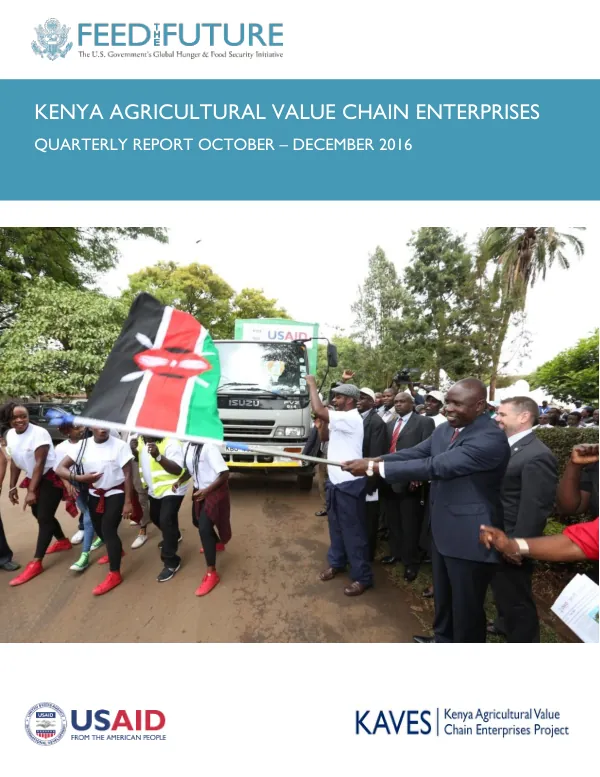
Quarterly Report # 14 (April – June) FY 2016: Kenya Agricultural Value Chain Enterprises
Sign inFINTRAC
Quarterly Report # 14 (April – June) FY 2016: Kenya Agricultural Value Chain Enterprises
The Kenya Agricultural Value Chain Enterprises (KAVES) program, implemented by Fintrac Inc.
2016 · 78 pages
Sign in to readA free account is required to download.
Abstract
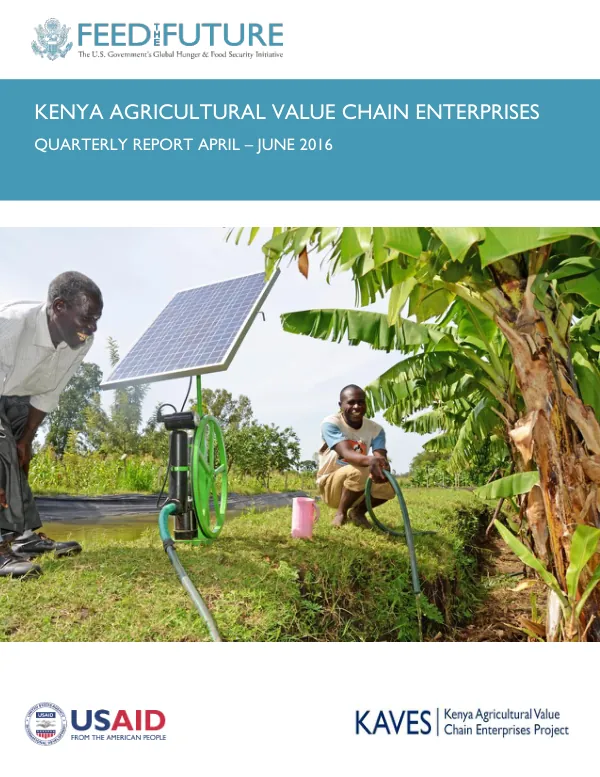
for the United States Agency for International Development (USAID) in Kenya, focuses on improving agricultural productivity and market access for smallholder farmers. The program's goal is to increase the income and food security of these farmers, particularly women and youth. In the dairy value chain, productivity and production improvement were key objectives. Progress was made in the study of hydroponic feed production and utilization, which aims to increase milk production and reduce costs. The program also increased the volumes of milk marketed through collection centers and promoted the school milk program to increase milk consumption. In the maize and other staple crops value chain, the program focused on increasing productivity and yields, seeds and varieties selection, adoption of labor-saving technologies, and good agricultural practices (GAPs). Sales volume and value increased, and low-cost on-farm storage was implemented to reduce postharvest losses. Aggregation for organized and efficient marketing was also promoted. The horticulture value chain saw an increase in production of high-volume crops, such as tomatoes and cucumbers. Farmers were trained on market requirements, and pesticides residue monitoring and sampling plans were implemented to ensure compliance with market standards. Domestic market food safety was also improved, and border rejection of beans and peas in pods at the EU entry points was addressed. In the nutrition sector, community knowledge on child health and nutrition was increased, and children reached with nutrition interventions showed improved dietary diversity. The launch of the global nutrition report in Kenya was also a notable achievement. The program also focused on water sanitation and hygiene (WASH), improving community environmental hygiene and sanitation, and increasing access to improved sanitation facilities. Organizational capacity building was another key area, with follow-up meetings and training sessions conducted to strengthen the capacity of partner organizations. The program's lessons learned highlighted the importance of farmer training, market access, and good agricultural practices in improving agricultural productivity and income. The program's activity progress showed significant increases in sales volume and value, gross margin, and other key indicators. The program's performance monitoring and evaluation framework was used to track progress and identify areas for improvement. Constraints and opportunities were also identified, and the program's gender strategy, environmental mitigation and monitoring, and partnership with other programs were reviewed. The program's sustainability and exit strategy were also discussed, and a subsequent quarter's work plan was outlined. Financial information, including cash flow reports and financial projections, was also provided.