FINTRAC
Feed the Future Ethiopia Value Chain Activity | FY 2019 Quarter III Report
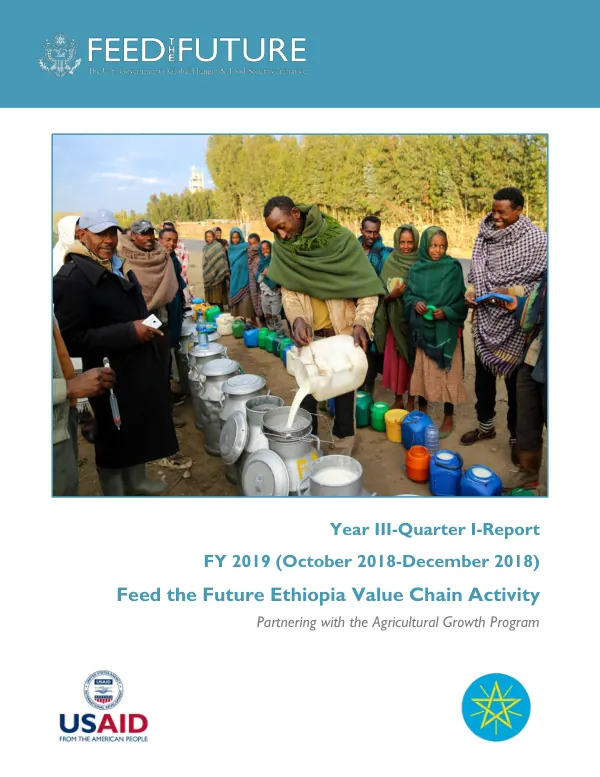
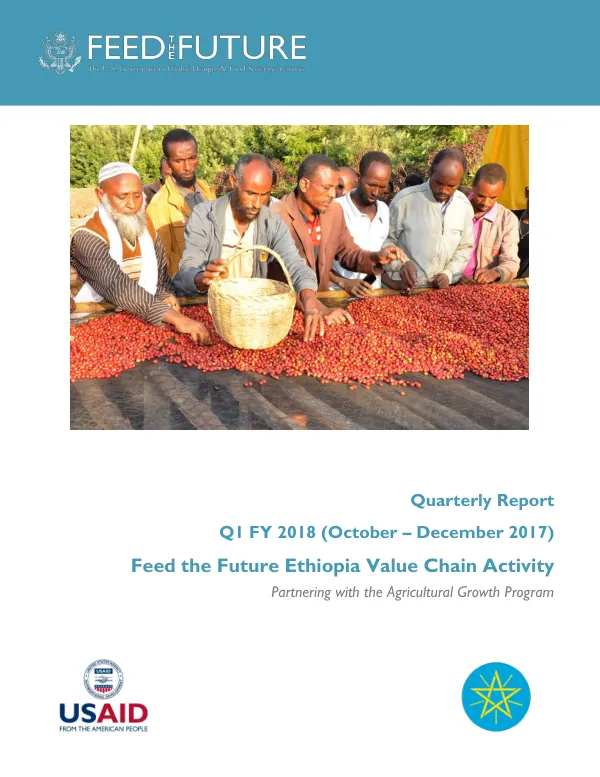
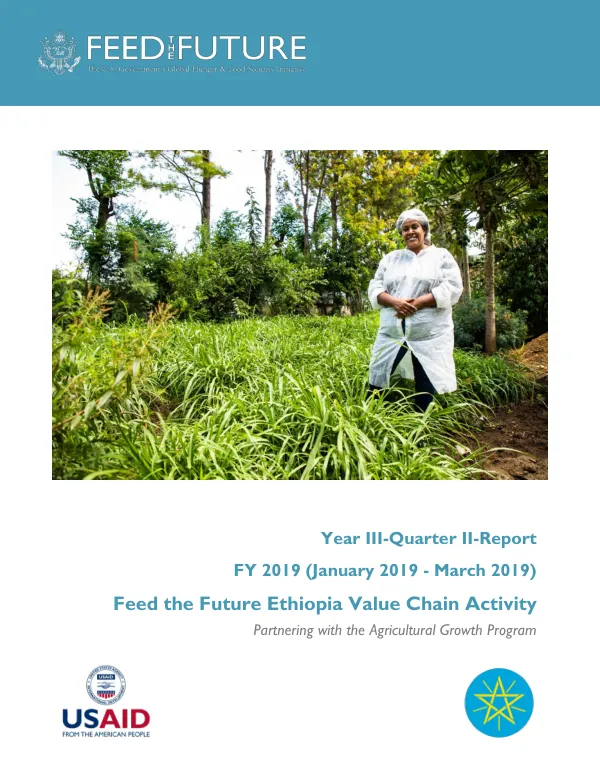
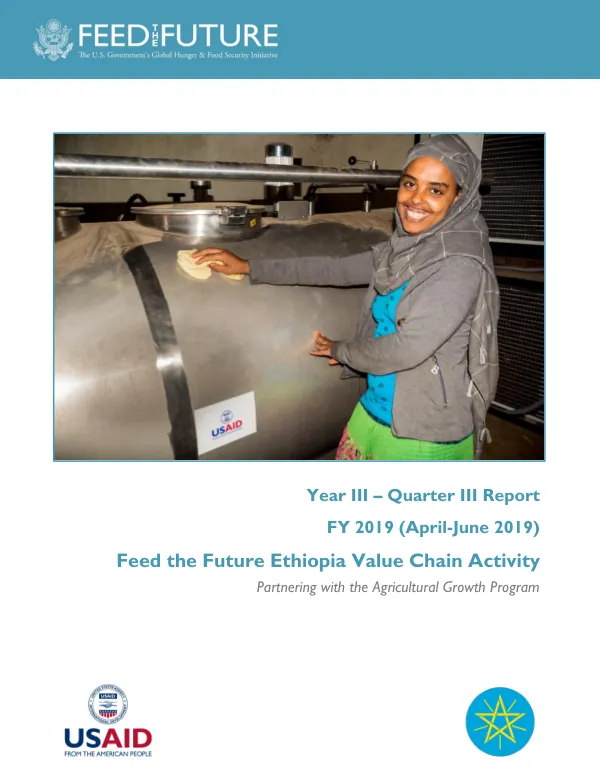
The Feed the Future Ethiopia Value Chain Activity is a program partnering with the Agricultural Growth Program to support the development of various agricultural value chains in Ethiopia.
2019 · 54 pages
Sign in to readA free account is required to download.
Abstract
The program focuses on improving the productivity and competitiveness of smallholder farmers in the dairy, meat and live animal, poultry, coffee, maize, and chickpea sectors. Geographic focus is on the Amhara and Oromia regions, where the program aims to increase the income and productivity of smallholder farmers. The program's value chain activities are designed to address specific challenges and opportunities in each sector, including improving milk quality, supporting cold chains, and enhancing market linkages. In the dairy sector, the program is supporting the development of milk processing facilities and training milk suppliers on best practices. The goal is to improve the quality and safety of milk, increase its market value, and create new income opportunities for smallholder farmers. The program is also working to improve the management of dairy farms, enhance the quality of milk, and increase the adoption of best practices among dairy farmers. In the meat and live animal sector, the program is focusing on improving the marketing and technology transfer of livestock products. The goal is to increase the income and productivity of smallholder farmers and improve the competitiveness of the sector. The program is also working to improve the management of livestock farms, enhance the quality of livestock products, and increase the adoption of best practices among livestock farmers. In the poultry sector, the program is improving poultry management practices and enhancing market linkages. The goal is to increase the income and productivity of smallholder farmers and improve the competitiveness of the sector. The program is also working to improve the management of poultry farms, enhance the quality of poultry products, and increase the adoption of best practices among poultry farmers. In the coffee sector, the program is supporting the development of coffee standards and enhancing market linkages. The goal is to increase the income and productivity of smallholder farmers and improve the competitiveness of the sector. The program is also working to improve the management of coffee farms, enhance the quality of coffee, and increase the adoption of best practices among coffee farmers. In the maize sector, the program is focusing on improving marketing and postharvest management practices. The goal is to increase the income and productivity of smallholder farmers and improve the competitiveness of the sector. The program is also working to improve the management of maize farms, enhance the quality of maize, and increase the adoption of best practices among maize farmers. In the chickpea sector, the program is promoting the commercialization of chickpea production and enhancing market linkages. The goal is to increase the income and productivity of smallholder farmers and improve the competitiveness of the sector. The program is also working to improve the management of chickpea farms, enhance the quality of chickpea, and increase the adoption of best practices among chickpea farmers. The program is also addressing cross-cutting issues such as gender and youth inclusion, nutrition, capacity building, market and commercialization, market information, financing, and enabling environment. The program is working to improve the productivity and competitiveness of smallholder farmers, increase their income and productivity, and enhance the overall competitiveness of the agricultural sector in Ethiopia.