ACDI/VOCA
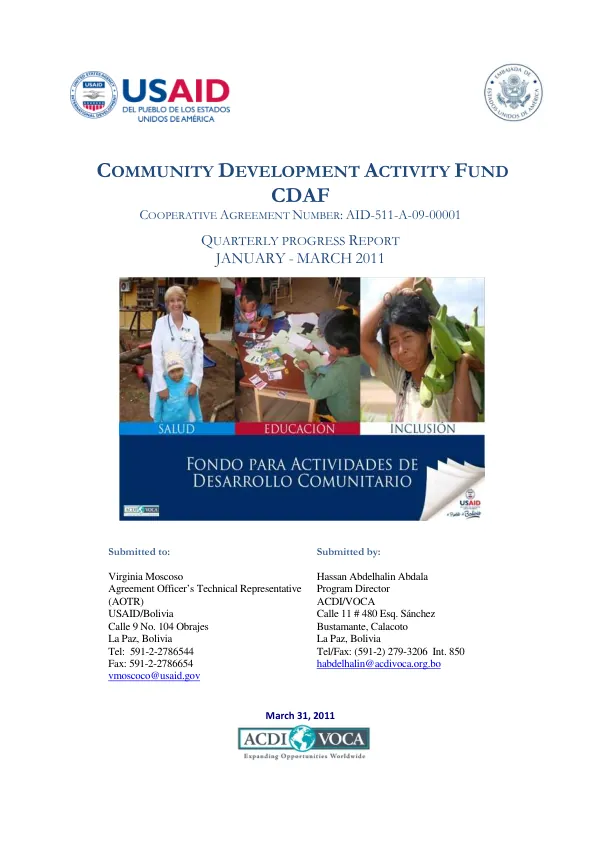
Quarterly Report Jan to March 2011 DEC
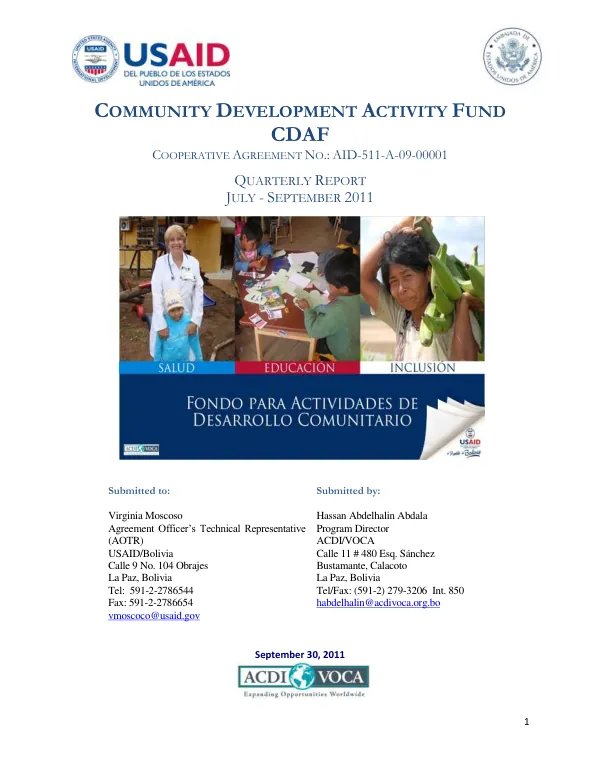
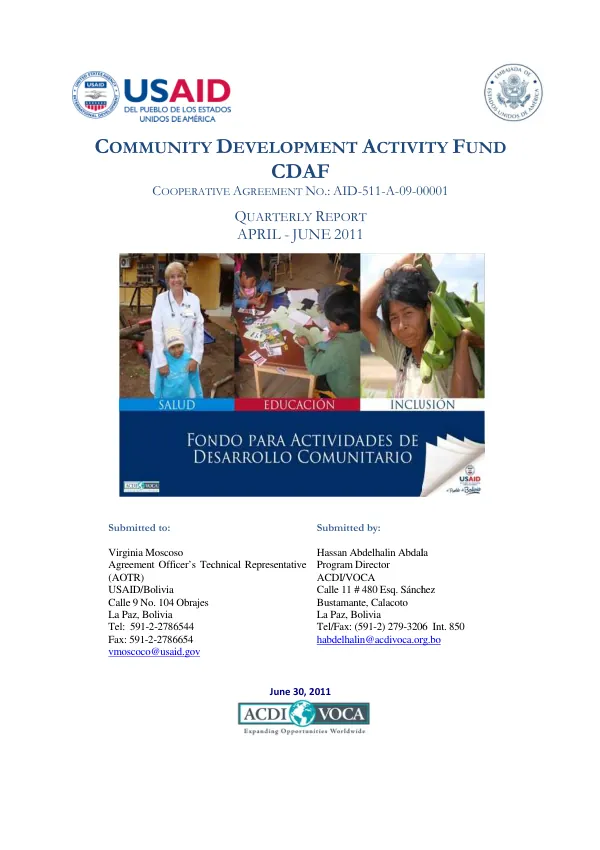
The CDAF Program began on September 30, 2009, with the overall goal of supporting communities throughout Bolivia in meeting their basic needs.
2011 · 18 pages
Sign in to readA free account is required to download.
Abstract
The project aims to assist underserved communities in resolving specific, self-identified problems through small grants that build local problem-solving capacities. The objectives are to finance small development activities that respond to the needs of Bolivians and contribute to promoting a better understanding of the United States Government and its development assistance in Bolivia. To achieve these goals and objectives, ACDI/VOCA implements the CDAF Program in coordination with USAID and through a series of activities designed to empower communities to achieve their social and economic development objectives. The program will implement more than 110 small-grant projects throughout Bolivia, with a focus on benefiting traditionally excluded groups, including indigenous communities and indigenous women. The CDAF Program advocates and advances initiatives through transparent and objective identification, assessment, and development, working with concerned citizens and beneficiary groups to share ideas on how to improve stakeholders' lives. During the second quarter of FY 2011 (January 1 to March 31, 2011), the project activities were reported by programmatic area. Key activities included meetings to mark the conclusion and delivery/transfer of four projects in various municipalities and departments. The Information Management System (SICDAF) was updated, and agreements were signed with the Santa Clara convent in Sucre to provide equipment for services to underprivileged children and the Municipality of Lagunillas in the Santa Cruz department to purchase two plows to benefit the Lagunillas and Mocomocal communities. Meetings were held with Virginia Moscoso (AOTR) to review requests for funding, approve projects, and schedule visits to the field to identify the needs and potential impact of future projects. Periodic meetings were also held with the Bolivia Communications Activity (BCA) to coordinate events and produce documentaries for project visibility. Field visits were conducted, including a monitoring visit at the greenhouse project in District IV of La Paz and a meeting with the mayor of the Coaquipa Municipality to inform them that the project requested by the Vaya community has been suspended. In February, a visit was made to Carrollo to prepare for a visit and project delivery ceremony with USAID. A meeting was held with the NGO, Para los Niños, to discuss and guide them on future projects. An official delivery was held for the furnishing and repair of the nursery and construction of a bathroom at the Quinua Flor nursery with the Sub Director of USAID, Rebecca Latorraca. A book lab was officially delivered to the Kella Kella Education Unit in the Comanche Municipality, providing the community with the means to begin training students, teachers, and community members. The CDAF Program has made significant progress in implementing its objectives, with a focus on empowering communities to achieve their social and economic development objectives. The program has implemented more than 20 small-grant projects throughout Bolivia, with a focus on benefiting traditionally excluded groups. The CDAF Program continues to advocate and advance initiatives through transparent and objective identification, assessment, and development, working with concerned citizens and beneficiary groups to share ideas on how to improve stakeholders' lives. The program has also made significant progress in promoting a better understanding of the United States Government and its development assistance in Bolivia. The CDAF Program has produced two new documentaries on health and education, highlighting the work undertaken by the program. The program has also held meetings with USAID to review requests for funding, approve projects, and schedule visits to the field to identify the needs and potential impact of future projects. The program has also made significant progress in promoting a better understanding of the United States Government and its development
Related documents