INSTITUTE OF NUTRITION OF CENTRAL AMERICA AND PANAMA
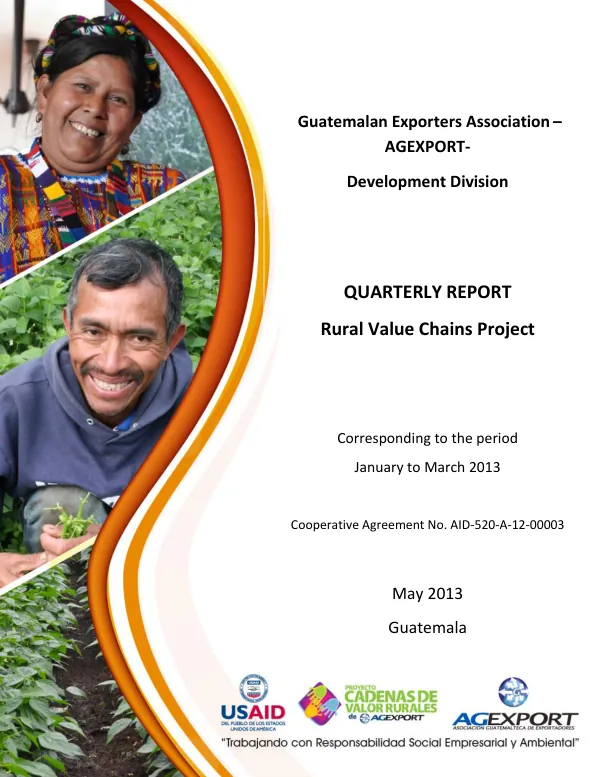
Quarterly Report January-March 2013: Rural Value Chains Project
The Rural Value Chains Project, executed by the Guatemalan Exporters Association (AGEXPORT), aims to expand the participation of families in rural areas by selected value chains to increase their incomes.
2013 · 45 pages
Sign in to readA free account is required to download.
Abstract
The project is part of the Feed the Future initiative and is implemented in 12 municipalities in the departments of Quiché, Totonicapán, and Quetzaltenango. The project's general objective is to increase the incomes of rural families by promoting the development of value chains in horticulture, coffee, and handicrafts. The project's implementation began in May 2012 and will continue until May 2017. The project's budget is US$ 23,000,000, and it is being implemented by a consortium of organizations, including Save the Children, Rainforest Alliance, Institute of Nutrition of Central America and Panama (INCAP), Vital Voices Guatemala, Sotz'il Association, and the Inter-American Institute for Cooperation on Agriculture (IICA). The project's coordination with other USAID projects is a priority element, and regular meetings and agreements are being held to ensure coordination at the national and departmental levels. The project's first 18 rural value chains were selected and approved by the chain selection committee, representing 2,690 producers, including 941 women, who are expected to generate 1,542 employments and produce goods worth approximately US$ 8,271,425.34. The project has also signed agreements and memorandums with organizations and buyers to establish alliances for approved value chains. In the case of the coffee chain, the project's focus is on three municipalities in the department of Quiché, where a disease called roya (rust) has affected coffee plantations, causing a significant drop in production volumes and informal jobs. A plan for roya control was developed with organizations, including the renewal of coffee plantations, integrated coffee management, and technical assistance. AGEXPORT will allocate Q 4,600,000 for specialized technical assistance for a 3.5-year period, while organizations will contribute Q 40,000,000 as leverage for workforce necessary for crop management. Save the Children began executing activities of Component 2 and 5, visiting municipalities and identifying 11 organizations of producers type B and C, which are currently under assessment to define the work plan for each organization. Some activities aimed to improve vegetable productivity in value chains and follow up on 15 producers' organizations that were supported in reconverting from sprinkler to drip irrigation in the municipalities of Quiché and Totonicapán. As a result, a 12% increase in production yielding in green beans and peas and a 25% increase in onion production were achieved, with producers also using less water for harvest production. The project's coordination with other USAID projects and the implementation of activities in the field have been key elements of this period. The project's focus on improving vegetable productivity and coffee management has shown positive results, and the project's technical assistance and support to small producers are expected to continue improving their livelihoods.