USAID DEC
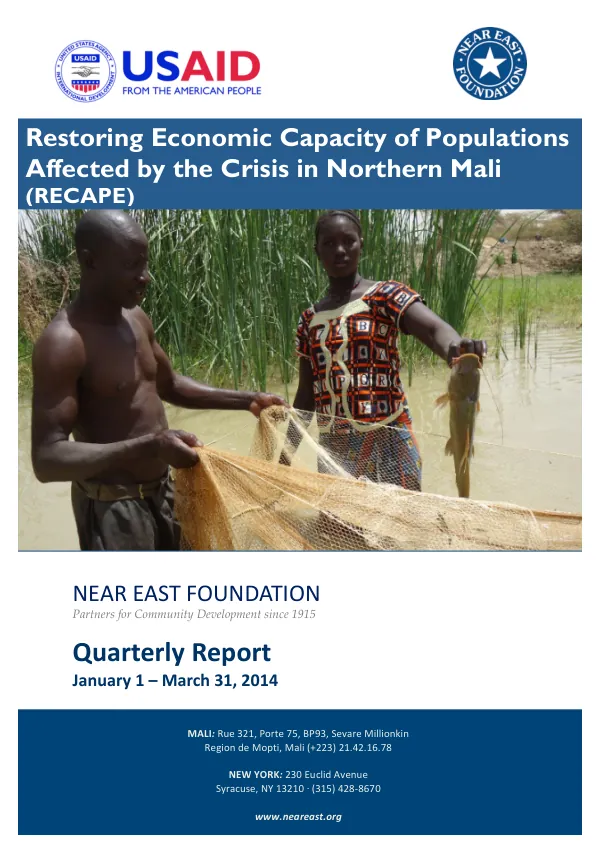
Quarterly Report, January – March 2014: Restoring Economic Capacity of Populations Affected by the Crisis in Northern Mali (RECAPE) Project
Sign inNEAR EAST FOUNDATION
Quarterly Report, January – March 2014: Restoring Economic Capacity of Populations Affected by the Crisis in Northern Mali (RECAPE) Project
The Restoring Economic Capacity of Populations Affected by the Crisis in Northern Mali (RECAPE) project, implemented by the Near East Foundation, has been providing support to thousands of families affected by the crisis in Northern Mali.
2014 · 14 pages
Sign in to readA free account is required to download.
Abstract
The project's main objective is to restore the economic capacity of these populations, enabling them to recover from the devastating effects of the crisis. During the fourth quarter of 2014, the project continued to implement activities according to the work plan. The project's focus areas include fisheries, livestock, agricultural production, and livelihoods restoration. In the fisheries sector, the project restored five degraded fishponds in the communes of Diaptodji, Korientzé, Noradji, Fanabougou, and Korombana, benefiting 1,428 individuals, including 722 women. The project also distributed equipment, restocked the fishponds with 19,600 fingerlings, and trained beneficiaries in fishing techniques. The project's monitoring and evaluation efforts revealed that the average production of fresh fish per fisher was 662.7 kg, with a total capture of 106,032 kg. The majority of fish caught were sold fresh, smoked, or dried. However, fish production was lower than expected in the rehabilitated ponds during their first season, primarily due to inadequate nutrition for the fish. The project will continue to work with targeted fishers and communities to develop the necessary knowledge and skills to improve production through the use of appropriate techniques. In the livestock sector, the project rehabilitated 100 acres of pasture in Diaptodji, Korombana, and Ourobe Doude communes, benefiting an estimated 480 pastoralists, including 144 women. The restored area in each village can meet the needs of 80-200 animals for 30 to 50 days. The project also trained managers of pastoral societies in pasture regeneration techniques, cutting, planting, and the maintenance of bourgou (Echinocloa stagnina). The project's activities in the agricultural production sector focused on monitoring the impact of fishery, agricultural production, livestock, and livelihoods restoration activities. The project also evaluated the impact of cash grants provided to beneficiaries to recover productive assets, with 84.6% of beneficiaries able to restart enterprises. The project's achievements against targets are detailed in Attachment 1. The project's overall goal is to restore the economic capacity of populations affected by the crisis in Northern Mali, enabling them to recover from the devastating effects of the crisis and improve their livelihoods.