UNITED NATIONS
Quarterly Report: Khetha Program
The Khetha program is a community-based initiative aimed at promoting conservation and sustainable livelihoods in the Greater Limpopo Transfrontier Conservation Area (GLTFCA) of southern Africa.
2023 · 42 pages
Sign in to readA free account is required to download.
Abstract
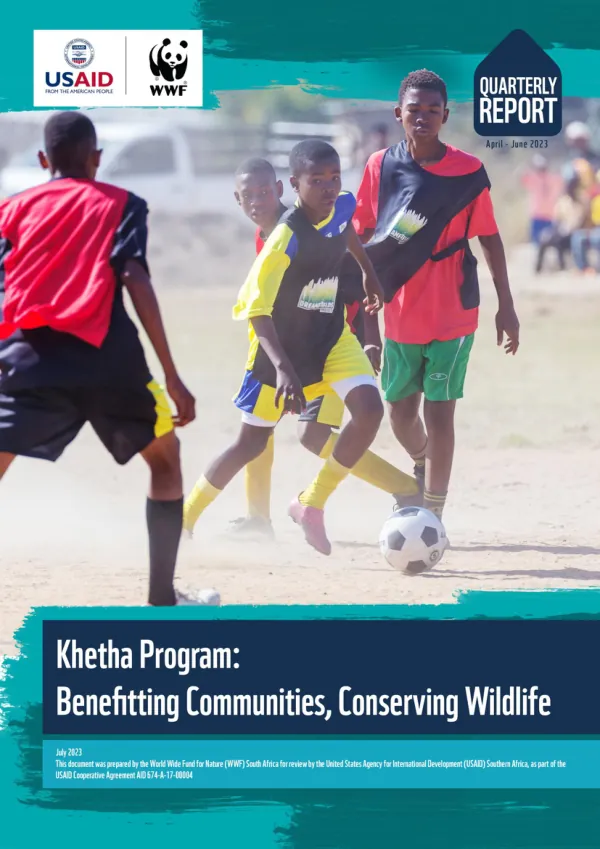
The program's goal is to contribute to positive growth rates in black and white rhino populations and maintain positive growth rates for elephants in the focal area by September 2024. The program operates in four innovation nodes in the GLTFCA, where it supports innovative partnerships and novel approaches within civil society, communities, the private sector, and government to improve relationships between people and wildlife. This includes supporting the implementation of critical wildlife trafficking policy frameworks for South Africa and Mozambique to increase crime prevention, detection, prosecution, and collaboration. The Khetha program also aims to learn, collaborate, and coordinate with influential institutions in the GLTFCA landscape to strengthen the collective response to wildlife trafficking. This includes working with government agencies, non-profit organizations, and private sector entities to develop and implement effective strategies to combat wildlife trafficking. The program's objectives contribute to the implementation of the United States National Strategy to Combat Wildlife Trafficking and complement regional and bilateral programs managed by USAID and other United States Government agencies in southern Africa. The program also aligns with ongoing responses by donors, governments, the private sector, and other organizations as well as to relevant national strategies and approaches in Mozambique and South Africa. In the current quarter, the Khetha program has made significant progress in achieving its objectives. The program's Mangalane, Kumane, and Captine communities in Mozambique received their second annual payment from the 20% benefit scheme from sustainable wildlife utilization in protected areas. The program also launched its youth sports program, donating soccer kits to 40 teams and hosting training clinics for about 800 players and 43 coaches. The program has also commenced data collection using the SenseMaker methodology to better understand the conflict landscape of the Greater Kruger from the perspective of South African National Parks' Environmental Monitors working on the Kruger National Park fence line. The program interviewed 67 Monitors from a variety of areas adjacent to the park. In addition, the program has continued to learn more about and build capacity for the wildlife economy. The program conducted a preliminary assessment of current meat consumption, game meat preferences, and existing meat-related enterprises as part of a process to identify and develop opportunities within the Gidjana and Bevhula communities linked to the Greater Kruger game meat value chain. The program has also strengthened law enforcement capacity to address wildlife crime by completing a second phase of training of 23 judges in Mozambique on wildlife crime utilizing a manual developed by WWF Mozambique, USAID, and the United States Office on Drugs and Crime. The program donated backpacks to the civil society group, Manyeleti Community Policing Forum, patrolling the fence of the Manyeleti Nature Reserve. The program's work supporting the development and implementation of a Kruger National Park Ranger Services Integrity Management Plan received high-level government support and is part of a Presidential directive to the Department of Forestry, Fisheries and the Environment for priority implementation. The program facilitated, participated in, and/or supported the participation of its partners in seven learning and sharing events, including the USAID VukaNow Activity Close Out on approaches implemented to address wildlife crime in southern Africa. The program's work in the current quarter demonstrates its commitment to promoting conservation and sustainable livelihoods in the GLTFCA. The program's progress in achieving its objectives contributes to the implementation of the United States National Strategy to Combat Wildlife Trafficking and complements regional and bilateral programs managed by USAID and other United States Government agencies in southern Africa.