USAID DEC
Creating Partnerships That Reduce the Impacts of the Illegal Wildlife Trade on People, Elephants and Rhinos
Sign inUSAID
Creating Partnerships That Reduce the Impacts of the Illegal Wildlife Trade on People, Elephants and Rhinos
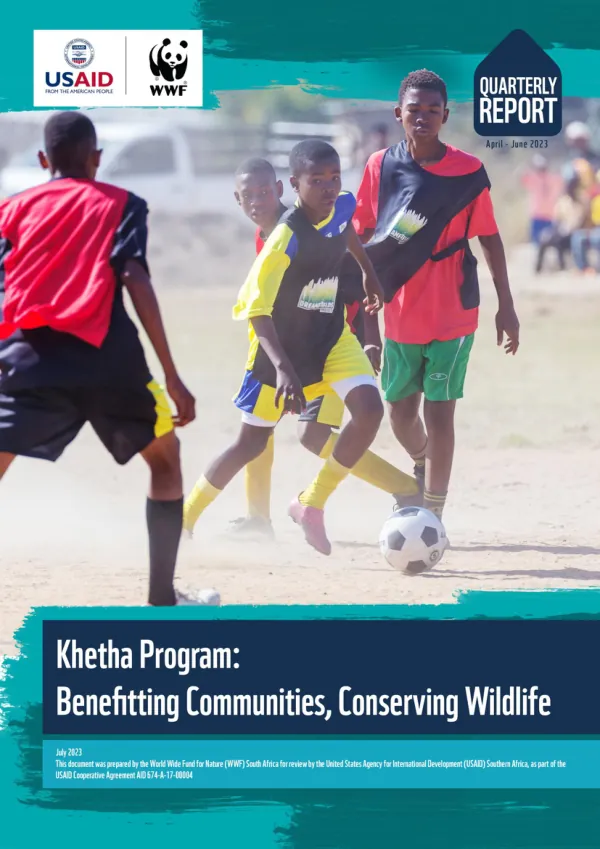
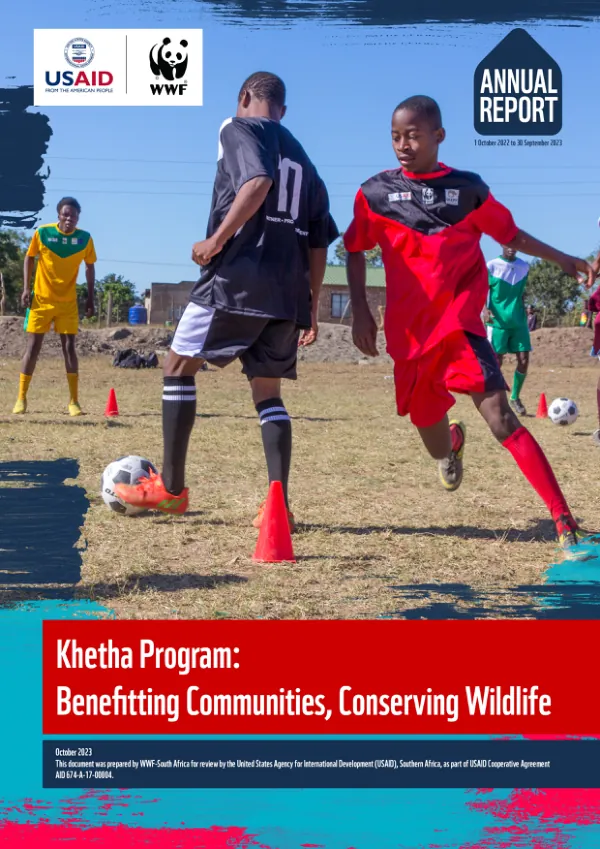
The Khetha programme is a cooperative agreement between the WWF South Africa and the United States Agency for International Development (USAID).
2023 · 14 pages
Sign in to readA free account is required to download.
Abstract
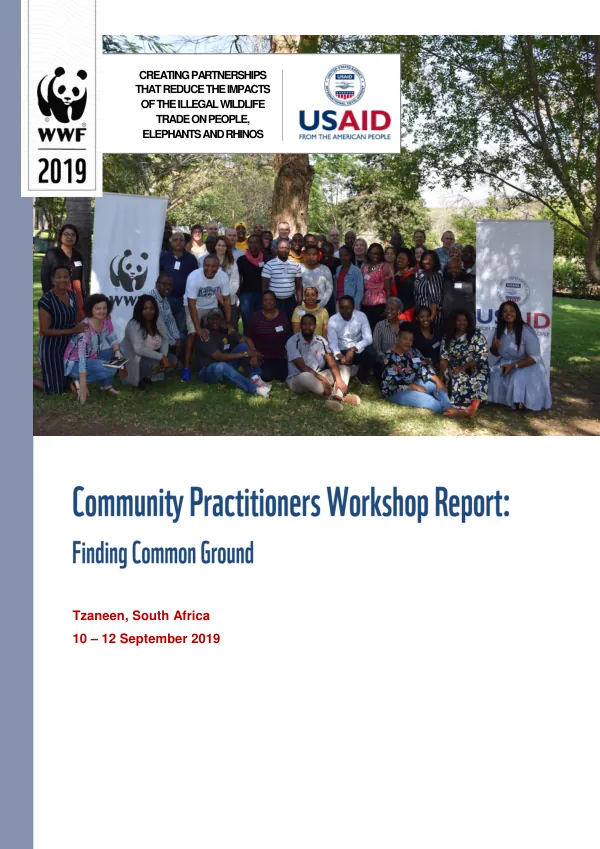
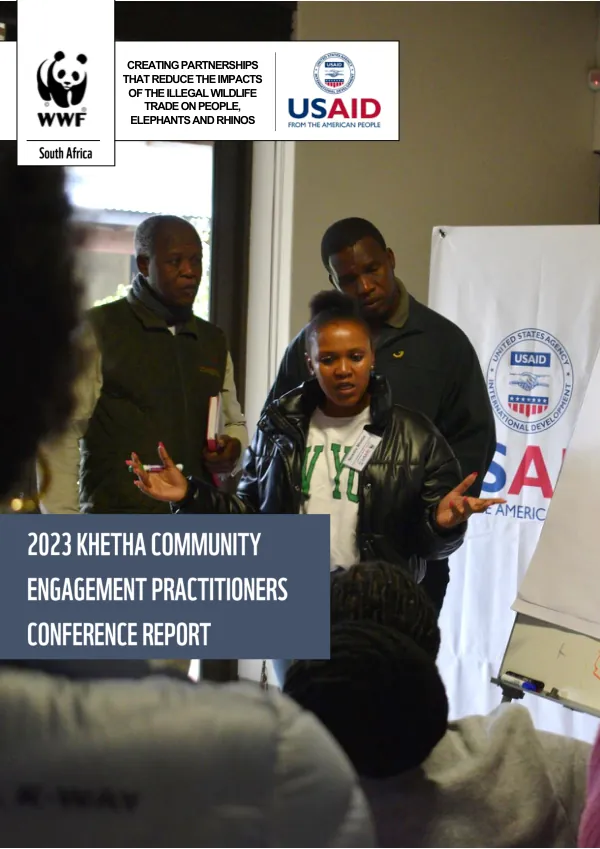
The programme's overall goal is to reduce the impact of wildlife trafficking on elephant and rhino populations and people in the Mozambican and South African landscape of the Great Limpopo Transfrontier Conservation Area (GLTFCA). The Khetha programme seeks to support innovative partnerships and novel approaches within civil society, communities, the private sector, and government to improve relationships between people and wildlife by September 2024. Community engagement practitioners (CEPs), often referred to as community liaison officers (CLOs), are key players in the Greater Kruger. They help build or mediate relationships between communities, protected areas, conservation agencies, and other stakeholders. CEPs work in a physically, technically, and socially challenging environment. It is crucial that CEPs receive the support they need to build the skills, knowledge, and experience they need to do their work effectively and safely. The Khetha Community Engagement Practitioners Conference is a yearly event where community engagement work and its associated challenges, successes, and learning are highlighted. CEPs share their experiences with one another and engage on topics that affect their work. The slogan for the 2023 conference was 'People, Power, Politics'. The conference featured keynote speakers, panel discussions, and networking opportunities. The world is facing an unprecedented biodiversity crisis, with the loss of species at an alarming rate. Globally, the pressure on earth's natural resources is increasing exponentially as world populations grow and the need for water, energy, food, transport, and telecommunications increases. Conservation approaches to the 'extinction crisis' have been implemented globally, including the declaration and expansion of protected areas. However, protecting nature from people is deemed an ineffective strategy. Convivial Conservation is a proposed new approach to conservation that considers the broader political context in which humans and nature exist. It proposes a shift from "Protected Areas" to "Promoted Areas", from "saving" nature from humans to "celebrating human and nonhuman natures", and from privatised expert technocracy to common democratic engagement. In the short term, Convivial Conservation proposes historic reparations and decolonising conservation, a conservation basic income, rethinking relations with corporations and state, and a Convivial Conservation Coalition. Differing economic aspirations exist among people, and conservationists need to acknowledge and respect these aspirations. For example, rangeland management and game meat processing are conservation-compatible land uses that transfer the cost of participating in conservation onto the community. Many communities do not see the benefit or economic value of conservation, and how one sees and perceives conservation and protected areas depends on where you are. The Khetha programme aims to address the complex relationships between people and wildlife in the GLTFCA landscape. By supporting innovative partnerships and novel approaches, the programme seeks to improve relationships between people and wildlife and reduce the impact of wildlife trafficking. The programme's work is critical to addressing the biodiversity crisis and promoting conservation-compatible land uses that benefit both people and wildlife.