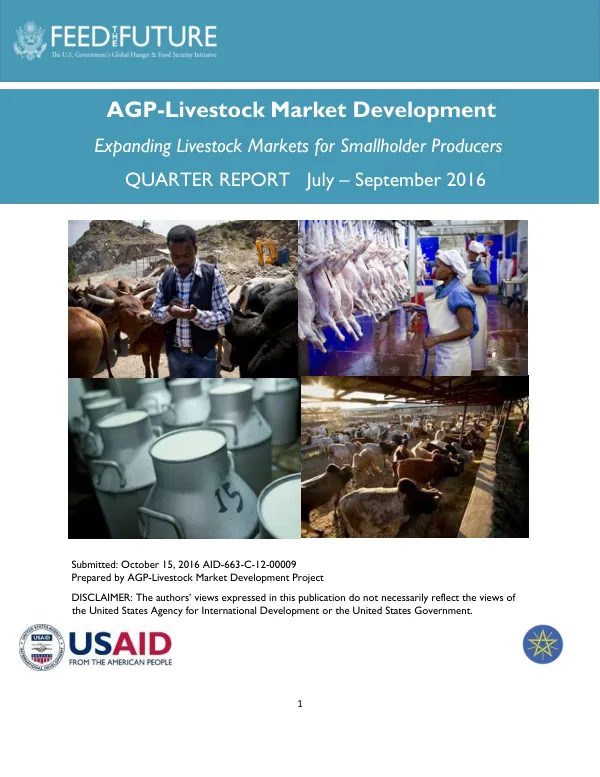
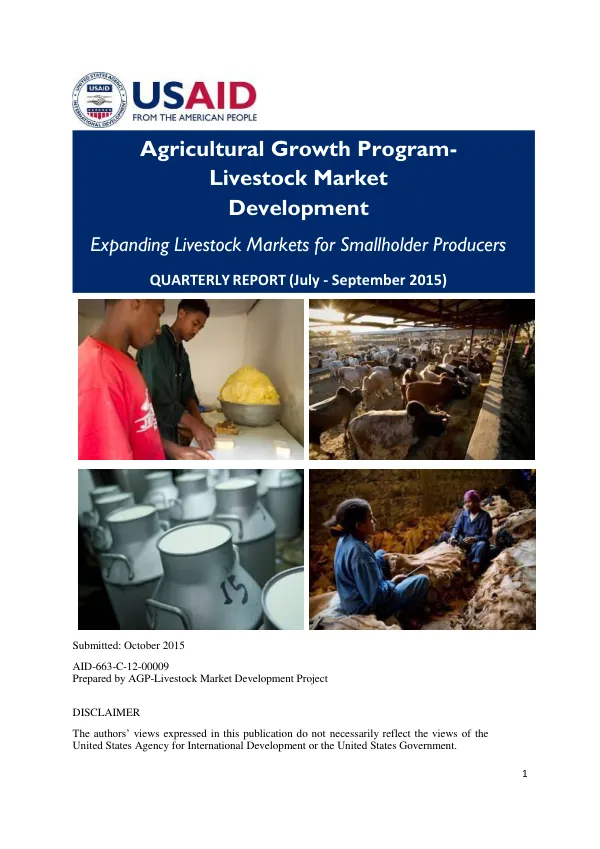
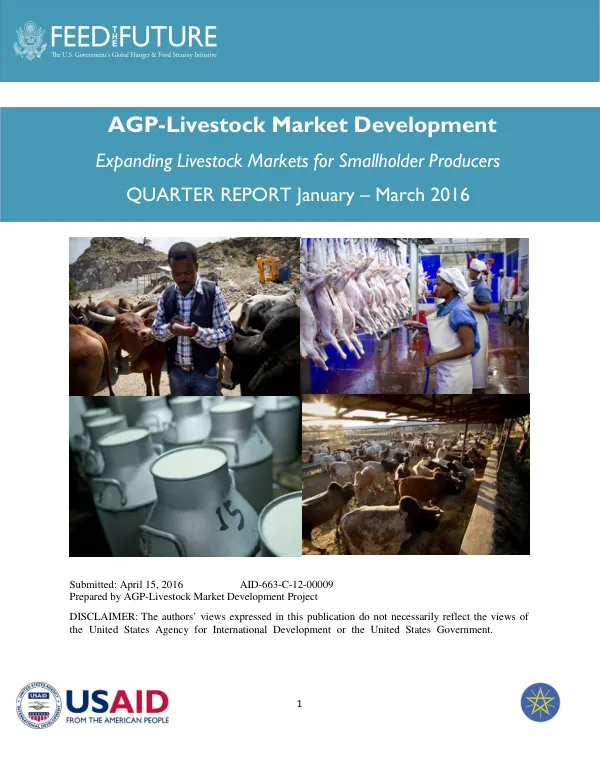
USAID DEC
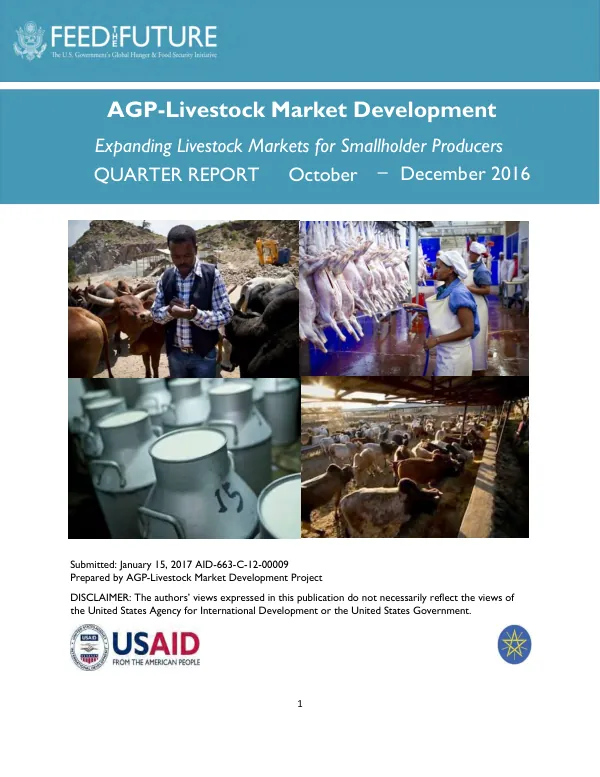
Quarter Report: October – Decemb er 2016
The Livestock Market Development Project, a component of the Agricultural Growth Program, aims to expand livestock markets for smallholder producers in Ethiopia.
2016 · 86 pages
Sign in to readA free account is required to download.
Abstract
The project began in 2016 and is implemented by the AGP-Livestock Market Development Project team. The project's main objective is to increase the productivity and competitiveness of selected livestock value chains for the benefit of smallholders. The project is divided into five components: Component 1, Component 2, Component 3, Component 4, and Component 5. Component 1 focuses on moving from analytics to strategy to learning, while Component 2 aims to improve the productivity and competitiveness of livestock value chains, specifically the dairy, meat and live animal, and cross-cutting issues. Component 3 spurs investment and innovation, while Component 4 improves the enabling environment for livestock value chains. Component 5 enhances the nutritional status of rural households through the intake of livestock products. The project's intermediate results (IRs) are categorized into three main areas: IR1, IR2, and IR3. IR1 focuses on increasing productivity and competitiveness of selected livestock value chains for the benefit of smallholders. IR2 aims to improve the enabling environment for livestock value chains, while IR3 focuses on improving the quality and diversity of household diets through the intake of livestock products. The project's strategies are designed to achieve the IRs. For example, IR1: Strategy 1 links value chain actors to input and service providers, while IR1: Strategy 2 establishes and strengthens input suppliers and service providers. IR2: Strategy 1 facilitates and empowers stakeholders for policy reform and advocacy, while IR2: Strategy 2 builds capacity for public and private stakeholders. IR3: Strategy 1 promotes behavioral change communication, while IR3: Strategy 2 ensures access to animal source food through pilot backyard chicken production. The project's geographic focus is on Ethiopia, with a specific emphasis on the livestock sector. The project's timeframes are from 2016 to 2020, with quarterly reports submitted to track progress. The project's recommendations include strengthening FBOs and sectorial associations, promoting gender equity and women empowerment, and improving the enabling environment for livestock value chains. The project's challenges include finance and administration, as well as environmental compliance. The project's annexes provide additional information on environmental compliance status, required follow-up activities, and work plan progress monitoring tables. The project's acronyms are listed in a separate section, providing a reference for stakeholders.