ABT ASSOCIATES
Quarterly Report – Q1/04
The Wajibika Project, a USAID-funded initiative, aimed to improve financial management and accountability in Local Government Authorities (LGAs) in Tanzania.
2012 · 15 pages
Sign in to readA free account is required to download.
Abstract
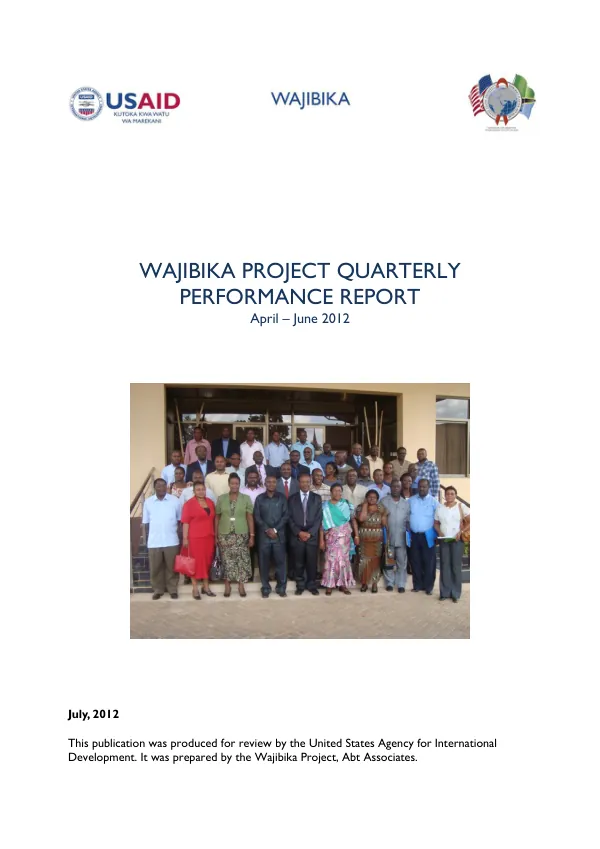
The project's quarterly performance report for April 1 to June 30, 2012, highlights key activities, achievements, and challenges. The project continued to address the recommendations from the USAID mid-term review, which was conducted in December 2011. The review findings and recommendations were provided to the project in January 2012. During this quarter, the project finalized a new Performance Monitoring Plan (PMP) through a collaborative effort with USAID. The revised PMP included an enhanced Results Framework, revised performance indicators, and Performance Indicator Reference Sheets. The project also developed a document that clearly describes the Wajibika Approach, which was not previously well-articulated and understood by all stakeholders. A graphic, the Wajibika Conceptual Framework, was created to illustrate the context within which the project operates, the Wajibika Approach, and the project Outcomes. A two-page synthesis document was prepared and distributed to USAID. In addition, the project developed an interview guide/tool for stakeholder engagement in developing transition and scale-up plans. The objectives of the stakeholder interviews were to solicit feedback and recommendations from key informants on how to best proceed in transitioning the project activities to LGAs. Interview guides for national, regional, council level, and development partners/other partners were developed, and data collection is ongoing. The project also organized two-week training sessions on the newest version of Epicor (version 9.05) for Council treasurers, internal auditors, and accountants in three regions (Iringa, Pwani, and Morogoro). The training covered hands-on training on all the functions of the software, appropriate coding of transactions, production of financial reports, and budgeting. A total of 86 accountants and 23 internal auditors were trained. Furthermore, the project facilitated a follow-up training to internal auditors and members of Audit Committees from the LGAs and Regional Administrative Secretariats for Iringa, Morogoro, Dodoma, and Pwani regions. The training was conducted from May 16-18 and from May 21-23, 2012, in Iringa and Dodoma respectively. A total of 112 participants were trained, and they had the opportunity to discuss areas that posed challenges to the effectiveness of the internal audit functions in LGAs. The project's quarterly performance report highlights the progress made in addressing the recommendations from the USAID mid-term review and the challenges faced in implementing the project activities. The report also provides an overview of the project's approach, activities, and achievements during the quarter.