USAID DEC
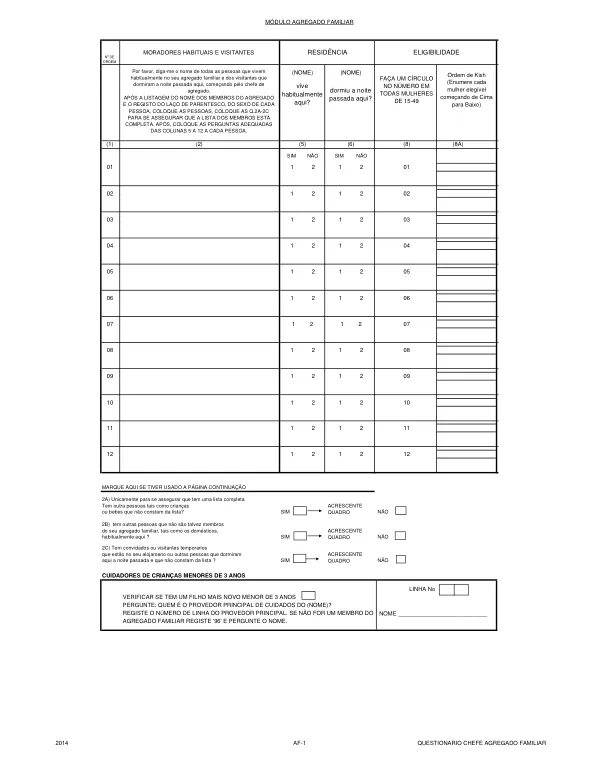
Questionário Chefe Agregado Familiar
The household survey in Rwanda began with the enumeration of household members and visitors.
2014 · 1 pages
Sign in to readA free account is required to download.
Abstract
The surveyor recorded the names of all individuals living in the household, including the head of the household, and their relationship to the head. The survey also included visitors who had stayed overnight in the household. The survey collected information on the number of household members, including children and infants. Respondents were asked to identify the primary caregiver for children under three years old and to record the caregiver's name and relationship to the household head. The survey also inquired about the presence of other individuals, such as domestic workers or guests, who were not part of the household but had stayed overnight. The survey used the Kish grid method to enumerate all eligible women aged 15-49 in the household. Respondents were asked to list the names of all household members and visitors, starting with the head of the household, and to record their relationship, sex, and other relevant information. The survey also included questions about the household's residency, eligibility, and the presence of visitors. The survey's data collection process aimed to provide a comprehensive understanding of the household's composition and dynamics. The information collected will be used to inform policies and programs aimed at improving the well-being of households in Rwanda.
Connected topics
Related documents