USAID DEC
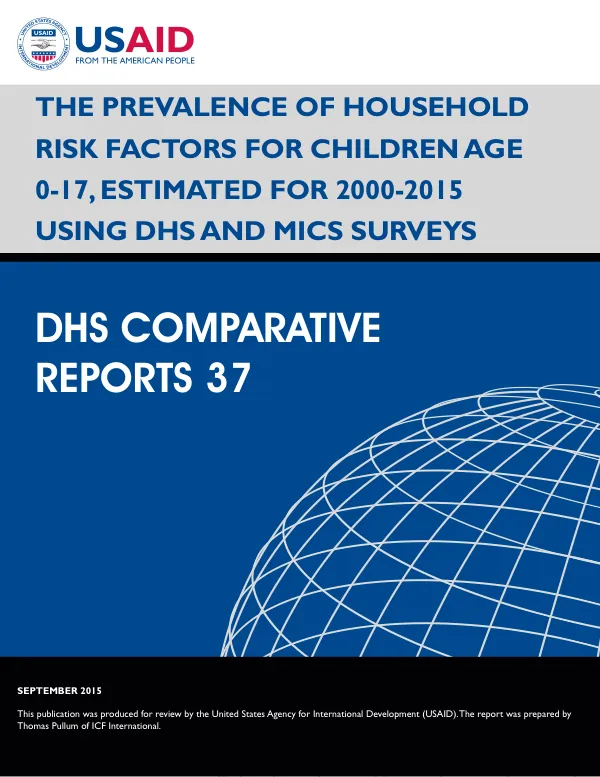
The Prevalence of Household Risk Factors for Children Age 0-17, Estimated for 2000-2015 Using DHS and MICS Surveys
Sign inICF
The Prevalence of Household Risk Factors for Children Age 0-17, Estimated for 2000-2015 Using DHS and MICS Surveys
The prevalence of household risk factors for children aged 0-17 was estimated for the period 2000-2015 using data from the Demographic and Health Surveys (DHS) and Multiple Indicator Cluster Surveys (MICS).
2015 · 128 pages
Sign in to readA free account is required to download.
Abstract
The study aimed to provide policymakers and program managers in low- and middle-income countries with easily accessible data on levels and trends for a wide range of health and demographic indicators. The analysis included 70 countries, with a total of 70 DHS and 34 MICS surveys available for the period. The surveys provided data on various household risk factors, including children who have lost one or both parents, children not living with either parent, children living in households with no educated adults, and children living in households ranked in the bottom two wealth quintiles. The study found that the prevalence of vulnerability varied across countries and over time. Children who had lost one or both parents were the most vulnerable group, with a prevalence of 4.3% in 2000 and 3.4% in 2015. Children not living with either parent had a prevalence of 2.5% in 2000 and 1.9% in 2015. Children living in households with no educated adults had a prevalence of 14.1% in 2000 and 10.3% in 2015. Children living in households ranked in the bottom two wealth quintiles had a prevalence of 23.1% in 2000 and 18.5% in 2015. The study also found that the number of vulnerable children varied across countries and over time. In 2000, an estimated 12.3 million children aged 0-17 were vulnerable, while in 2015, an estimated 9.3 million children were vulnerable. The largest number of vulnerable children was found in sub-Saharan Africa, where an estimated 6.3 million children were vulnerable in 2000 and 4.5 million children were vulnerable in 2015. The study concluded that household risk factors are a significant concern for children aged 0-17 in low- and middle-income countries. The prevalence of vulnerability varied across countries and over time, with children who had lost one or both parents being the most vulnerable group. The study highlights the need for policymakers and program managers to address these risk factors in order to improve the health and well-being of children in these countries. The study used data from the DHS and MICS surveys, which are widely recognized as reliable sources of data on health and demographic indicators. The analysis was based on a large sample of countries, providing a comprehensive picture of the prevalence of household risk factors for children aged 0-17. The study's findings have important implications for policymakers and program managers in low- and middle-income countries, highlighting the need for targeted interventions to address these risk factors and improve the health and well-being of children.