USAID
Questionário Cuidadores
The questionnaire for caregivers is a tool used to gather information about the health and hygiene practices of caregivers in a specific region.
2014 · 5 pages
Sign in to readA free account is required to download.
Abstract
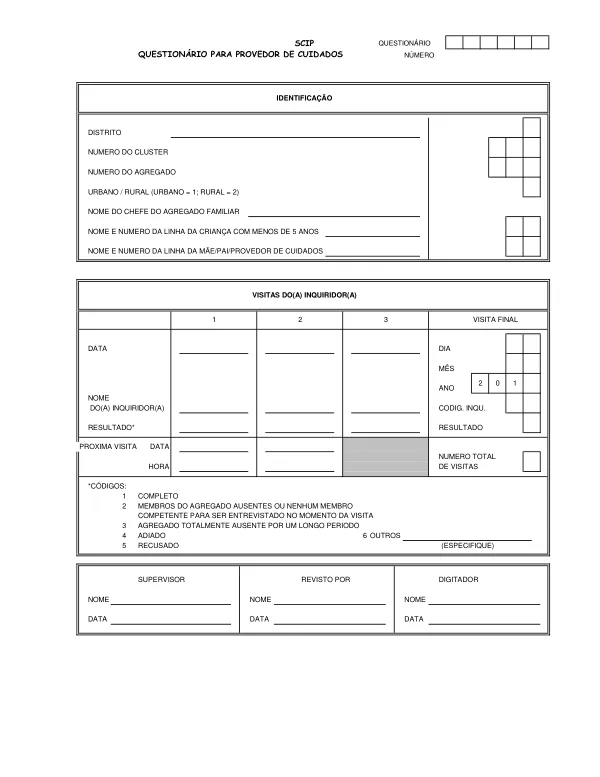
The questionnaire is divided into several modules, each focusing on a different aspect of health and hygiene. The first module, "Características Gerais Entrevistado," is an introduction to the questionnaire and includes questions about the caregiver's relationship with the child and their consent to participate in the study. The caregiver is asked about their relationship with the child, such as whether they are the mother, father, or another family member. The second module, "Higiene," focuses on the caregiver's knowledge and practices related to hygiene. The caregiver is asked about their access to soap and water, as well as their practices for washing their hands and the child's hands. The caregiver is also asked about their methods for treating and storing water, including whether they use a filter or boil the water. The third module, "Preparação, armanezamento e manipulação de alimentos," focuses on the caregiver's practices related to food preparation and storage. The caregiver is asked about their methods for preparing food, including whether they wash their hands before handling food and whether they store food in a clean and safe manner. The questionnaire also includes questions about the caregiver's knowledge and practices related to handwashing, including whether they use soap and water to wash their hands and whether they dry their hands properly after washing. The caregiver is also asked about their methods for storing food, including whether they store food in a clean and safe manner and whether they use utensils to handle food. The questionnaire is designed to gather information about the caregiver's knowledge and practices related to health and hygiene, as well as their access to resources and facilities that support good health and hygiene practices. The information gathered from the questionnaire can be used to identify areas where caregivers may need additional support or education to improve their health and hygiene practices. The questionnaire is administered by a trained interviewer who asks the caregiver a series of questions and observes their practices and behaviors. The interviewer records the caregiver's responses and observations, which are then used to gather information about the caregiver's knowledge and practices related to health and hygiene. The questionnaire is an important tool for gathering information about the health and hygiene practices of caregivers in a specific region. The information gathered from the questionnaire can be used to identify areas where caregivers may need additional support or education to improve their health and hygiene practices, and to develop interventions and programs to support caregivers in improving their health and hygiene practices. The questionnaire is typically administered in a face-to-face interview, and the interviewer may use a standardized protocol to ensure that the questionnaire is administered consistently across all participants. The interviewer may also use observation and other methods to gather additional information about the caregiver's practices and behaviors. The questionnaire is typically used in conjunction with other data collection methods, such as surveys and focus groups, to gather a more comprehensive understanding of the health and hygiene practices of caregivers in a specific region. The information gathered from the questionnaire can be used to inform the development of policies and programs that support caregivers in improving their health and hygiene practices.