CARE
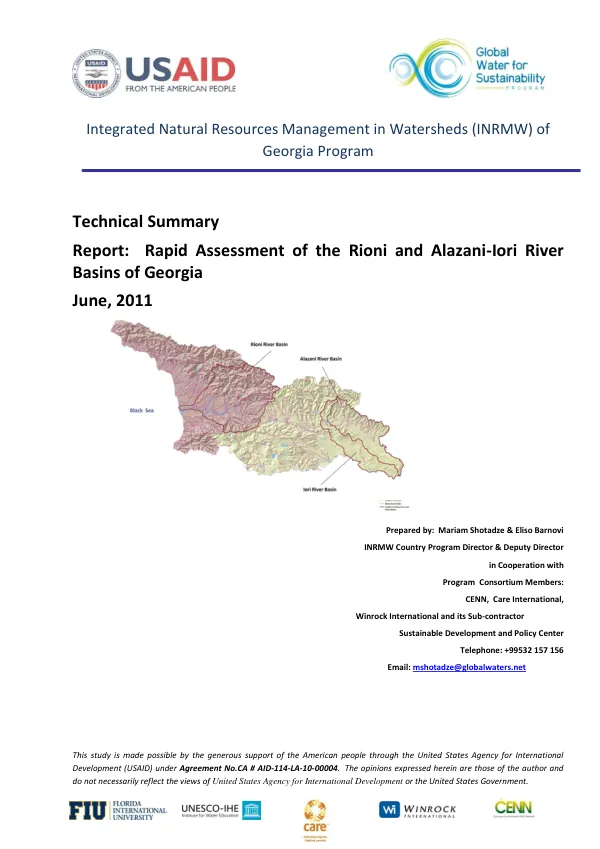
Rapid Assessment of the Rioni and Alazani-Iori River Basins of Georgia
The Integrated Natural Resources Management in Watersheds (INRMW) of Georgia Program is a multi-year project launched by USAID-Caucasus in September 2010.
2011 · 43 pages
Sign in to readA free account is required to download.
Abstract
The project aims to improve the lives of people in Georgia by utilizing and managing natural resources more sustainably, including water, soil, vegetation, and ecosystems. The primary goal of the INRMW Program is to introduce innovative approaches and practical models of participatory integrated natural resources management in targeted watersheds. The project focuses on four representative watersheds of the Rioni and Alazani-Iori River Basins, with the objective of creating a knowledge base to lead to the selection of four smaller pilot areas for on-the-ground interventions. The Rapid River Basin Assessment is a key deliverable under the project, which aims to collect, synthesize, and analyze the baseline situation existing in the Alazani, Iori, and Rioni River Basins in terms of ecological status and the use of natural resources. The study has been developed through the collection, compilation, and analysis of available information, as well as through face-to-face interviews with project partners and representatives of various organizations. The assessment relied on available data and studies, but noted limitations for selected historical and current socio-economic and environmental data. The Rioni and Iori River Basins have limited studies, and various studies differ in terms of data completeness and inconsistencies. The Alazani-Iori River Basins are characterized by severe pollution due to waste dumping and untreated wastewater discharges, as well as large areas of forests cleared due to illegal logging. The Rioni River Basin faces similar challenges, including pollution, deforestation, and overgrazing. Inappropriate irrigation and agricultural practices have degraded large areas of arable land through soil erosion and salinization. The study identifies linkages among the use of natural resources and ecosystem functions, and defines resource use opportunities where sustainable and integrated management of these resources can bring immediate health, environmental, ecological, and economic benefits. The information and analysis contained in this report will help the project identify and select the most appropriate pilot areas for demonstration of integrated natural resources management in a watershed context. The project aims to introduce innovative approaches and practical models of participatory integrated natural resources management in targeted watersheds, by facilitating reforms to and harmonization of national policies, and by increasing the capacity of national and regional institutions to replicate these approaches and models throughout the country. The project will achieve its goal by implementing a number of sequential activities, including baseline assessments, rapid assessments, selection of pilot areas, detailed assessments, development of resource management plans, and implementation of priority interventions at the community level through a community small-grants program. The study concludes that the Alazani-Iori and Rioni River Basins face significant environmental pressures and impacts, including pollution, deforestation, overgrazing, and soil erosion. The study recommends that the project focus on introducing innovative approaches and practical models of participatory integrated natural resources management in targeted watersheds, by facilitating reforms to and harmonization of national policies, and by increasing the capacity of national and regional institutions to replicate these approaches and models throughout the country.
Related documents
Documents in this collection
 2011
2011USAID DEC
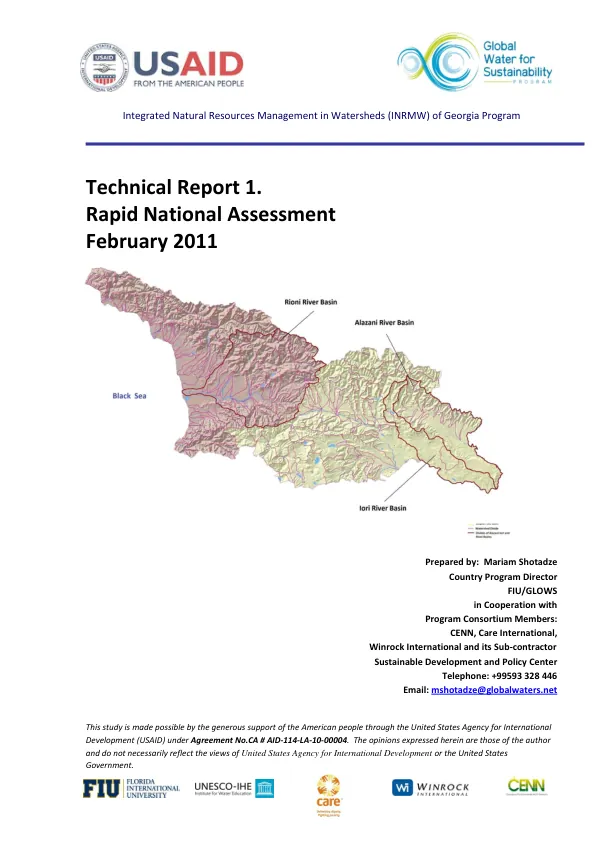
Integrated Natural Resources Management in Watersheds (INRMW) of Georgia Program Technical Report 1: Rapid National Assessment
Open record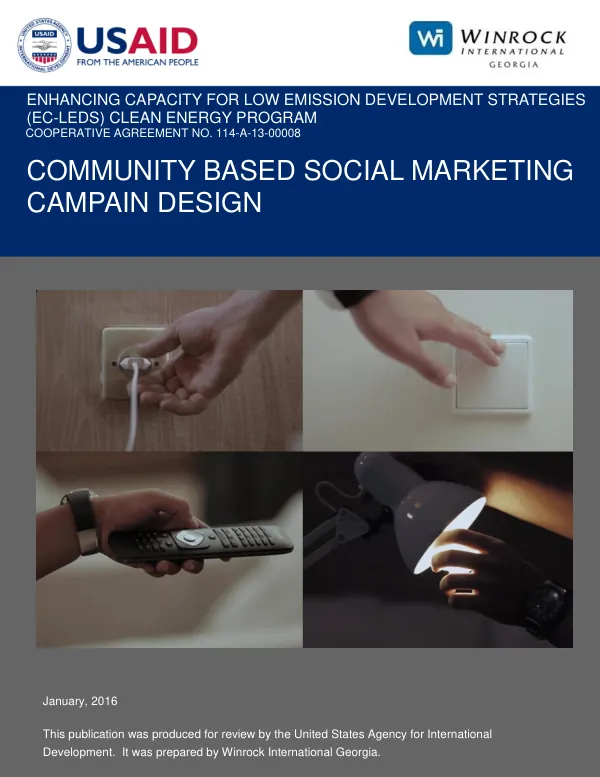 2016
2016USAID DEC
Enhancing Capacity for Low Emission Development Strategies (EC-LEDS) Clean Energy Program: Community Based Social Marketing Campaign Design
Open record