USAID DEC
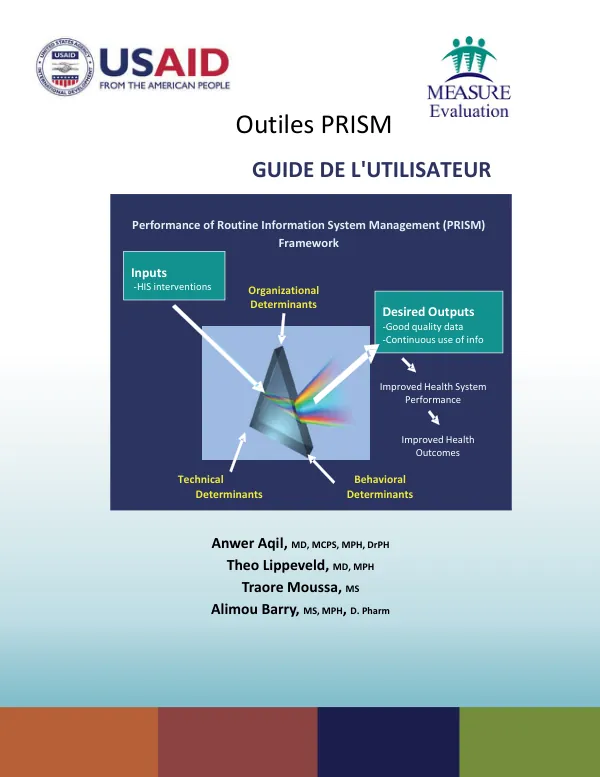
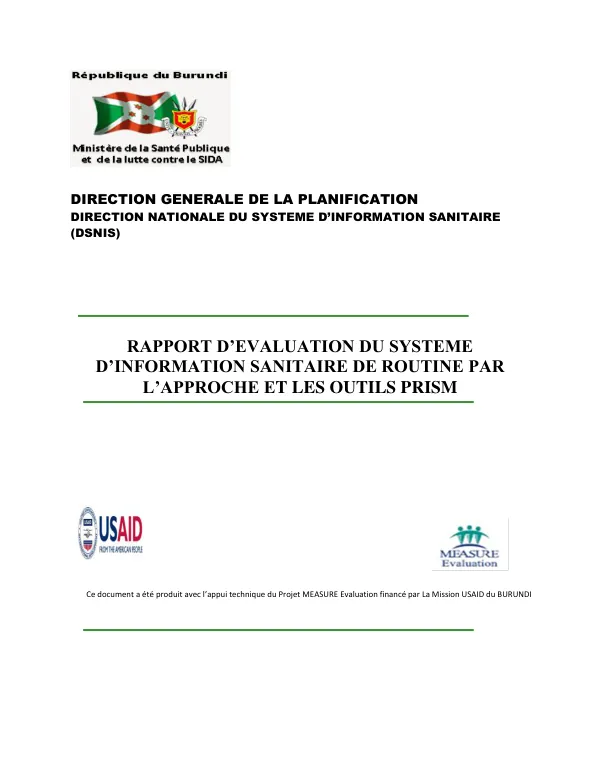
Rapport d'évaluation du système d'information sanitaire de routine par l'approche et les outils PRISM
Sign inFUTURES GROUP INTERNATIONAL, LLC
Rapport d'évaluation du système d'information sanitaire de routine par l'approche et les outils PRISM
The Direction Générale de la Planification and the Direction Nationale du Système d'Information Sanitaire (DSNIS) of Burundi conducted an evaluation of the Routine Health Information System (SISR) using the PRISM approach and tools.
2015 · 129 pages
Sign in to readA free account is required to download.
Abstract
The evaluation was supported by the MEASURE Evaluation project, funded by the USAID Mission in Burundi. The evaluation aimed to assess the performance of the SISR at various levels, including the national, provincial, district, and health facility levels. The study employed a mixed-methods approach, combining both quantitative and qualitative data collection and analysis methods. The evaluation team collected data from various sources, including surveys, interviews, and document reviews. At the national level, the evaluation found that the SISR had a moderate level of performance, with some strengths and weaknesses. The system had a well-defined organizational structure, with clear roles and responsibilities, but faced challenges related to data quality, timeliness, and utilization. The evaluation identified several determinants of the SISR's performance, including the availability of resources, the capacity of the workforce, and the level of support from the government and other stakeholders. At the provincial level, the evaluation found that the SISR performed better in some provinces than others. The provinces with better-performing SISRs had more resources, a more skilled workforce, and stronger support from the government and other stakeholders. The evaluation identified several determinants of the SISR's performance at the provincial level, including the availability of resources, the capacity of the workforce, and the level of support from the government and other stakeholders. At the district level, the evaluation found that the SISR performed poorly in some districts, with limited resources, a lack of skilled workforce, and weak support from the government and other stakeholders. The evaluation identified several determinants of the SISR's performance at the district level, including the availability of resources, the capacity of the workforce, and the level of support from the government and other stakeholders. The evaluation made several recommendations to improve the performance of the SISR, including the strengthening of the organizational structure, the development of a more robust data management system, and the provision of more resources and support to the workforce. The evaluation also recommended the implementation of a more effective monitoring and evaluation system to track the performance of the SISR over time. The evaluation was conducted in collaboration with the MEASURE Evaluation project, which provided technical assistance and support to the evaluation team. The evaluation was funded by the USAID Mission in Burundi, which provided financial support to the evaluation team. The evaluation was conducted in accordance with the principles of the Health Metrics Network (HMN) and the guidelines of the World Health Organization (WHO). The evaluation team consisted of experts from various fields, including health information systems, epidemiology, and statistics. The team used a range of data collection and analysis methods, including surveys, interviews, and document reviews. The evaluation team also used a range of tools and software, including the PRISM approach and the District Health Information Software (DHIS2). The evaluation found that the SISR had several strengths, including a well-defined organizational structure, a clear set of roles and responsibilities, and a robust data management system. However, the evaluation also identified several weaknesses, including limited resources, a lack of skilled workforce, and weak support from the government and other stakeholders. The evaluation was conducted in accordance with the principles of the Health Metrics Network (HMN) and the guidelines of the World Health Organization (WHO). The evaluation team consisted of experts from various fields, including health information systems, epidemiology, and statistics. The team used a range of data collection and analysis methods, including surveys, interviews, and document reviews. The evaluation team also used a range of tools and software, including the PRISM approach and the District Health Information Software (DHIS2).