USAID DEC
Re-imagining National education systems through curricula support: A desk review of how Kenya initiated and scaled the Tusome Early Grade Reading program
Sign inDFID
Re-imagining National education systems through curricula support: A desk review of how Kenya initiated and scaled the Tusome Early Grade Reading program
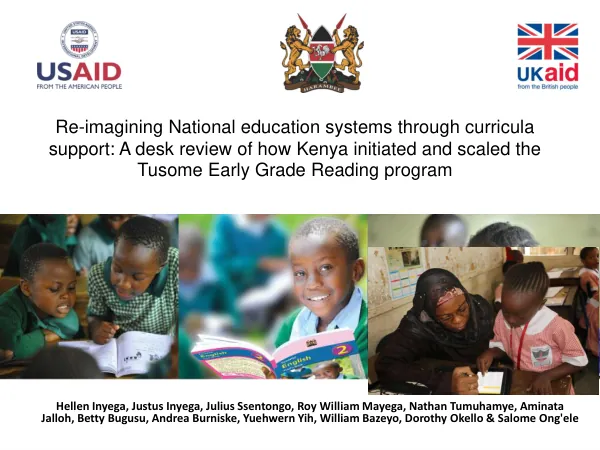
Kenya's national education system has been reimagined through the Tusome Early Grade Reading program, which aimed to improve literacy outcomes for Class 1 and 3 students.
2019 · 23 pages
Sign in to readA free account is required to download.
Abstract
The program was initiated in 2015 and concluded in 2019, with a focus on enhancing teacher capacity, access to textbooks, instructional support, and monitoring and evaluation systems. Tusome's objectives included improving English and Kiswahili literacy outcomes, enhancing teacher capacity, and establishing an effective monitoring and evaluation system. The program was implemented in over 138,000 schools, with more than 3.6 million pupils participating annually. Over 23,800 head teachers and 127,000 teachers received training, and over 23 million textbooks were distributed to schools. Tusome's five key interventions included enhancing teacher capacity, improving access to textbooks and instructional materials, providing instructional support and supervision, integrating information and communications technology, and enhancing collaboration with other literacy actors. The program's focus on these interventions aimed to improve pupils' learning outcomes and literacy outcomes in Kenya.
Connected topics