DEVELOPMENT ALTERNATIVES, INC. (DAI)
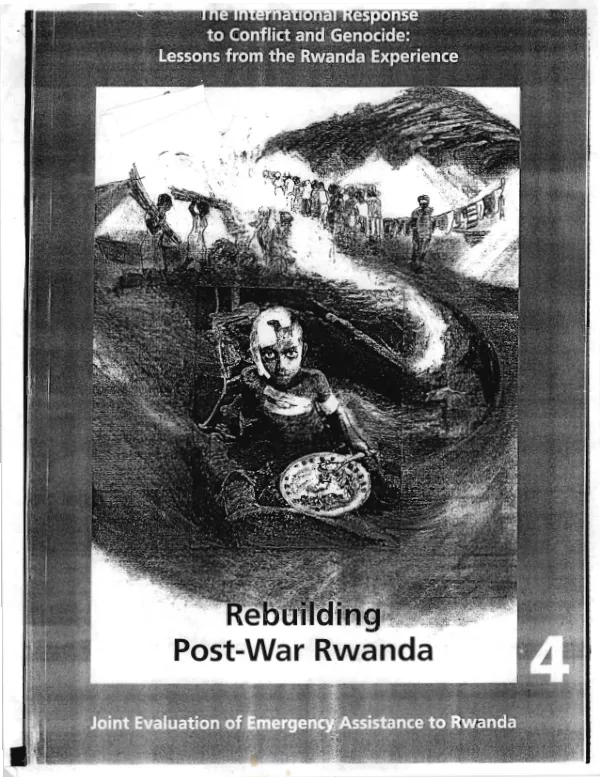
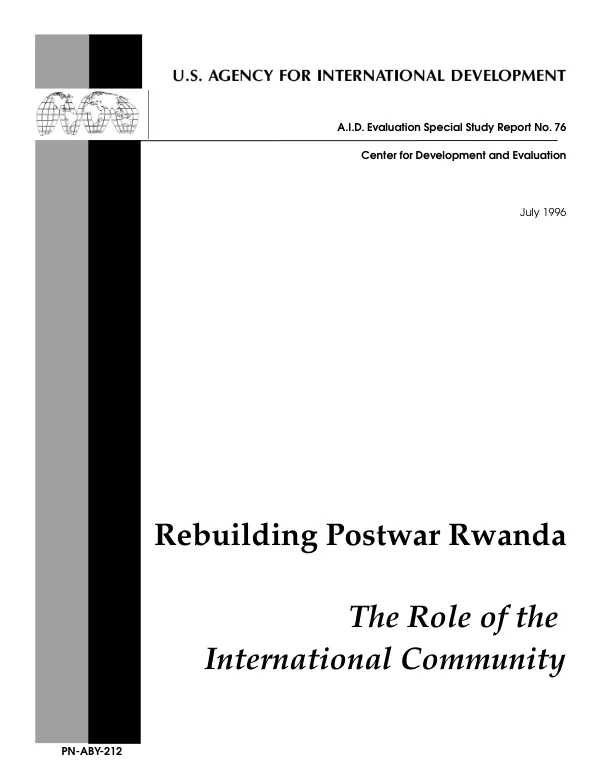
Rebuilding postwar Rwanda : the role of the international community
The crisis in Rwanda, where in 1994 more than half a million people were massacred and untold numbers uprooted from their homes, is one of this century"s most profound and least understood tragedies.
Kumar, Krishna; Tardif-Douglin, David G. · 1996
Sign in to readA free account is required to download.
Abstract
This report seeks to examine the international community"s response. Following consideration of Rwanda"s political, economic, and foreign aid background, the report covers international assistance in the areas of human rights and the judiciary; economics; health and education; interventions for vulnerable groups; the return of refugees and internally displaced persons; and programs for social and psychological healing and reconciliation. Cross-cutting issues, including consequences of the genocide, relations between NGOs and the Rwandan Government, prospects for the return of the refugees, and issues pertaining to Rwanda"s long-term development, are examined next. The report concludes with recommendations for continued assistance to Rwanda, along with the following lessons learned. (1) The international community failed to comprehend the profound social consequences of the genocide. Most lamentable was the rush to promote reconciliation over the understandable resistance of those who suffered immensely. (2) New mechanisms are needed for rapid delivery of rehabilitation assistance during the post-emergency phase. (3) Self-regulation by PVOs would improve impact. Some PVOs lacked the ability to function effectively in developing societies, other failed to coordinate with fellow PVOs and relief agencies, and still others lured experienced staff from the government by offering higher salaries and benefits. (4) Mechanisms for collecting, analyzing, and sharing background information about the crisis need to be institutionalized. For example, in their ignorance of the extent to which political leaders had been involved in the genocide, relief agencies allowed former leaders to deliver assistance in refugee camps -- and thereby reestablish command over the refugees.