USAID
Reintegración Económica en Colombia
The Colombian government and regional authorities collaborated with international organizations to design and implement innovative strategies for vulnerable populations and those in the process of reintegrating into productive activities.
2020 · 1 pages
Sign in to readA free account is required to download.
Abstract
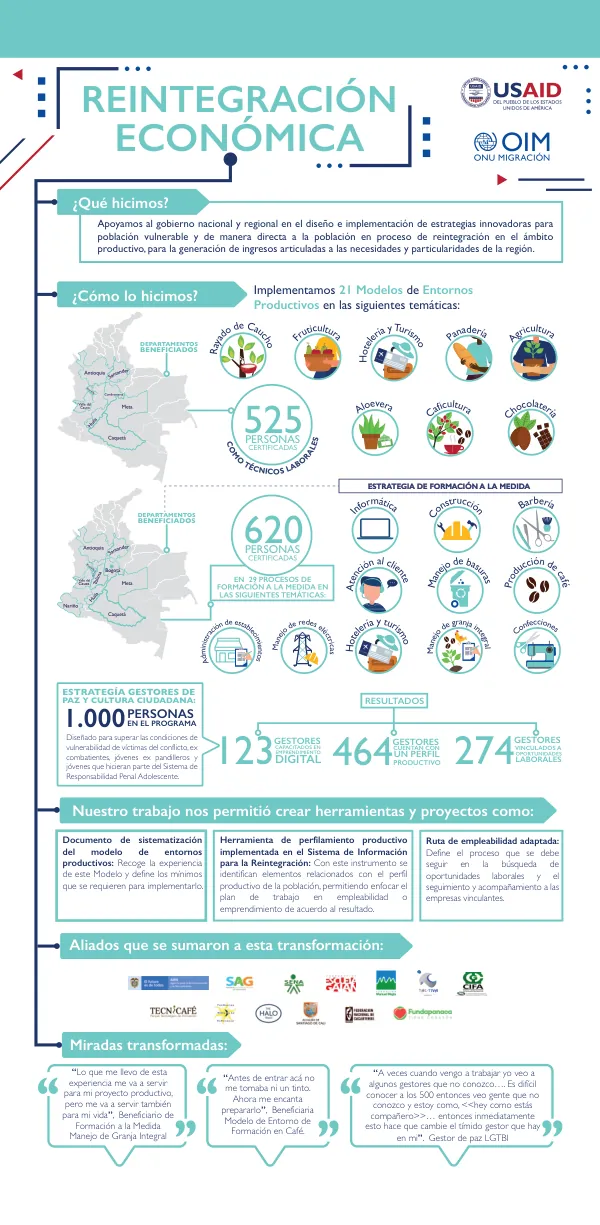
This initiative aimed to generate income opportunities tailored to the needs and specificities of the region. The program implemented 21 Models of Productive Environments in various departments, including Caquetá, Huila, Valle del Cauca, Cundinamarca, Antioquia, Risaralda, and Meta. These models focused on different themes, such as agriculture, livestock, and entrepreneurship. A total of 525 people were certified through these initiatives. The program also provided training and capacity-building opportunities for community leaders and social workers. The training covered various topics, including informatics, construction, barbering, and entrepreneurship. Additionally, the program developed tools and projects, such as the Document of Systematization of the Productive Environments Model, which documented the experience and defined the minimum requirements for implementing the model. The program's results included the certification of 620 people and the involvement of 1,000 individuals in the program. The initiative also trained 123 community leaders in peace and cultural citizenship, 464 in digital entrepreneurship, and 274 in linking opportunities with labor markets. These outcomes demonstrate the program's success in promoting economic development and social inclusion in Colombia. The program's impact was evident in the testimonials of its beneficiaries, who reported positive changes in their lives. For example, a beneficiary of the Formación a la Medida program stated that the experience would serve him not only for his productive project but also for his personal life. Another beneficiary, a woman who participated in the Model of Entorno de Formación en Café, reported that she had developed a new skill and was now able to prepare coffee for her family and friends. The program's success can be attributed to its focus on community-led development and its commitment to providing tailored training and support to vulnerable populations. The initiative's results demonstrate the potential of community-based programs to promote economic development, social inclusion, and peacebuilding in Colombia.