USAID
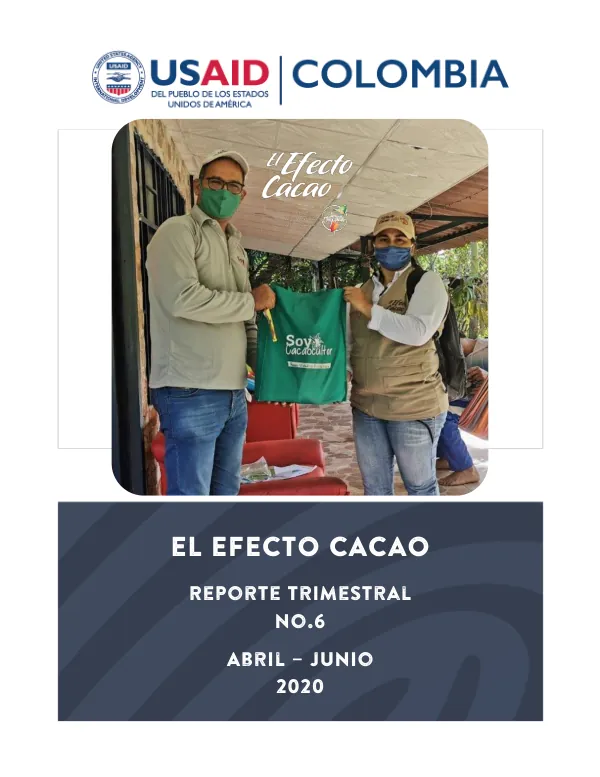
Reporte Anual No.1: El Efecto Cacao
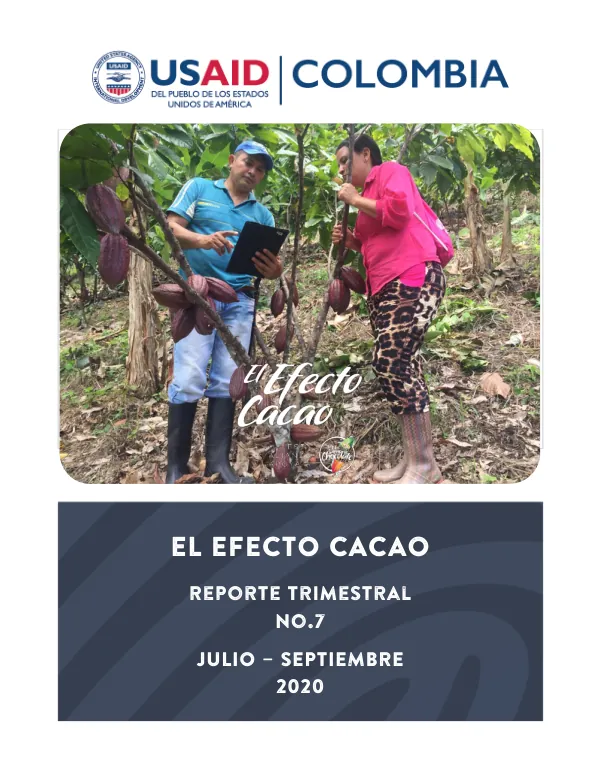
The agricultural development initiative, El Efecto Cacao (TCE), was launched in 2018 with the goal of strengthening the cacao production chain and improving the living conditions of producers and their communities.
2019 · 25 pages
Sign in to readA free account is required to download.

Abstract
The initiative is an alliance between the United States Agency for International Development (USAID), Luker Chocolate, Fundación Luker, Enel-Emgesa, Fundación Saldarriaga Concha, and EAFIT, with a total investment of $35.1 million. TCE focuses on three main components: increasing productivity in cacao crops through the establishment of a demonstration plot in Necoclí, Antioquia, and another in El Agrado, Huila; strengthening associations of cacao producers by improving their technical, commercial, and administrative capacities; and improving the academic, socio-emotional, and resilience skills of the population living near the demonstration plots. During the first year of the initiative, TCE achieved sales of $78.460.060, representing 80% of the target. The initiative also selected 14 associations of cacao producers to participate in the program, with whom it worked to strengthen their organizational capacity and provide training to their members. A total of 557 producers received training in the "Soy Cacaocultor" methodology, and 372 producers were selected to participate in the intervention of planting and/or rehabilitating cacao crops. TCE also established a demonstration plot in Necoclí, where it implemented a model of sustainable cacao production that combines technology and the best varieties of fine and aromatic cacao. The initiative also worked with the SENA, ART, and the Ministry of Agriculture to establish a network of allies and partners. In terms of geographic focus, TCE operates in four subregions: Urabá, Bajo Cauca, Centro-Sur del Huila, and Tumaco. The initiative has a strong presence in the departments of Antioquia and Huila, where it has established partnerships with local organizations and communities. TCE's implementation details include the selection of 446 producers to participate in the intervention of planting and/or rehabilitating cacao crops. Of these, 372 producers signed an agreement of voluntary participation, and all producers from the selected associations were invited to participate in training sessions on cacao technologies. The initiative also worked with the reasentamientos of Enel-Emgesa, with the support of 91 producers. In terms of timeframes, TCE's first year of implementation was from February 2019 to September 2019. The initiative has set a target of intervening in 1,340 hectares of cacao crops by 2024, with 700 hectares currently under intervention. TCE has also established a monitoring system to track the evolution of cacao sales and the use of funds allocated for the development of the initiative. Overall, TCE's first year of implementation has been marked by significant achievements, including the establishment of a demonstration plot, the strengthening of associations of cacao producers, and the improvement of the skills of producers and their communities. The initiative has also established a strong network of allies and partners, and has set a clear direction for its future implementation.