USAID DEC
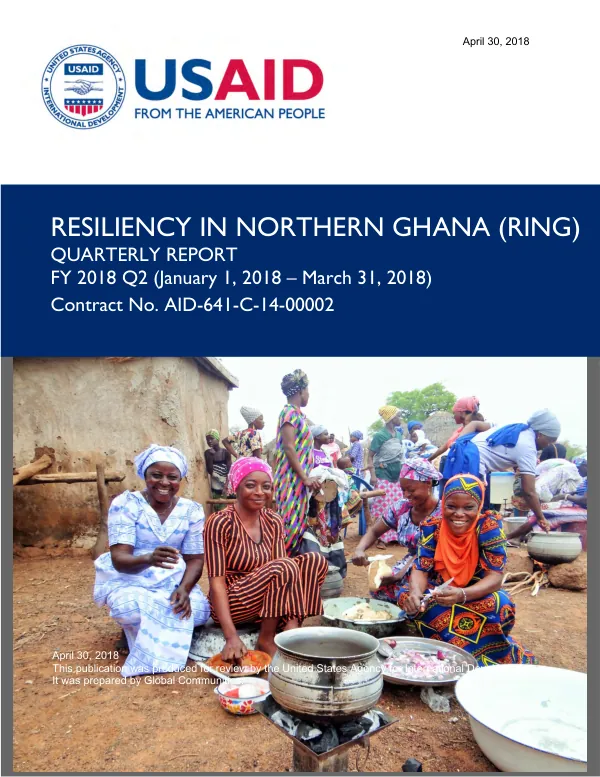
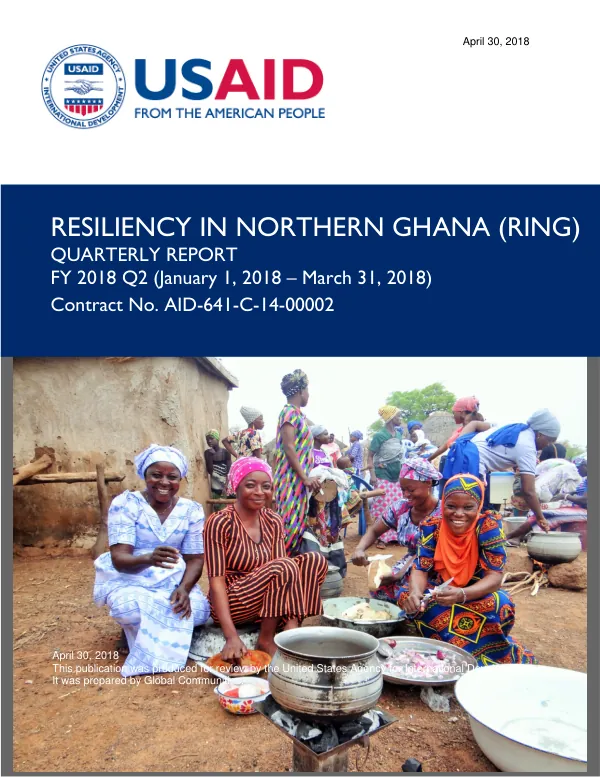
Resiliency in Northern Ghana (RING) Quarterly Report FY 2018 Q2 (January 1, 2018 – March 31, 2018)
Sign inGLOBAL COMMUNITIES
Resiliency in Northern Ghana (RING) Quarterly Report FY 2018 Q2 (January 1, 2018 – March 31, 2018)
Resiliency in Northern Ghana (RING) has made significant progress in improving the lives of rural communities in the Northern Region.
2018 · 111 pages
Sign in to readA free account is required to download.
Abstract
The program, which began in 2015, aims to increase household income, improve food security, and enhance resilience to shocks and stresses. Key achievements include the establishment of 1,200 Village Savings and Loans Associations (VSLAs), which have mobilized over 60,000 members and facilitated savings of over 10 million Ghana cedis. The program has also supported the cultivation of orange-fleshed sweetpotatoes, with over 1,000 hectares of land under cultivation, and the installation of drip irrigation kits, benefiting over 1,500 farmers. In addition to these achievements, RING has made significant progress in improving water, sanitation, and hygiene (WASH) services. The program has supported the construction of over 1,000 household latrines and tippy taps, and has facilitated the triggering of community-led total sanitation (CLTS) in over 100 communities. Furthermore, RING has supported the establishment of 15 water and sanitation management teams (WSMTs), which are responsible for managing and maintaining water and sanitation infrastructure in their respective communities. The program has also made significant progress in improving nutrition outcomes. RING has supported the implementation of the mother-to-mother support group (MTMSG) program, which has reached over 10,000 women and has improved infant and young child feeding practices. The program has also supported the distribution of vitamin A-rich foods, including orange-fleshed sweetpotatoes, to over 5,000 children. In terms of social behavior change communication (SBCC), RING has supported the development and dissemination of a range of materials, including radio dramas, posters, and leaflets, to promote healthy behaviors and practices. The program has also supported the training of over 1,000 community health workers (CHWs) and health extension agents (HEAs) to promote healthy behaviors and practices. Overall, RING has made significant progress in improving the lives of rural communities in the Northern Region. The program's achievements in agriculture, WASH, nutrition, and SBCC have had a positive impact on household income, food security, and resilience to shocks and stresses. The program has also made significant progress in terms of monitoring and evaluation. RING has established a robust monitoring and evaluation system, which includes regular data collection and analysis, to track progress and identify areas for improvement. The program has also conducted a range of evaluations, including a mid-term evaluation and an end-line evaluation, to assess the impact of the program. In terms of implementation, RING has worked closely with a range of stakeholders, including government agencies, non-governmental organizations (NGOs), and community-based organizations (CBOs). The program has also supported the development of a range of capacity-building initiatives, including training programs and workshops, to build the capacity of local stakeholders.