GLOBAL COMMUNITIES
WASH for Health Project FY18 Quarterly Report
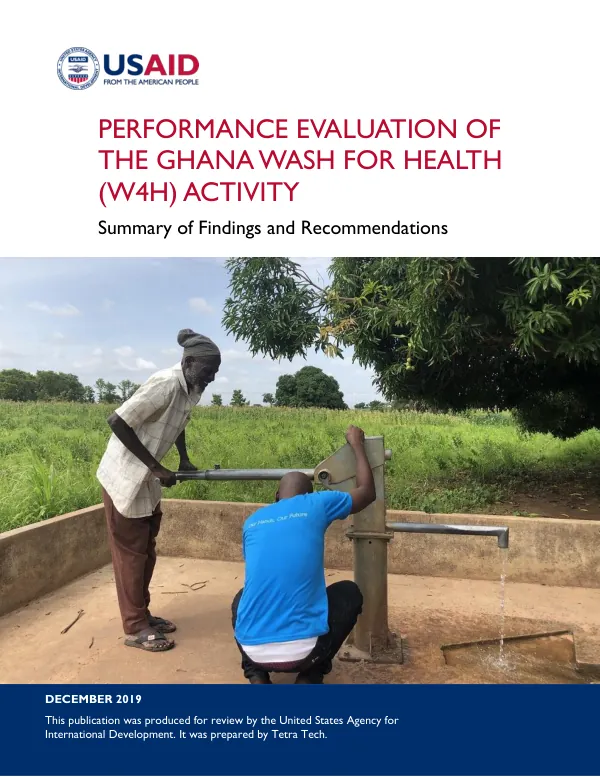
The WASH for Health Project is a five-year initiative aimed at accelerating sustainable improvements in water and sanitation access and promoting hygiene behaviors in target districts in Ghana.
2018 · 40 pages
Sign in to readA free account is required to download.
Abstract
The project, awarded to Global Communities in February 2015, is in its third year of implementation. The project's goal is to improve access to safe drinking water, sanitation facilities, and hygiene practices, ultimately contributing to better health outcomes and improved quality of life for the target population. During the reporting period, October 1, 2017 to December 31, 2017, the project continued to focus on its core objectives, with a particular emphasis on scaling down to 17 districts from the initial 23. This strategic decision was made to maximize effective implementation and ensure that the project's resources were utilized efficiently. The project's activities were concentrated in the five targeted regions, including Greater Accra, Northern, Volta, Central, and Western Regions. The project's progress during the reporting period was marked by several key accomplishments. These included the completion of a comprehensive assessment of the project's impact, which provided valuable insights into the effectiveness of the project's interventions. Additionally, the project made significant strides in promoting community-led total sanitation (CLTS) approaches, which have been shown to be effective in achieving open defecation-free (ODF) status in target communities. The project also continued to engage with local stakeholders, including community-based organizations (CBOs), civil society organizations (CSOs), and government agencies. These partnerships were instrumental in facilitating the project's activities and ensuring that the project's interventions were aligned with the needs and priorities of the target communities. Despite the project's progress, several challenges were encountered during the reporting period. These included difficulties in accessing remote communities, limited resources, and the need for more effective communication and coordination among project stakeholders. However, the project's team worked diligently to address these challenges and ensure that the project's objectives were met. The project's sustainability was also a key focus area during the reporting period. Efforts were made to strengthen the capacity of local institutions and ensure that the project's interventions were sustainable in the long term. This included the provision of technical assistance and training to local stakeholders, as well as the development of a comprehensive sustainability plan. In terms of financial management, the project remained within its budget, with a total expenditure of $1.2 million during the reporting period. The project's financial performance was closely monitored, and adjustments were made as necessary to ensure that the project's resources were utilized efficiently. Overall, the WASH for Health Project made significant progress during the reporting period, with a focus on scaling down to 17 districts and promoting community-led total sanitation approaches. The project's activities were concentrated in the five targeted regions, and efforts were made to strengthen the capacity of local institutions and ensure the project's sustainability.