MISIÓN DE OBSERVACIÓN ELECTORAL
Resultados Elecciones Presidenciales 2014
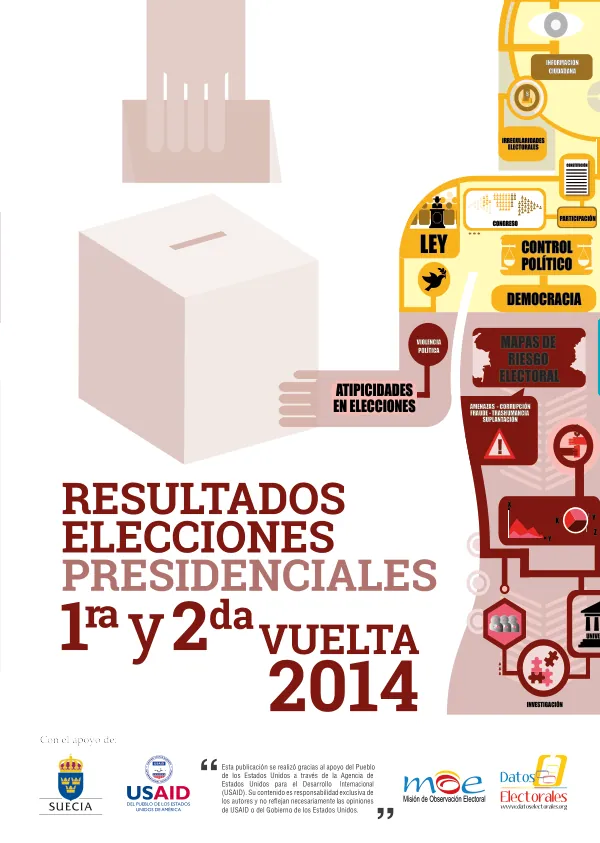
The electoral risk maps in Colombia are a critical tool for understanding the complexities of the electoral process.
2014 · 54 pages
Sign in to readA free account is required to download.
Abstract
These maps identify areas of high risk, including corruption, fraud, and violence, which can impact the integrity of the electoral process. The maps also highlight atypicalities in elections, such as irregularities and lack of participation. The 2014 presidential election in Colombia was a significant event, with Juan Manuel Santos ultimately emerging as the winner. The election was marked by a high level of participation, with 47.97% of eligible voters casting their ballots. The results showed that Santos won the election with 50.98% of the vote, while his opponent, Óscar Iván Zuluaga, received 45.02% of the vote. The election was also notable for the high level of participation among women. According to the data, 51.95% of eligible voters were women, and they made up 48.05% of the total vote. The election also saw a significant increase in the number of voters in the exterior, with 1.890 mesas installed and 217 puestos installed. The census electoral data for 2014 showed that there were 32.975.158 potential voters in Colombia, with 15.845.390 men and 17.129.768 women. The data also showed that there were 34.088.000 tarjetas electorales, including 33.000.000 regular tarjetas and 88.000 Braille tarjetas. The election was also marked by a high level of participation among voters in the exterior. According to the data, 51.95% of eligible voters in the exterior cast their ballots, with 48.05% voting for Santos and 45.02% voting for Zuluaga. The data also showed that the department of Cundinamarca had the highest percentage of potential voters, with 0.49% of the total. The election was also notable for the high level of participation among voters in the department of Tolima, which had a 4.33% percentage of potential voters. The data also showed that the department of Bolívar had a 4.33% percentage of potential voters, with 0.85% of the total voting for Santos and 0.72% voting for Zuluaga. The election was also marked by a high level of participation among voters in the department of Norte de Santander, which had a 1.56% percentage of potential voters. The data also showed that the department of La Guajira had a 1.56% percentage of potential voters, with 0.07% of the total voting for Santos and 0.16% voting for Zuluaga. The election was also notable for the high level of participation among voters in the department of Cauca, which had a 2.67% percentage of potential voters. The data also showed that the department of Nariño had a 2.67% percentage of potential voters, with 0.13% of the total voting for Santos and 0.14% voting for Zuluaga. The election was also marked by a high level of participation among voters in the department of Valle, which had a 2.67% percentage of potential voters. The data also showed that the department of Caldas had a 2.67% percentage of potential voters, with 0.13% of the total voting for Santos and 0.14% voting for Zuluaga. The election was also marked by a high level of participation among voters in the department of Boyacá, which had a 1.56% percentage of potential voters. The data also showed that the department of Vichada had a 1.56% percentage of potential voters, with 0.07% of the total voting for Santos and 0.16% voting for Zuluaga. The election was also notable for the high level of participation among voters in the department of Guainía, which had a 1.56% percentage of potential voters. The data also showed that the department of Vaupés had a 1.56% percentage of potential voters, with 0.07% of the total voting for Santos and 0.16% voting for Zuluaga. The election was also marked by a high level of participation among voters in the department of Amazonas, which had a 1.56% percentage of potential voters. The data also showed that the department of Putumayo had a 1.56% percentage of potential voters, with 0.