USAID|MALAWI
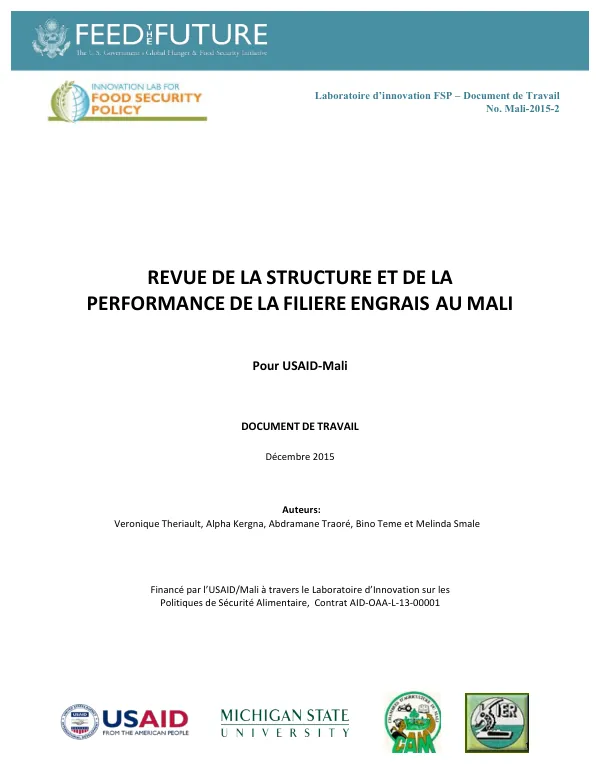
Revue de la structure et de la performance de la filière engrais au Mali
The fertilizer sector in Mali is a critical component of the country's agricultural development.
2015 · 58 pages
Sign in to readA free account is required to download.
Abstract
The sector's performance is influenced by a range of factors, including the availability of fertilizers, market demand, and government policies. This document provides an overview of the fertilizer sector in Mali, including its structure, performance, and challenges. The fertilizer sector in Mali is characterized by a complex supply chain, with multiple actors involved in the production, importation, and distribution of fertilizers. The sector is dominated by a few key players, including the Compagnie Malienne de Développement des Textiles (CMDT), which is the largest producer and distributor of fertilizers in the country. Other key players in the sector include the Société Malienne de l'Azote (SMA) and the Société Malienne de la Potasse (SMP). The demand for fertilizers in Mali is driven by the country's growing agricultural sector, which is characterized by a high level of dependence on imported fertilizers. The country's farmers rely heavily on fertilizers to improve crop yields and productivity, particularly for staple crops such as maize, rice, and sorghum. However, the availability of fertilizers in the country is often limited, particularly in rural areas, due to inadequate transportation infrastructure and limited access to credit. The government of Mali has implemented a range of policies aimed at improving the performance of the fertilizer sector. These policies include the development of a national fertilizer strategy, which aims to increase the availability of fertilizers in the country and improve their quality. The government has also implemented a range of initiatives aimed at promoting the use of organic fertilizers and improving the efficiency of fertilizer use among farmers. Despite these efforts, the fertilizer sector in Mali continues to face a range of challenges, including limited access to credit, inadequate transportation infrastructure, and limited availability of fertilizers. The sector is also characterized by a high level of inefficiency, with a significant proportion of fertilizers being wasted due to poor application practices and inadequate storage facilities. The performance of the fertilizer sector in Mali is measured through a range of indicators, including the availability of fertilizers, market prices, and crop yields. The sector's performance is also influenced by a range of external factors, including changes in global fertilizer prices and the impact of climate change on agricultural productivity. In terms of access to fertilizers, the sector faces significant challenges, particularly in rural areas. The country's farmers often rely on informal markets to access fertilizers, which can be expensive and of poor quality. The government has implemented a range of initiatives aimed at improving access to fertilizers, including the development of a national fertilizer distribution network and the provision of subsidies to farmers to purchase fertilizers. The prices of fertilizers in Mali are influenced by a range of factors, including global market prices, transportation costs, and taxes. The prices of fertilizers are often high, particularly for small-scale farmers, which can limit their access to these essential inputs. The government has implemented a range of initiatives aimed at reducing the prices of fertilizers, including the provision of subsidies to farmers and the development of a national fertilizer pricing policy. In terms of productivity, the fertilizer sector in Mali faces significant challenges, particularly in terms of the efficiency of fertilizer use among farmers. The country's farmers often apply fertilizers in excess of recommended rates, which can lead to environmental pollution and reduced crop yields. The government has implemented a range of initiatives aimed at improving the efficiency of fertilizer use, including the development of a national fertilizer use policy and the provision of training to farmers on best practices in fertilizer application. The competitiveness of the fertilizer sector in Mali is influenced by a range of factors, including the availability of fertilizers, market prices, and the efficiency of fertilizer use among farmers. The sector faces significant challenges, particularly in terms of competition from imported fertilizers and the limited availability of domestic fertilizers. The government has implemented a range of initiatives aimed at improving the competitiveness of the sector, including the development of a national fertilizer strategy and the provision of subsidies to farmers to purchase fertilizers. In conclusion, the fertilizer sector in Mali is a critical component of the country's agricultural development. The sector faces significant challenges, including limited access to credit, inadequate transportation infrastructure, and limited availability of fertilizers. The government has implemented a range of initiatives aimed at improving the performance of the sector, including the development of a national fertilizer strategy and the provision of subsidies to farmers to purchase fertilizers. However, the sector continues to face significant challenges, and further efforts are needed to improve its performance and competitiveness.