MINISTRY OF HEALTH
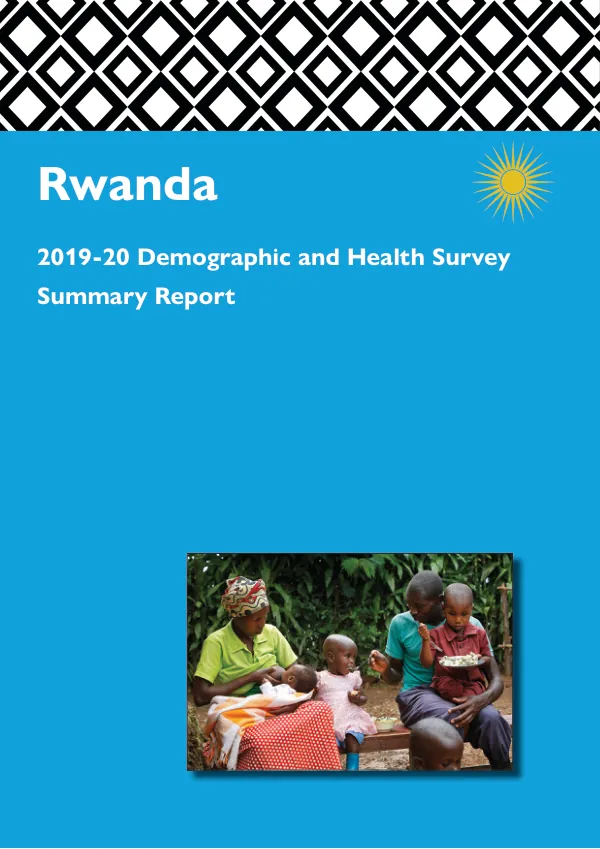
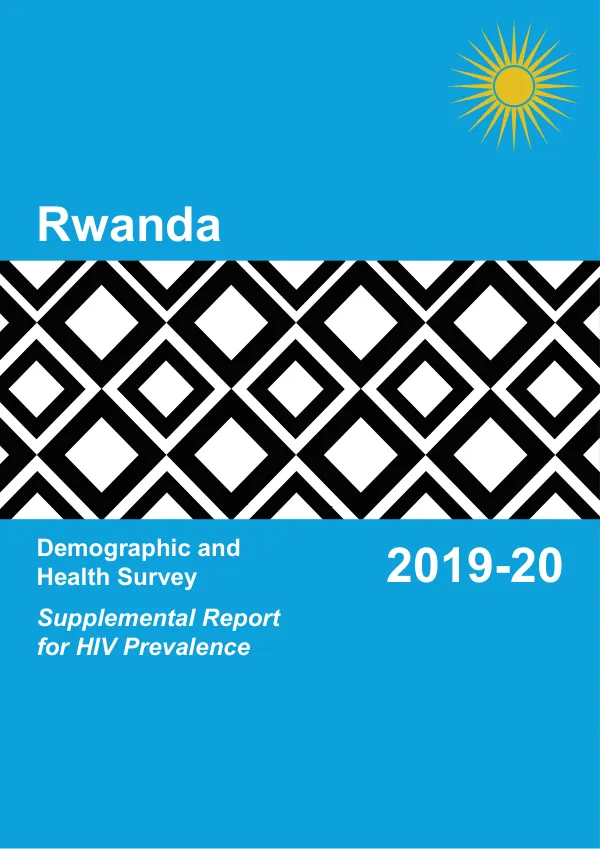
Rwanda Demographic and Health Survey 2019-20 Supplemental Report on HIV Prevalence
The Rwanda Demographic and Health Survey 2019-20 Supplemental Report for HIV Prevalence was implemented by the National Institute of Statistics of Rwanda (NISR) in collaboration with the Ministry of Health (MOH).
2023 · 49 pages
Sign in to readA free account is required to download.
Abstract
The survey aimed to provide data on HIV prevalence, coverage of HIV testing, and other related indicators. Funding for the survey was provided by various organizations, including the Government of Rwanda, the United States Agency for International Development (USAID), the United Nations Children's Fund (UNICEF), and the U.S. Centers for Disease Control and Prevention (CDC). The survey used a multi-stage sampling design, with a sample of 12,444 women and 4,444 men aged 15-49 years. The survey included a range of questionnaires, including household and individual interviews, anthropometry, anemia, malaria, HIV, and micronutrient testing. The survey also included pretest, training of field staff, and fieldwork, as well as data processing and response rates. The survey found that the coverage of HIV testing was 93.4% among women and 92.1% among men. The HIV prevalence was 3.5% among women and 2.5% among men. The prevalence of HIV was higher among women aged 25-34 years (4.3%) and men aged 25-34 years (3.3%). The prevalence of HIV was also higher among women who had multiple sexual partners (6.3%) and men who had multiple sexual partners (5.1%). The survey found that the prevalence of HIV was higher among young people aged 15-24 years, with 1.4% of women and 1.1% of men testing positive for HIV. The prevalence of HIV was also higher among women who had symptoms of sexually transmitted infections (STIs) and prior HIV testing (4.5%). The survey found that the prevalence of HIV was lower among men who had been circumcised (1.8%). The survey also found that the prevalence of HIV was higher among couples, with 4.5% of couples testing positive for HIV. The survey found that the coverage of HIV testing was higher among women who had completed secondary education (95.6%) and men who had completed secondary education (94.5%). The survey provides data on HIV prevalence, coverage of HIV testing, and other related indicators, which can be used to inform HIV prevention and treatment programs in Rwanda. The survey highlights the importance of increasing HIV testing coverage, particularly among young people and those with multiple sexual partners. The survey also highlights the need to increase access to HIV prevention and treatment services, particularly among those who are most vulnerable to HIV infection.