USAID DEC
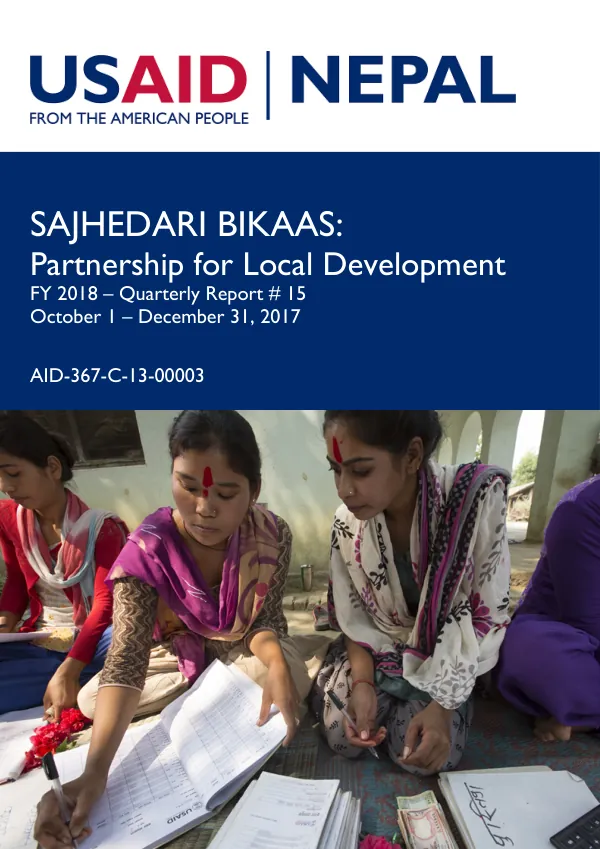
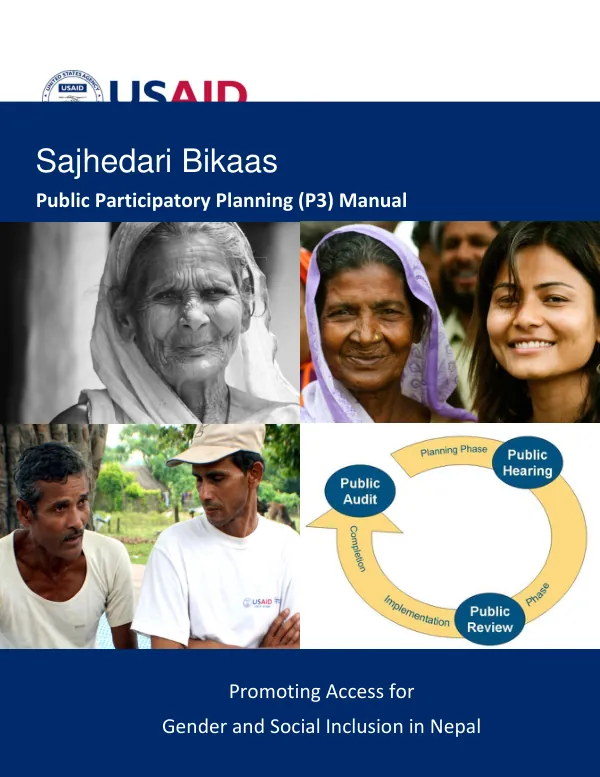
Sajhedari Bikaas Public Participatory Planning (P3) Manual Promoting Access for Gender and Social Inclusion in Nepal
Sign inGOVERNMENT OF SENEGAL
Sajhedari Bikaas Public Participatory Planning (P3) Manual Promoting Access for Gender and Social Inclusion in Nepal
The Sajhedari Bikaas Public Participatory Planning (P3) Manual is a comprehensive guide for promoting access to gender and social inclusion in Nepal.
2013 · 66 pages
Sign in to readA free account is required to download.
Abstract
The manual is designed to support the needs of the Sajhedari Bikaas project and ensure that partners, including District Non-Governmental Organization (DNGO) staff, Government of Nepal (GON) officials, Social Mobilizers, and other stakeholders, are able to perform their roles and responsibilities effectively. The manual explains the Community Development System in Nepal and trains staff on the 14-Point Planning Process used by the Ministry of Federal Affairs and Local Development (MFALD). It also illustrates the tools and local accountability systems promoted at the Village Development Committee (VDC) and District Development Committee (DDC) levels to support the Local Self Governance Act (LSGA). The LSGA provides regulations and guidance for local government officials to administer the planning and development process in Nepal. The manual focuses on Social and Community Mobilization and its role in creating inclusion and participation in the annual planning process in Nepal. It also emphasizes the importance of transparency and accountability in the planning process. The manual and tools included are designed to be useful for project management staff, community groups, and non-governmental organizations that support the objectives of Sajhedari Bikaas. The training objectives of the manual are to support the needs of the Sajhedari Bikaas project and ensure that partners are able to perform their roles and responsibilities effectively. A Training of Trainers (TOT) approach is used to ensure replication and scale over the life of the project. This approach also supports the transfer of lessons and skills to the Ward and Settlement level. The manual is divided into several sections, including empowerment and public planning, gender equality and social inclusion, resource mobilization and planning, and implementing access. Each section provides detailed information on the relevant topics and includes tools and resources to support the planning process. The Sajhedari Bikaas project aims to promote access to gender and social inclusion in Nepal by supporting the development of local governance and community development programs. The project focuses on empowering local communities to take ownership of their development and promoting transparency and accountability in the planning process. The manual is a valuable resource for anyone involved in the planning and development process in Nepal, including project management staff, community groups, and non-governmental organizations. It provides a comprehensive guide to the Community Development System in Nepal and the 14-Point Planning Process used by the MFALD. It also emphasizes the importance of social and community mobilization and transparency and accountability in the planning process. The Sajhedari Bikaas project is supported by the United States Agency for International Development (USAID) and aims to promote access to gender and social inclusion in Nepal. The project focuses on empowering local communities to take ownership of their development and promoting transparency and accountability in the planning process.