GOVERNMENT OF SENEGAL
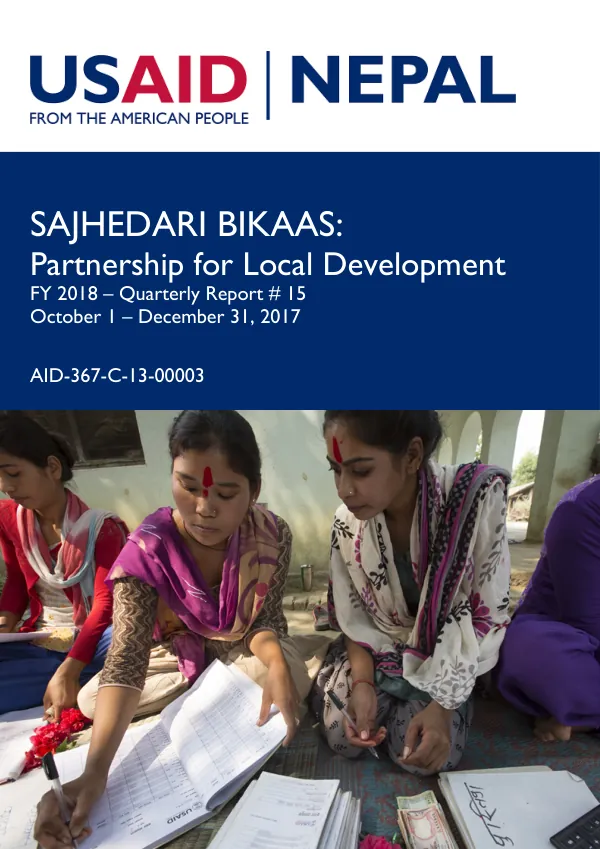
SAJHEDARI BIKAAS: Partnership for Local Development FY 2018 – Quarterly Report # 15
The Partnership for Local Development, SAJHEDARI BIKAAS, is a program aimed at promoting local development in Nepal.
2018 · 59 pages
Sign in to readA free account is required to download.
Abstract
The program is funded by the United States Agency for International Development (USAID) and is implemented in collaboration with various local and national stakeholders. The program's primary objective is to establish and improve the enabling environment for community development, improve communities' ability to access resources for development, and enhance their capacity to effectively implement inclusive development projects. The program's quarterly report for October 1 to December 31, 2017, highlights the progress made towards achieving the program's objectives. In terms of establishing and improving the enabling environment for community development, the program has made significant progress in institutionalizing early responses to address causes and consequences of instability. This has been achieved through the establishment of community mediation centers (CMCs) and the training of community mediators (CMs). The program has also made progress in improving communities' ability to access resources for development. This has been achieved through the establishment of inclusive community strategic planning processes and the development of strategic community development plans. The program has also supported the Internal Revenue Assessment and Projection (IRAP) process, which aims to improve the financial management of local governments. In terms of improving communities' ability to effectively implement inclusive development projects, the program has made progress in institutionalizing mechanisms for transparent administration of funds. This has been achieved through the establishment of systems for monitoring and evaluation (M&E) and the adoption of inclusive management systems. The program has also established systems for sustainability, which aim to ensure that development projects are sustained over time. The program has also made progress in increasing the ability of existing and new government units to function effectively. This has been achieved through the training of local government officials and the provision of technical assistance to support the implementation of local governance and community development programs. Despite the progress made, the program faces several challenges and constraints. These include staff turnover and replacement, provincial and federal elections, and coordination with the Ministry of Federal Affairs and Local Development (MoFALD). The program's financial report for the quarter highlights the major category expenditures, including personnel costs, program expenses, and overhead costs. The program has also made significant progress in terms of community development activities. The program has supported the establishment of community mediation centers (CMCs) and the training of community mediators (CMs). The program has also supported the development of strategic community development plans and the implementation of inclusive development projects. The program's quarterly report highlights the progress made in terms of community development activities. The report notes that the program has supported the establishment of 15 CMCs and the training of 150 CMs. The program has also supported the development of strategic community development plans in 10 districts and the implementation of inclusive development projects in 5 districts. The program's quarterly report also highlights the progress made in terms of gender equality and social inclusion (GESI). The report notes that the program has supported the establishment of women's groups and the training of women in leadership and management skills. The program has also supported the development of strategic plans for women's empowerment and the implementation of projects that promote GESI. Overall, the Partnership for Local Development, SAJHEDARI BIKAAS, has made significant progress towards achieving its objectives. The program has established and improved the enabling environment for community development, improved communities' ability to access resources for development, and enhanced their capacity to effectively implement inclusive development projects. Despite the challenges and constraints faced by the program, the progress made is a testament to the program's commitment to promoting local development in Nepal.