GIZ
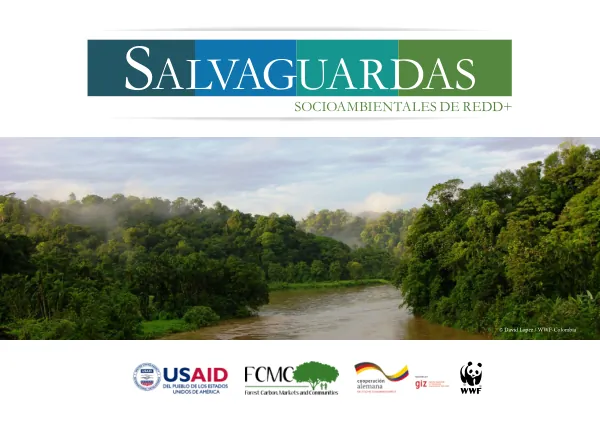
Salvaguardas Socioambientales de REDD+
The development of a National Framework for Social and Environmental Safeguards for REDD+ in Colombia is a critical component of the country's efforts to address climate change.
2014 · 24 pages
Sign in to readA free account is required to download.
Abstract
The framework aims to ensure that the rights of communities and the protection of biodiversity are prioritized in the implementation of REDD+ initiatives. The process of developing the framework involved the participation of various stakeholders, including community organizations, a multidisciplinary group of experts, and a team of consultants. The framework was developed through a four-stage process: the construction of a baseline, the development of a proposal for principles and criteria, the definition of the principles and criteria for Colombia, and the provision of recommendations for the development of a System of Information for Safeguards (SIS) for Colombia. The framework is based on the principles of the United Nations Framework Convention on Climate Change (UNFCCC), which emphasizes the importance of social and environmental safeguards in the implementation of REDD+ initiatives. The framework aims to mitigate the risks associated with REDD+ and promote the benefits of these activities, which go beyond carbon capture, including the protection of biodiversity, security of land tenure, empowerment of stakeholders, and the strengthening of forest governance. The framework is composed of a set of principles and criteria that are designed to ensure the effective implementation of REDD+ initiatives in Colombia. The principles and criteria are based on the results of a thorough analysis of the risks and benefits associated with REDD+ and the experiences of other countries that have implemented similar initiatives. The framework is intended to serve as a tool for the government, community organizations, and other stakeholders involved in REDD+ initiatives in Colombia. It is expected to facilitate the development of these initiatives and ensure that they are implemented in a way that is consistent with the principles and criteria outlined in the framework. The development of the framework was supported by the German Agency for International Cooperation (GIZ) and the Forest Carbon, Markets and Communities (FCMC) program, with the accompaniment of the Ministry of Environment and Sustainable Development (MADS). The framework is the result of the collective work and participation of many individuals and institutions, and it is intended to be a useful tool for the development of REDD+ initiatives in Colombia. The framework is based on the following key principles: * The protection of the rights of communities and the protection of biodiversity are prioritized in the implementation of REDD+ initiatives. * The framework is designed to ensure the effective implementation of REDD+ initiatives in Colombia. * The framework is based on the principles of the UNFCCC and the experiences of other countries that have implemented similar initiatives. * The framework is intended to serve as a tool for the government, community organizations, and other stakeholders involved in REDD+ initiatives in Colombia. The criteria are as follows: * The framework is designed to ensure the protection of the rights of communities and the protection of biodiversity in the implementation of REDD+ initiatives. The development of the framework was a collaborative effort involving various stakeholders, including community organizations, a multidisciplinary group of experts, and a team of consultants. The framework is the result of the collective work and participation of many individuals and institutions, and it is intended to be a useful tool for the development of REDD+ initiatives in Colombia. The framework is expected to facilitate the development of REDD+ initiatives in Colombia and ensure that they are implemented in a way that is consistent with the principles and criteria outlined in the framework. The framework is also expected to promote the benefits of REDD+ initiatives, including the protection of biodiversity, security of land tenure, empowerment of stakeholders, and the strengthening of forest governance. The framework is based on the following key recommendations: * The government, community organizations, and other stakeholders involved in REDD+ initiatives in Colombia should work together to develop a comprehensive framework for the implementation of REDD+ initiatives. * The framework should be designed to ensure the effective implementation of REDD+ initiatives in Colombia. The development of the framework was supported by the German Agency for International Cooperation (GIZ) and the Forest Carbon, Markets and Communities (FCMC) program, with the accompaniment of the Ministry of Environment and Sustainable Development
Related documents