CATHOLIC RELIEF SERVICES ORGANIZATION
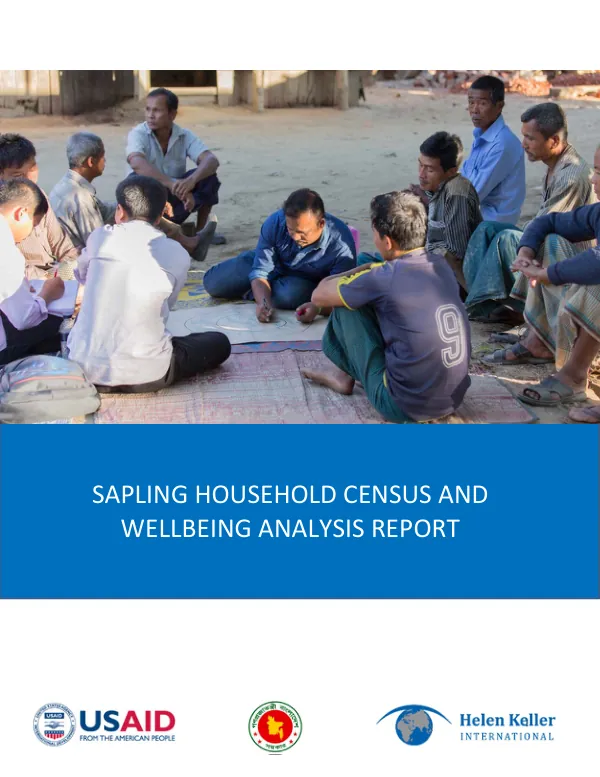
SAPLING Household Census and Wellbeing Analysis Report
The SAPLING Household Census and Wellbeing Analysis Report is a comprehensive study conducted by Helen Keller International (HKI) in collaboration with the Ministry of Chittagong Hill Tracts Affairs (MOCHTA) and other local implementing partners.
2018 · 67 pages
Sign in to readA free account is required to download.
Abstract
The report aims to assess the socio-economic profile of households in the Chittagong Hill Tracts (CHT) region of Bangladesh and to identify key factors influencing their wellbeing. The study employed a mixed-methods approach, combining both qualitative and quantitative data collection methods. A household census was conducted in 2015, which collected data on various aspects of household demographics, income sources, access to facilities, and land productivity. The data was collected using a standardized household census questionnaire, which was administered to a sample of 1,500 households in the CHT region. The report presents a detailed analysis of the socio-economic profile of the households in the CHT region. The data reveals that the average household size in the region is 5.3 members, with a majority of households (63.4%) residing in the Chittagong Hill Tracts. The age and sex distribution of the household members shows a high proportion of children under the age of 18 (44.1%), with a slight majority of females (51.3%) in the household. The report also highlights the importance of education in the region, with a significant proportion of households (71.4%) having at least one member with some level of education. However, the data also reveals a high level of illiteracy, with 28.6% of households having no literate members. The report further notes that a significant proportion of households (43.1%) rely on agriculture as their primary source of income, while 21.4% of households engage in non-agricultural activities. The report also presents an analysis of access to facilities in the region, including mobile access, access to electricity, and access to solar facilities. The data reveals that a significant proportion of households (63.4%) have access to mobile phones, while 45.1% of households have access to electricity. However, the report notes that a significant proportion of households (54.5%) do not have access to solar facilities. The report also presents an analysis of land productivity in the region, including land ownership, homestead production, and jhum cultivation. The data reveals that a significant proportion of households (71.4%) own land, while 45.1% of households engage in homestead production. However, the report notes that a significant proportion of households (43.1%) rely on jhum cultivation as their primary source of income. The report concludes that the SAPLING project has made significant progress in improving the socio-economic profile of households in the CHT region. The project has increased access to education, improved access to healthcare, and enhanced the livelihoods of households in the region. However, the report notes that there are still significant challenges to be addressed, including poverty, illiteracy, and limited access to facilities. The report recommends that the SAPLING project continue to focus on improving access to education, healthcare, and livelihoods for households in the CHT region. The report also recommends that the project work to address the root causes of poverty and illiteracy in the region, including limited access to facilities and lack of economic opportunities. The report was submitted to the United States Agency for International Development (USAID) on September 30, 2018, as part of the cooperative agreement No. AID-FFP-A-15-00010. The report is a comprehensive analysis of the socio-economic profile of households in the CHT region and provides valuable insights into the challenges and opportunities facing households in the region.
Related documents
Documents in this collection
 2018
2018USAID DEC
Sustainable Agriculture and Production Linked to Improved Nutrition Status, Resilience and Gender Equity (SAPLING) Quarterly Performance Report January – March 2018
Open record 2018
2018USAID DEC