USAID DEC
Scaling Up Kenyan Fair Trade Macadamia Exports
Scaling Up Kenyan Fair Trade Macadamia Exports is a project implemented by Ten Senses Africa Ltd.
2011 · 3 pages
Sign in to readA free account is required to download.
Abstract
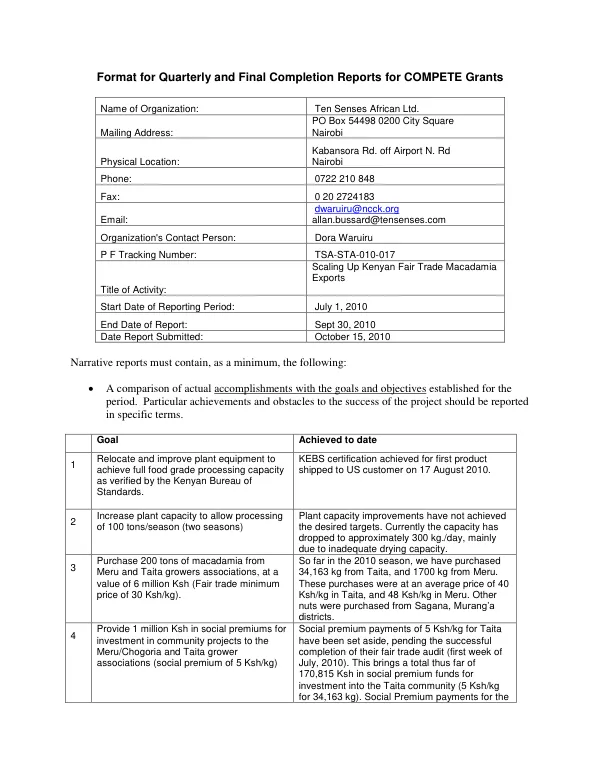
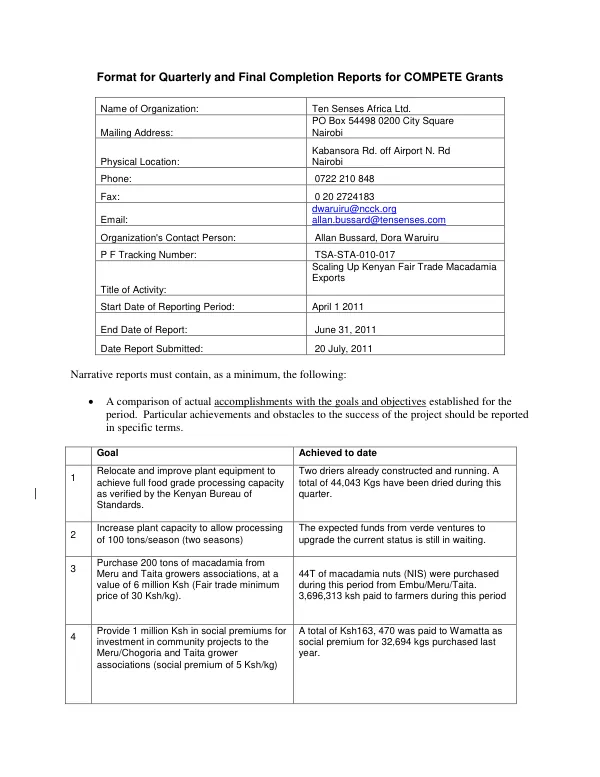
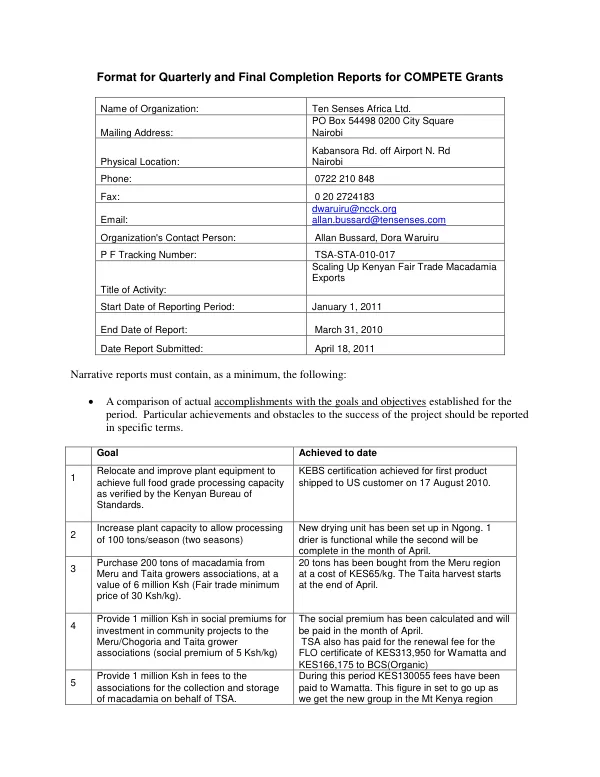
in collaboration with various stakeholders. The project aims to improve the livelihoods of small-scale macadamia farmers in Kenya by increasing their access to fair trade markets and providing them with technical assistance to enhance their productivity and quality of production. The project has made significant progress in achieving its objectives. One of the key achievements is the relocation and improvement of plant equipment to achieve full food-grade processing capacity, as verified by the Kenyan Bureau of Standards. KEBS certification was achieved for the first product shipped to a US customer on August 17, 2010. Additionally, the project has increased plant capacity to allow for the processing of 100 tons per season, with a new drying unit set up in Ngong and two dryers operational by April 2011. The project has also made progress in purchasing macadamia from Meru and Taita growers associations, with 20 tons bought from the Meru region at a cost of KES65/kg. The social premium has been calculated and will be paid in April 2011, totaling KES1 million. Furthermore, the project has achieved Fair Trade certification for the Taita grower association, WAMATTA, which is the first macadamia farmer group in the world to be Fair Trade certified. The project has also provided technical assistance to farmers in Meru and Taita, resulting in a decrease in rejection rates and an increase in yield. Additionally, awareness training is ongoing among various clusters in the Mt Kenya region, undertaken by Farm to Fork Ltd. The project has also exported 50 MT of processed nuts, with at least 30 tons to the US market, representing a sales goal of $240,000 or KES17 million. The project has also made progress in creating stable employment for at least 35 staff in the Nairobi factory, with 60 workers in two shifts, including 5 permanent positions and the rest casual positions. The project has also created a social enterprise that models corporate social responsibility in Kenya, with the TSA board committed to providing financial and in-kind support to an orphanage in the Kawangware slum in Nairobi. However, the project has faced some challenges, including cost overruns, particularly the Organic Audit, which overspent by $690. The project is in discussion with Verde Ventures and SlovakAid to consider supporting the revision of the organic audit in 2011. Additionally, the project has increased its drying capacity from 9.5 tons per batch to 20 tons by the end of April 2011. Overall, the project has made significant progress in achieving its objectives, with notable achievements in Fair Trade certification, technical assistance to farmers, and export of processed nuts. However, the project still faces some challenges, including cost overruns and the need to repeat the organic audit.