INTERNATIONAL RESCUE COMMITTEE
Second Quarter Report GO221
The International Rescue Committee (IRC) implemented a program in Niger to reduce the impact of recurring food and nutrition crises on the population.
2015 · 6 pages
Sign in to readA free account is required to download.
Abstract
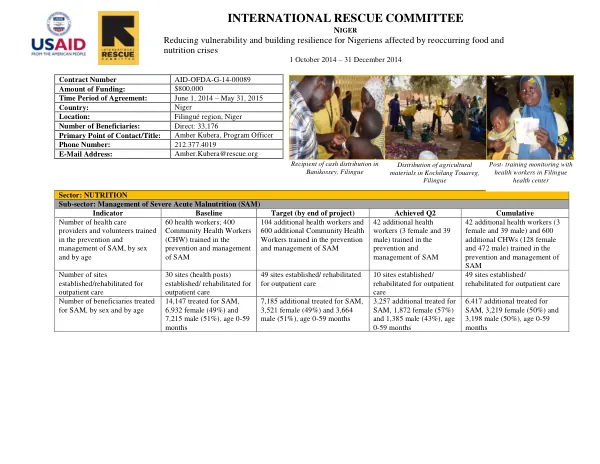
The program focused on the management of Severe Acute Malnutrition (SAM) and aimed to improve the nutritional status of children under the age of 5. The program targeted 33,176 beneficiaries, with a focus on the Filingué region. The IRC trained 60 health care providers and 400 Community Health Workers (CHWs) in the prevention and management of SAM. By the end of the project, an additional 104 health workers and 600 CHWs were trained in the prevention and management of SAM. The program established 49 sites for outpatient treatment, with 30 of these sites being health posts. A total of 14,147 children were treated for SAM, with 6,933 females and 7,215 males. By the end of the project, 7,185 additional children were treated for SAM, with 3,521 females and 3,664 males. The program also focused on infant and young child feeding and behavior change interventions. A SLEAC survey was conducted in December 2014 to assess admission and coverage rates. The survey found that 42 health workers were trained in the prevention and management of SAM, with trainings continuing in the next quarter to reach the targeted 104. Ten OTP centers were established, and all centers were equipped with necessary equipment and materials for proper management of malnutrition. The IRC also implemented a water, sanitation, and hygiene (WASH) program in Niger. The program focused on hygiene promotion and aimed to improve the health and well-being of the population. The program targeted 16,887 people, with a focus on direct hygiene promotion. By the end of the project, 6,971 people received direct hygiene promotion, excluding mass media campaigns and double-counting. The program also established 49 water and hygiene committees, with 35 health facilities having soap and water at hand-washing stations. The program also focused on sanitation infrastructure, with 24,170 people directly benefiting from the sanitation infrastructure program. The program established 40 hand-washing facilities within the target population, with 39 health facilities having hand-washing facilities. The IRC's program in Niger aimed to reduce the impact of recurring food and nutrition crises on the population. The program focused on the management of Severe Acute Malnutrition (SAM) and aimed to improve the nutritional status of children under the age of 5. The program also focused on infant and young child feeding and behavior change interventions, as well as hygiene promotion and sanitation infrastructure. The program achieved several targets, including training 104 health workers and 600 CHWs in the prevention and management of SAM. The program also established 49 sites for outpatient treatment and provided direct hygiene promotion to 6,971 people. The program also established 49 water and hygiene committees and 40 hand-washing facilities within the target population. The IRC's program in Niger demonstrated the importance of addressing the root causes of malnutrition and improving the health and well-being of the population. The program's achievements highlight the need for continued investment in nutrition, health, and WASH programs in Niger. The program's success can be attributed to the IRC's commitment to improving the lives of the population in Niger. The IRC's expertise in nutrition, health, and WASH programs enabled the program to achieve its targets and improve the health and well-being of the population. The program's achievements demonstrate the potential for IRC's programs to make a significant impact on the lives of the population in Niger. The IRC's program in Niger also highlights the importance of community engagement and participation in program implementation. The program's success can be attributed to the engagement of local communities in the program's implementation, which enabled the program to reach a larger number of beneficiaries and achieve its targets. The IRC's program in Niger also highlights the importance of continued investment in nutrition, health, and WASH programs in Niger. The program's achievements demonstrate the need for continued investment in these programs to improve the health and well-being of the population in Niger.
Related documents