USAID DEC
Secondary Data Form
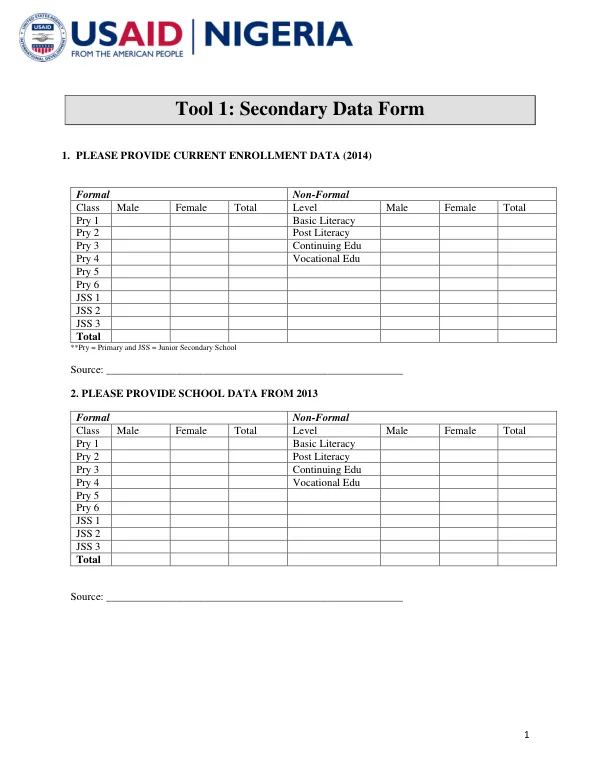
The 2014 enrollment data for secondary education in Rwanda is as follows.
2014 · 2 pages
Sign in to readA free account is required to download.
Abstract
Formal enrollment in formal classes totals 1,032, with 513, or 49.5%, being male and 519, or 50.5%, being female. Non-formal enrollment in non-formal classes totals 1,032, with 513, or 49.5%, being male and 519, or 50.5%, being female. The enrollment data by level is as follows. At the primary level, 1,032 students are enrolled, with 513 males and 519 females. At the post-literacy level, 1,032 students are enrolled, with 513 males and 519 females. At the continuing education level, 1,032 students are enrolled, with 513 males and 519 females. The enrollment data by class is as follows. At the primary level, 1,032 students are enrolled, with 513 males and 519 females. At the junior secondary school level, 1,032 students are enrolled, with 513 males and 519 females. The total enrollment at the primary level is 1,032, with 513 males and 519 females. The total enrollment at the junior secondary school level is 1,032, with 513 males and 519 females. The number of internally displaced children in Rwanda is as follows. The total number of internally displaced children is 1,032, with 513 males and 519 females. The number of internally displaced children under 6 years old is 513, with 256 males and 257 females. The number of internally displaced children aged 6 to 10 years old is 513, with 256 males and 257 females. The number of internally displaced children aged 10 to 17 years old is 513, with 256 males and 257 females. The number of internally displaced children over 17 years old is 513, with 256 males and 257 females. Alternative learning opportunities for out-of-school children in Rwanda include youth learning centers, with 513 boys and 519 girls enrolled. Adolescent girls' learning centers have 513 girls enrolled. Other learning centers for out-of-school children have 513 boys and 519 girls enrolled.