USAID DEC
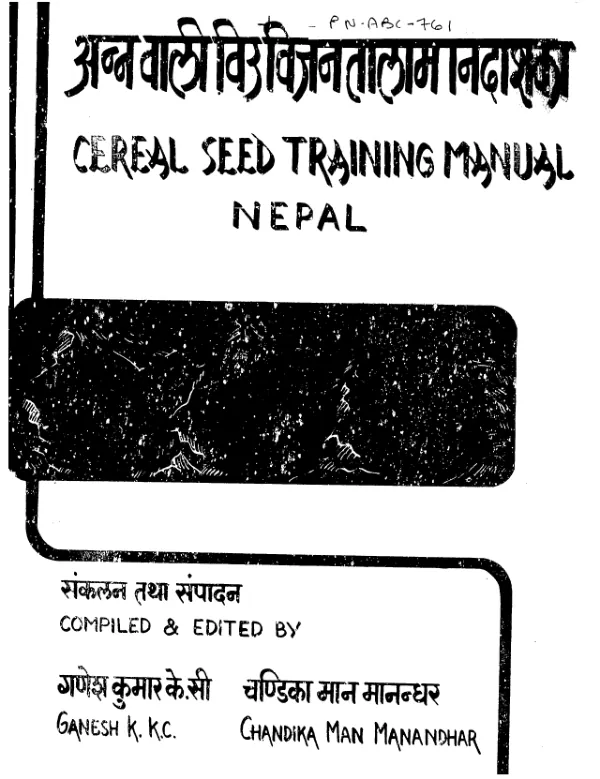
Seed Technology Applications in Nepal
Seed Technology applications in Nepal have made significant strides in the recent past.
296 pages
Sign in to readA free account is required to download.
Abstract
A point of focus for future efforts is the development of trained manpower capable of competently handling the growing national seed activities. Technical knowledge about seed production must be made available not only to seed personnel but also to extension workers, students, and farmers if greater use of improved seed is to be ensured. Although there is no dearth of foreign-language literature on the subject, it can neither be easily understood nor utilized by most of the field staff. In this background, it is heartening to see a seed manual appear in Nepali language, with suitable adaptation to local problems and experiences. This publication is expected to serve a useful purpose despite its obvious limitations. The development of trained manpower is crucial for the growth of seed technology in Nepal. The manual is a step in the right direction, providing technical knowledge to seed personnel, extension workers, students, and farmers. The manual's adaptation to local problems and experiences will enable its users to apply the knowledge effectively. The manual's content includes information on seed production, handling, and storage. It also covers topics such as seed testing, certification, and quality control. The manual's language is clear and concise, making it accessible to a wide range of users. The inclusion of local examples and case studies will help users understand the practical applications of the knowledge. The development of seed technology in Nepal has the potential to improve crop yields, increase food security, and enhance the livelihoods of farmers. The manual is a valuable resource for anyone involved in seed production, handling, and storage. Its widespread adoption will contribute to the growth of seed technology in Nepal and help the country achieve its development goals. The manual's publication is a collaborative effort between various stakeholders, including the Seed Production and Irrigation Storage Project, the AIC Central Office, and other organizations. The project's success is a testament to the commitment of its partners to improving seed technology in Nepal. The manual's availability will enable more people to access the knowledge and skills needed to improve seed production and handling practices. The development of seed technology in Nepal is a long-term process that requires sustained effort and commitment. The manual is a valuable resource that will contribute to the growth of seed technology in Nepal. Its widespread adoption will help the country achieve its development goals and improve the livelihoods of farmers.
Related documents