USAID DEC
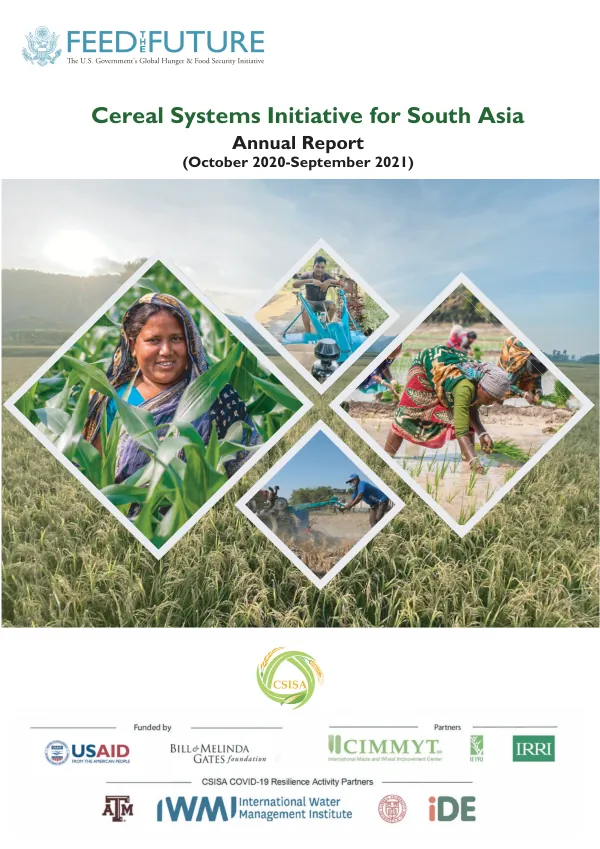
Cereal Systems Initiative for South Asia Annual Report (October 2020-September 2021)
Sign inUSAID DEC
Cereal Systems Initiative for South Asia Annual Report (October 2020-September 2021)
The Cereal Systems Initiative for South Asia (CSISA) Annual Report for the period of October 2020 to September 2021 highlights the initiative's achievements in Bangladesh and Nepal.
2021 · 185 pages
Sign in to readA free account is required to download.
Abstract
In Bangladesh, CSISA's focus on innovation and systemic change led to significant progress in reducing risk and facilitating the uptake of sustainable intensification practices. The initiative's efforts to deploy better-bet agronomic messaging through input dealer networks and development partners resulted in improved crop yields and increased adoption of sustainable practices among farmers. In Nepal, CSISA's work on reducing risk and facilitating the uptake of sustainable intensification practices also yielded positive results. The initiative's partnerships with local organizations and government agencies helped to promote the use of sustainable practices and improve crop yields. Additionally, CSISA's efforts to bring participatory science and technology evaluations to the landscape and back again helped to identify and address the needs of smallholder farmers. CSISA's work on policy reform also made significant progress in both Bangladesh and Nepal. The initiative's efforts to improve seed systems, scale-appropriate mechanization, soil fertility management, and fertilizer markets helped to create a more favorable policy environment for sustainable agriculture. In Nepal, CSISA's work on agricultural risk management also helped to improve the resilience of smallholder farmers to climate-related shocks. In response to the COVID-19 pandemic, CSISA launched a COVID-19 response and resilience program in Nepal. The program aimed to enable rapid, targeted, and effective agricultural crisis response through scale-appropriate farm mechanization and rural services provision. The program's work packages focused on creating jobs for young return migrants, minimizing the economic impacts of COVID-19 for very poor and women farmers, breaking the smallholder irrigation bottleneck, and building rural resilience to the COVID-19 crisis. Despite the challenges faced during the reporting period, CSISA's work in Bangladesh and Nepal continued to make significant progress in promoting sustainable agriculture and improving the livelihoods of smallholder farmers. The initiative's partnerships with local organizations, government agencies, and development partners helped to leverage resources and expertise, and its focus on innovation and systemic change helped to drive progress towards its goals. CSISA's achievements in Bangladesh and Nepal are a testament to the initiative's commitment to improving the lives of smallholder farmers and promoting sustainable agriculture in the region. The initiative's work on policy reform, innovation, and systemic change has helped to create a more favorable policy environment for sustainable agriculture, and its efforts to address the needs of smallholder farmers have improved their livelihoods and resilience to climate-related shocks. The CSISA COVID-19 response and resilience program in Nepal has also made significant progress in addressing the needs of smallholder farmers during the pandemic. The program's work packages have helped to create jobs for young return migrants, minimize the economic impacts of COVID-19 for very poor and women farmers, break the smallholder irrigation bottleneck, and build rural resilience to the COVID-19 crisis. Overall, CSISA's work in Bangladesh and Nepal has made significant progress in promoting sustainable agriculture and improving the livelihoods of smallholder farmers. The initiative's focus on innovation, systemic change, and policy reform has helped to drive progress towards its goals, and its partnerships with local organizations, government agencies, and development partners have helped to leverage resources and expertise.
Related documents