USAID
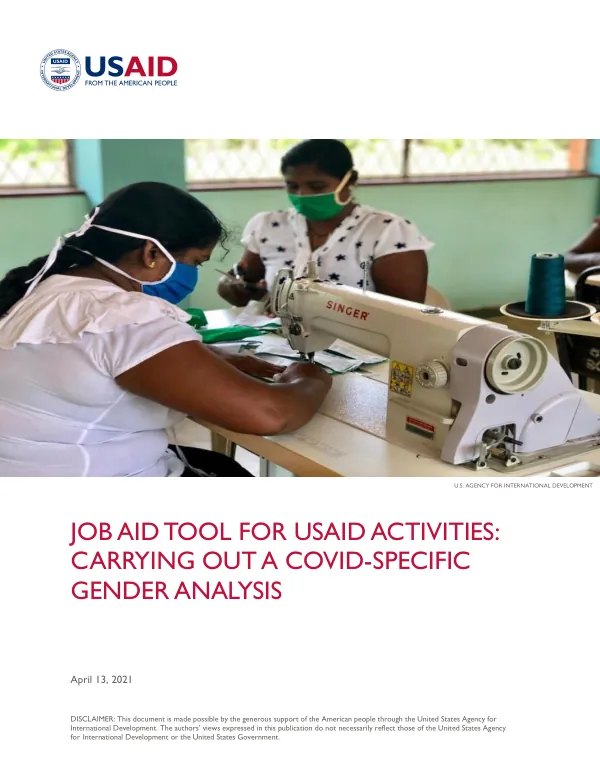
USAID's Gender and COVID-19 Guidance
The COVID-19 pandemic has had a significant impact on countries worldwide, with long-term effects across various sectors, including gender equality.
2021 · 9 pages
Sign in to readA free account is required to download.
Abstract
Integrating a commitment to gender equality and women's empowerment in activity design and implementation is crucial to supporting affected communities and saving lives. The pandemic has highlighted the need to adapt programming to respond to how COVID-19 is affecting women and girls, men and boys of different ages, disabilities, ethnicities, races, gender identities, sexual orientations, migration statuses, and socio-economic and demographic groups. Women and girls, men and boys of different ages, disabilities, ethnicities, races, gender identities, sexual orientations, migration statuses, and socio-economic and demographic groups have different levels of COVID-19 risk based on their daily activities, structural inequalities, and unique strengths. Conducting activity-level COVID-19-specific gender analysis is essential to inform USAID strategies and activities. This analysis should draw upon previous USAID and other donor gender analyses to identify areas of vulnerability and opportunities for intervention. Women, especially health workers and those from marginalized groups, have largely been absent from decision-making and leadership roles in the COVID-19 response. Their absence threatens the success of health interventions during the pandemic. Engaging and strengthening women's leadership, especially women from marginalized groups, through targeted outreach campaigns and multiple and flexible modalities is critical to their participation in COVID-19-related project design, implementation, and relevant task forces. Men face higher COVID-19 mortality rates than women linked to social norms and behaviors around masculinity and biological factors. Many men and boys have also faced increased responsibility for care roles that women and girls typically manage, leading to discrimination and stigma. Targeting men and boys with specialized messaging, support, and training as they assume new duties and care responsibilities for family members with COVID-19 is essential to mitigate these risks. Women and girls, men and boys, especially those from marginalized groups, are especially vulnerable to receiving COVID-19-related misinformation and/or conflicting information largely fueled by social media outlets. Consulting with national partners when developing COVID-19 risk communication and community engagement (RCCE) action plans is crucial to ensure that messaging on preventive, protective, and care-seeking behaviors reaches and is understandable to all populations. The digital gender gap exacerbates the susceptibility of women and girls, especially those from marginalized groups, to contracting COVID-19, increases the risk of exposure to gender-based violence (GBV) and social isolation during lockdowns, decreases access to potentially life-saving resources, and leads to missed economic opportunities. Investing in technology, Internet access, and digital literacy, including how to navigate the Internet safely, for women and girls, men and boys, especially those from marginalized groups, is essential to enhance remote means of communication and knowledge exchange. Not putting in place GBV risk mitigation measures and failing to integrate equitable and accessible economic, psychosocial, education, and water, sanitation and hygiene (WASH)-related support as part of the COVID-19 response may unintentionally increase the risks of GBV for women and girls. Including GBV prevention messaging in national or sub-national RCCE strategies and action plans, implementing targeted prevention programming, and making available safe and confidential in-person and remote GBV health, case management, and social support response services are critical to mitigate these risks. Sexual exploitation and abuse (SEA) is a form of GBV for which all aid workers are accountable and is likely present in every aid context, including in COVID-19 responses. Prioritizing SEA prevention through ongoing efforts targeting USAID and its partners that tackle structural gender inequalities and power imbalances while at the same time explicitly communicating to USAID partners and program participants that the Agency will not tolerate SEA is essential to prevent SEA. In the context of COVID-19, women and girls, especially those who live in rural areas or are pregnant and lactating; elderly persons; persons with disabilities; ethnic minorities; lesbian, gay, bisexual, transgender, queer/questioning, and intersex (LGBTQI+) persons; and malnourished persons are particularly vulnerable to increased food insecurity and malnutrition due to discriminatory gender norms and because they have fewer financial resources. Providing direct food assistance without conditionalities and extra protection to nutritionally vulnerable households with pregnant women or young children, integrating behavioral-change measures to address inequalities in food allocation and consumption at the household level, and supporting the continuation of school feeding programs while schools are closed are critical to mitigate these risks. Women may experience reduced access or be priced out of markets for seeds, fertilizer, tools, labor, and other productive inputs before men due to stay-at-home measures, including those that allow only a head of household, male, to leave the home, closures in markets, and declines in cross-border trade. Targeting women farmers, traders, and vendors in programming activities related to market access, including simplified trade regimes for women cross-border traders to reduce transaction costs, and input procurement, including a combination of digital and traditional inputs, cash, and access to credit in agricultural assistance programs, and prioritizing access for women producers are essential to mitigate these risks. St
Related documents