USAID DEC
Self-Sufficiency and Value Chain Opportunities in Rice, Maize and Wheat in Nepal
The agricultural development initiative in Nepal began with a focus on increasing domestic production of key crops to address food insecurity, reduce the agriculture import bill, and promote agriculture self-sufficiency.
2016 · 69 pages
Sign in to readA free account is required to download.
Abstract
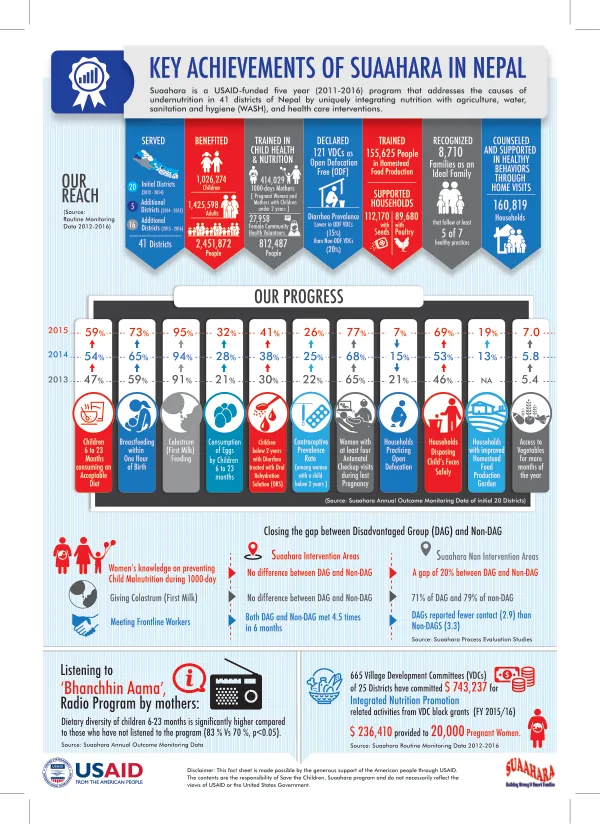
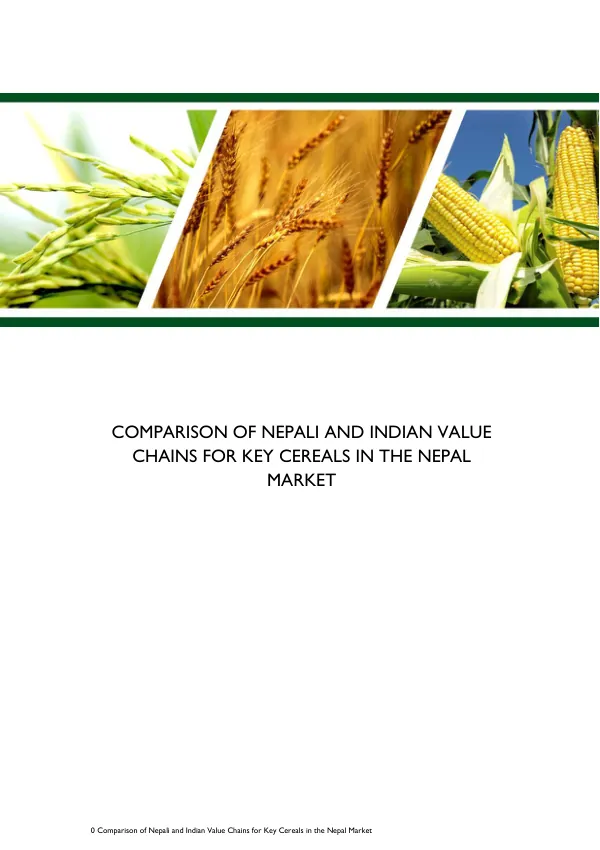
The country's landscape and agricultural production are defined by three contrasting climatic zones, with the sub-tropical lowlands of the Terai having the best agricultural potential. Rice is the main crop in this region, but additional commodities like pulses, wheat, barley, and oilseeds are also grown. Agriculture in Nepal has long been based on subsistence farming, where farmers derive their living from cultivating fragmented plots of land in difficult conditions. Government programs to introduce irrigation facilities and fertilizers have proven inadequate, and population increases and environmental degradation have ensured that minimal gains in agricultural production have been cancelled out. As a result, about 40% of the total population in Nepal is reported to be moderately to severely food insecure, 28% of children under the age of 5 are underweight, and 43% of these children are severely malnourished. The area under production of rice, maize, and wheat in Nepal from 2007-2012 has remained stagnant, leading to a significant increase in imports of these crops from India. The import of rice, maize, and wheat from India has increased considerably in the past five years, with a notable escalation starting in 2012. Media reports highlight the trend, with rice imports from India jumping to NRs. 13.43 billion (c. $127.9 million) in the first two-thirds of the 2015-2016 fiscal year. Imports of high-value, fine varieties of rice have soared because the vast majority of rice produced and processed in Nepal is of low-value coarse rice, and consumer tastes are changing. The KISAN Project commissioned a study to get a better understanding of the dynamics that affect self-sufficiency in the rice and maize domestic industries as well as value chain opportunities in the rice, maize, and wheat industries. The study aimed to identify the key value chain links, with a view to improve the competitiveness of Nepal's domestic rice and maize industries. The study's main objectives include analysis of the unit-level economics of production, processing, and trading at both the farmer and processor level in Nepal and India, assessment of price differentials and margins in both Nepal and India for farmers and processors, and determination of the competitiveness of Nepali rice and maize industries to meet current and future market requirements. The study also aimed to identify the key value chain links, with a view to improve the competitiveness of Nepal's domestic rice and maize industries. The study's methodology involved a comprehensive analysis of the value chains of rice and maize in Nepal and India, including an examination of the production, processing, and trading practices of farmers and processors in both countries. The study also involved a review of the existing literature on the subject, as well as a collection of primary data through surveys and interviews with farmers, processors, and other stakeholders in the value chain. The study's findings indicate that the Nepali rice and maize industries face significant challenges in terms of competitiveness, including high production costs, limited access to markets, and a lack of investment in technology and infrastructure. The study also found that the Indian rice and maize industries have a significant advantage in terms of scale and efficiency, which has contributed to the increasing imports of these crops from India. The study's recommendations include the need for the Nepali government to implement policies and programs to support the development of the domestic rice and maize industries, including investments in irrigation, fertilizers, and other inputs, as well as support for farmers and processors to improve their productivity and competitiveness. The study also recommends the need for the Nepali government to negotiate with the Indian government to reduce the trade barriers and tariffs that affect the import of rice and maize from India.