USAID
Nepal Food Safety Situational Analysis (FSSA)
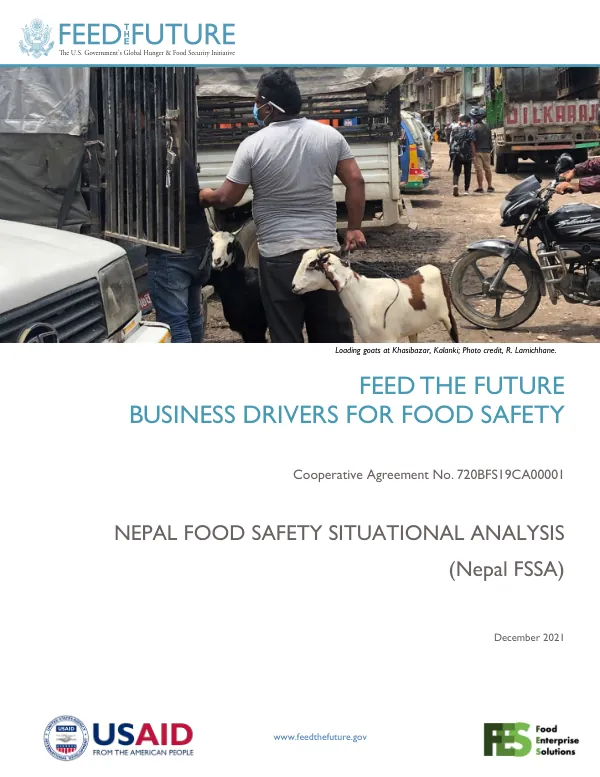
The Nepal Food Safety Situational Analysis (FSSA) was conducted by Food Enterprise Solutions (FES) in collaboration with Feed the Future Business Drivers for Food Safety (BD4FS), an economic development activity co-created with and funded by the United States Agency for International Development (USAID).
2021 · 69 pages
Sign in to readA free account is required to download.
Abstract
The study aimed to explore various aspects of food safety in Nepal, including risks and hazards, regulatory framework, and market systems. The FSSA focused on three commodities: fresh fruits and vegetables, eggs, and goat meat, which represent priority value chains identified by the USAID Mission in Nepal. The study was undertaken in the Kathmandu and Chitwan food corridors in Baghmati Province, the initial geographic focus areas of BD4FS. The research involved desk reviews and targeted interviews of food business owners in these corridors. Nepal's regulatory framework for food safety is a few decades old, but recent releases of the National Food Safety Policy of 2019 and the Food Hygiene and Quality Bill of 2020 indicate signs of improvement. However, the enforcement of standards, laws, and policies remains weak. The FSSA interviews revealed growing commitment towards food safety by large, medium, and formal small-sized food businesses, resulting from increasing pressure to address food safety issues by discerning consumers. The study observed three different retail practices with varying levels of interest in food safety: conventional retail stores, kiosks, and informal businesses that are less interested in food safety; large retail supermarkets; and online trading food businesses that are very interested in food safety with customers willing to pay extra for quality. The latter two segments of the market are still small but rapidly growing due to increasing awareness of the importance of food safety. The FSSA also highlighted the challenges faced by small firms in accessing finance, with most borrowing from relatives, informal sources, and personal savings. The study presents key recommendations for consideration at the food enterprise and food systems levels to further the agenda on improving the food safety of nutrient-dense, perishable foods in Nepal. The regulatory framework for food safety in Nepal is in the process of improvement, with the release of the National Food Safety Policy of 2019 and the Food Hygiene and Quality Bill of 2020. However, the enforcement of standards, laws, and policies remains weak. The FSSA identified the need for strengthening the regulatory framework and improving the enforcement of food safety standards. The study also highlighted the importance of increasing awareness among consumers about the importance of food safety, particularly in the informal markets where food safety is often compromised. The FSSA recommended the development of a comprehensive food safety strategy that addresses the needs of all stakeholders, including food businesses, consumers, and regulatory bodies. The FSSA identified the need for improving the cold chain capacity in Nepal, particularly in the informal markets where the demand for temperature-controlled food is increasing. The study recommended the development of a cold chain infrastructure that meets the needs of the growing demand for temperature-controlled food. The FSSA also highlighted the importance of supporting small firms in accessing finance, particularly in the informal markets where access to finance is limited. The study recommended the development of financial products and services that cater to the needs of small firms in the informal markets. Overall, the FSSA provided valuable insights into the food safety situation in Nepal and highlighted the need for a comprehensive food safety strategy that addresses the needs of all stakeholders. The study recommended the development of a regulatory framework that is effective in enforcing food safety standards, increasing awareness among consumers about the importance of food safety, improving the cold chain capacity, and supporting small firms in accessing finance.