USAID. BUR. FOR AFRICA. OFC. OF REGIONAL AFFAIRS
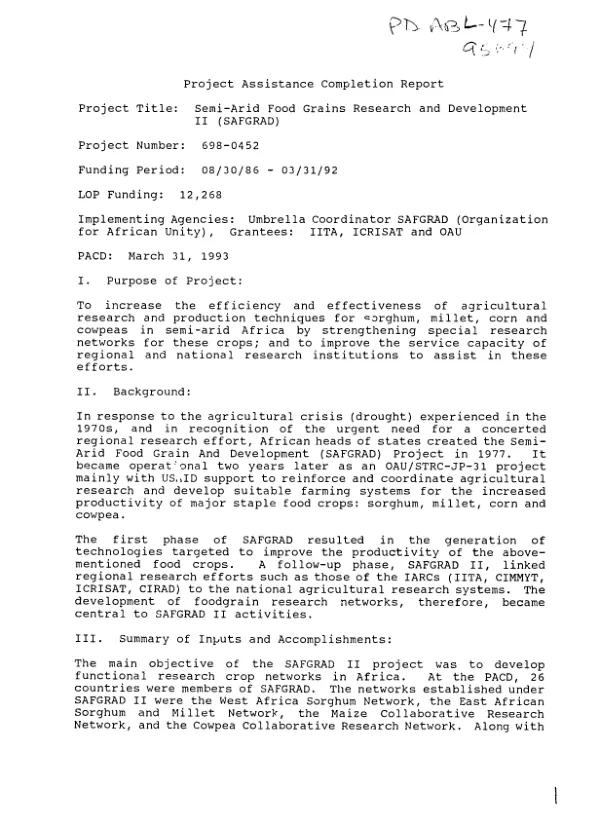
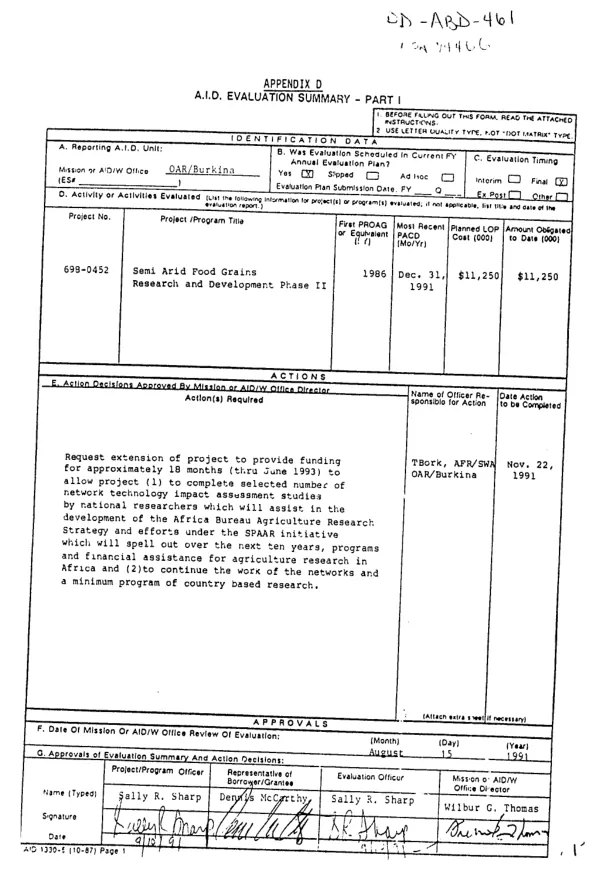
Semi-arid food grain research and development (SAFGRAD)
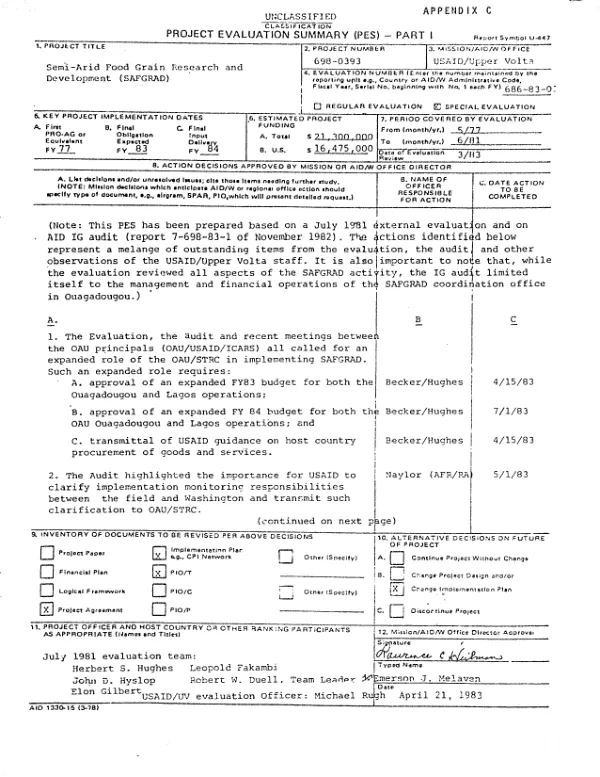
Evaluates project to conduct cereals research in semiarid Africa and to disseminate improved agronomic practices to small farmers.
Hughes, Herbert S.; Hyslop, John D. +1 more · 1983
Sign in to readA free account is required to download.
Abstract
PES of 4/83 covers the period 5/77-6/81 and is based on a 7/81 external evaluation and an 11/82 audit of the Organization of African Unity (OAU) project coordinating office. The project"s primary focus has been regional-level varietal research, with the greatest progress in maize; sorghum research has been delayed by contractor staffing problems and lack of an agreement with the Nigerian government. Management problems and lack of a computer for data analysis have prevented the farming systems unit, which has worked almost exclusively on village studies in Upper Volta, from completing its planned analysis; still, on-farm trials are underway. Accelerated crop production officers have been working too exclusively with crop research and neglecting linkages with national farming systems research programs. The soil and water management and farming systems research programs need more regional emphasis, while varietal researchers should keep in mind farmers" current management methods and input levels. Training has been very well received. The project has enrolled or prepared 16 participants for degree study (although this activity is below target and started late) and funded some 40% of short-term training at international research institutes. Information exchange, however, has received very perfunctory treatment; research workshop reports have been well produced and distributed but appeared to lack significant technical input, and conference reports have received limited distribution, although the newsletter has been highly beneficial. Office and laboratory construction have been completed. Implementation has been hampered by poorly defined relationships between donors and OAU and between A.I.D. and participating contractors. The project"s major weakness, however, has been the inactivity of the its consultative and technical advisory committees; the resulting vacuum - filled in part by A.I.D. and OAU - has been a primary cause of the failure to evolve beyond research or to integrate research with other efforts. Improved committee mechanisms have recently been established, however. The status, as of 3/83, of the 14 recommendations from the 1981 evaluation is reported.
Related documents