MANAGEMENT SCIENCES FOR HEALTH
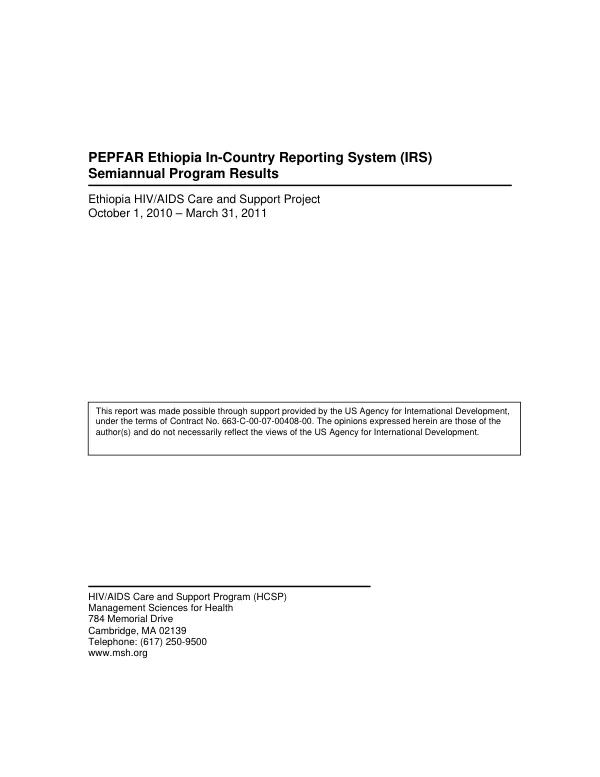
Semiannual Program Results: Ethiopia HIV/AIDS Care and Support Project
The HIV/AIDS Care and Support Program (HCSP) in Ethiopia, supported by the President's Emergency Plan for AIDS Relief (PEPFAR), implemented various activities during the semiannual reporting period from October 1, 2010, to March 31, 2011.
2011 · 53 pages
Sign in to readA free account is required to download.
Abstract
The program's primary goal was to provide comprehensive care and support services to individuals affected by HIV/AIDS. In the area of Prevention of Mother-to-Child Transmission (PMTCT), the HCSP achieved significant results. By the end of the reporting period, 9,550 health centers were providing PMTCT services, representing a 100% increase from the previous reporting period. This achievement was attributed to the program's efforts in training health care workers and establishing a robust infrastructure for PMTCT services. The HCSP also implemented various activities in other program areas, including HIV/AIDS Prevention and Behavior Change Communication (HVAB), HIV/AIDS Orphans and Vulnerable Children (HVOP), and Home-Based Care (HMBL). These activities aimed to reduce the spread of HIV/AIDS, provide care and support to affected individuals, and promote behavior change among the general population. During the reporting period, the HCSP received technical assistance from various consultants and organizations, including Management Sciences for Health (MSH) and the US Agency for International Development (USAID). The program also supported international travel for its staff and partners, including visits to conferences, workshops, and meetings. The HCSP faced several challenges and constraints during the reporting period, including limited resources and infrastructure. However, the program implemented various strategies to overcome these challenges, including strengthening its partnerships with local organizations and governments. The HCSP also conducted various monitoring and evaluation activities during the reporting period, including site visits and assessments. These activities aimed to assess the program's progress and identify areas for improvement. In terms of publications and reports, the HCSP supported the production of several publications, including the Libona and NNPWE monthly issues. These publications aimed to disseminate information on HIV/AIDS prevention, care, and support services to the general public. Overall, the HCSP made significant progress in implementing its activities and achieving its goals during the semiannual reporting period from October 1, 2010, to March 31, 2011. The program's efforts in PMTCT, HIV/AIDS prevention, and care and support services contributed to the reduction of HIV/AIDS-related morbidity and mortality in Ethiopia. The HCSP's achievements during the reporting period were recognized by various stakeholders, including USAID and the Ethiopian government. The program's success was attributed to its strong partnerships, effective implementation strategies, and commitment to providing comprehensive care and support services to individuals affected by HIV/AIDS. In the next reporting period, the HCSP plans to continue its efforts in PMTCT, HIV/AIDS prevention, and care and support services. The program will also focus on strengthening its partnerships with local organizations and governments, as well as improving its monitoring and evaluation activities.