USAID DEC
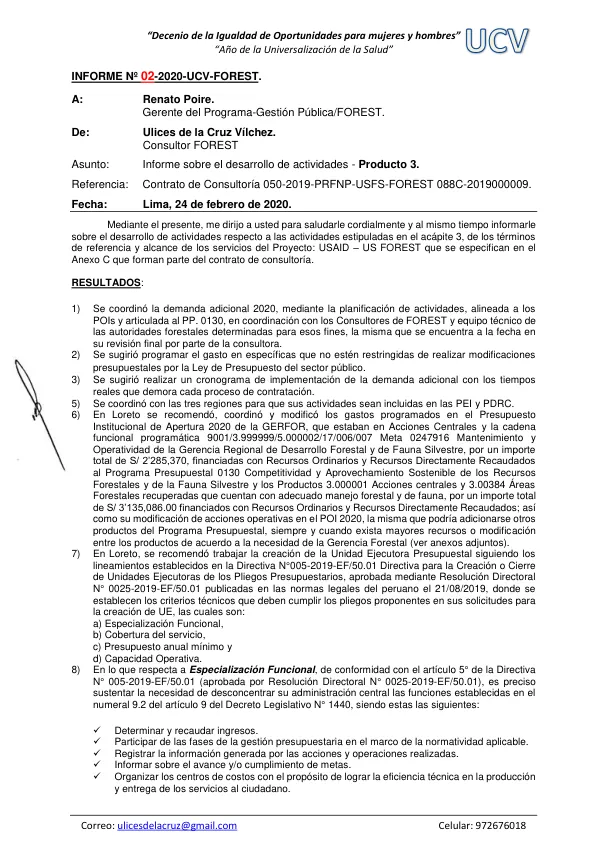
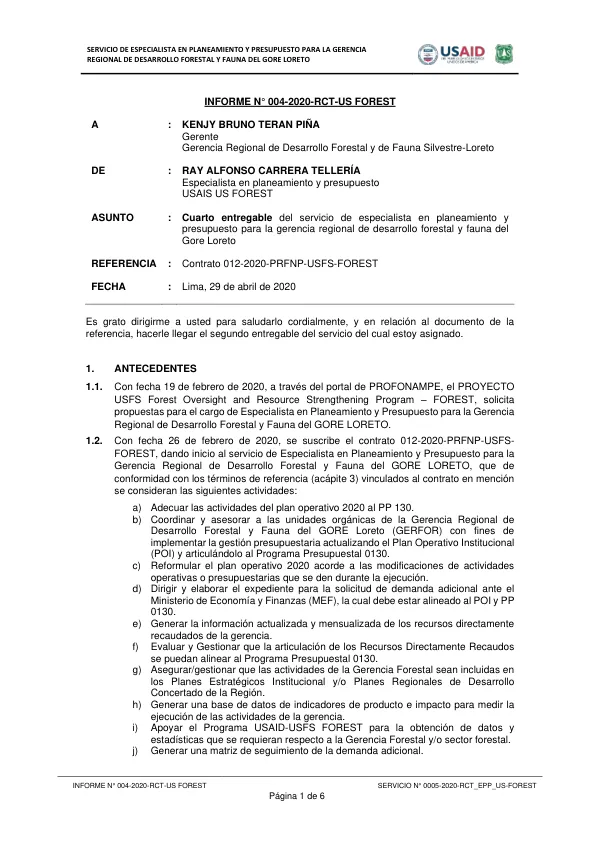
Servicio de Especialista en Planeamiento y Presupuesto para la Gerencia Regional de Desarrollo Forestal y Fauna del Gore Loreto
Sign inUSAID
Servicio de Especialista en Planeamiento y Presupuesto para la Gerencia Regional de Desarrollo Forestal y Fauna del Gore Loreto
The agricultural development initiative in Loreto, Peru, is a key focus area for the Regional Development Forest and Wildlife Management of the Loreto Region.
2020 · 6 pages
Sign in to readA free account is required to download.
Abstract
The initiative aims to promote sustainable forest management and biodiversity conservation in the region. The Regional Development Forest and Wildlife Management of the Loreto Region has partnered with the USAID-USFS FOREST program to implement this initiative. The initiative is guided by the Regional Development Forest and Wildlife Management's plan of work, which includes activities such as updating the Operational Plan (POI) and articulating it to the Program Budget 0130. The plan also includes activities related to the demand for additional resources in 2020, which was affected by the COVID-19 pandemic. The Regional Development Forest and Wildlife Management has established a working group to develop proposals for reactivating the forest sector in Loreto. The working group has identified several key areas for reactivation, including the use of topa, bolaina, and capirona in the forest sector, and the promotion of short-cycle crops and horticulture in rural areas. The group has also proposed the development of a plan of incentives for local forests and the identification of actions for short-term and medium-term implementation. The Regional Development Forest and Wildlife Management will need to reassign its budget to prioritize activities and implement the plan. The initiative also aims to promote the use of local resources and products, such as wood, charcoal, and other forest products. The working group has identified the need to develop a plan for the delimitation of forest matrices for BL and BI, and to identify the state of concesions forestals. The group has also proposed the development of a plan for the export of forest products through the Amazon River. The Regional Development Forest and Wildlife Management has also established a partnership with the Ministry of Economy and Finance (MEF) to implement the initiative. The MEF has delegated functions to the Regional Development Forest and Wildlife Management to facilitate the reactivation of the forest sector in Loreto. The Regional Development Forest and Wildlife Management has also established a working group to develop proposals for reactivating the forest sector in Loreto. The initiative is expected to have a positive impact on the forest sector in Loreto, promoting sustainable forest management and biodiversity conservation. The Regional Development Forest and Wildlife Management will need to work closely with stakeholders, including local communities, to implement the plan and achieve the desired outcomes. The initiative is a key step towards promoting sustainable forest management and biodiversity conservation in the Loreto Region. The Regional Development Forest and Wildlife Management has also established a system for monitoring and evaluating the implementation of the initiative. The system includes the use of indicators to measure the progress of the initiative and to identify areas for improvement. The Regional Development Forest and Wildlife Management will need to regularly review and update the system to ensure that it remains effective and relevant.