USAID DEC
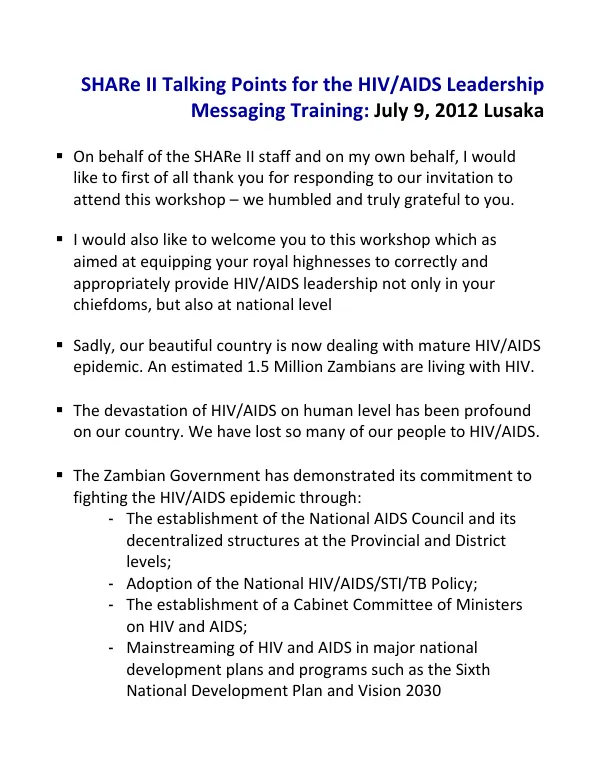
SHARe II Talking Points for the HIV/AIDS Leadership Messaging Training
The HIV/AIDS Leadership Messaging Training was held on July 9, 2012, in Lusaka.
2012 · 4 pages
Sign in to readA free account is required to download.
Abstract
The training aimed to equip royal highnesses with the necessary skills to provide effective HIV/AIDS leadership at both the chiefdom and national levels. Zambia is facing a mature HIV/AIDS epidemic, with an estimated 1.5 million Zambians living with the disease. The Zambian Government has demonstrated its commitment to combating the epidemic through various initiatives, including the establishment of the National AIDS Council and its decentralized structures, adoption of the National HIV/AIDS/STI/TB Policy, and mainstreaming of HIV and AIDS in major national development plans and programs. Bilateral partners have also contributed significantly to the national response, providing over 80% of the funds for the HIV treatment program in Zambia. However, the country faces significant challenges in its response to HIV/AIDS, including ensuring access to HIV care and treatment services, mitigating the impact of the epidemic on vulnerable populations, and preventing the further spread of HIV. The number of new HIV infections in Zambia stands at 250 per day, with 225 adults and 25 children affected. If this trend continues, the country may not be able to afford HIV treatment for all those in need due to the high cost of treatment. To address these challenges, strong and visible leadership is required, as well as resources. Chiefs play a crucial role in this effort, as they are respected and influential figures in their communities. They can provide leadership to stamp out harmful practices that perpetuate HIV/AIDS, promote interventions that offer protections against the disease, and integrate community conversations and voices into national and sub-national strategic plans. The SHARe II project has developed an HIV/AIDS Messages and Talking Points Toolkit to support chiefs in their efforts to address HIV/AIDS. The toolkit provides guidance on what to say when addressing issues related to HIV/AIDS, tailored to the epidemic in Zambia. The project will also support the translation of the messages into local languages and adapt them to be culturally appropriate and suitable for use at the local level. The presence of the chiefs at the training is a clear demonstration of their commitment to the fight against HIV/AIDS. The partnership between the chiefs, the SHARe II project, and other stakeholders is expected to be productive and effective in addressing the HIV/AIDS epidemic in Zambia.
Related documents
Documents in this collection
 2017
2017USAID DEC
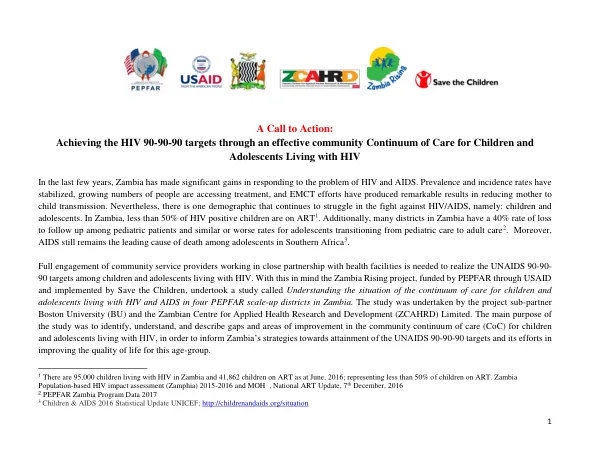
A Call to Action: Achieving the HIV 90-90-90 targets through an effective community Continuum of Care for Children and Adolescents Living with HIV
Open record 2013
2013USAID DEC