USAID DEC
Shifting Social Norms as Part of Social and Behavior Change: Training Curriculum
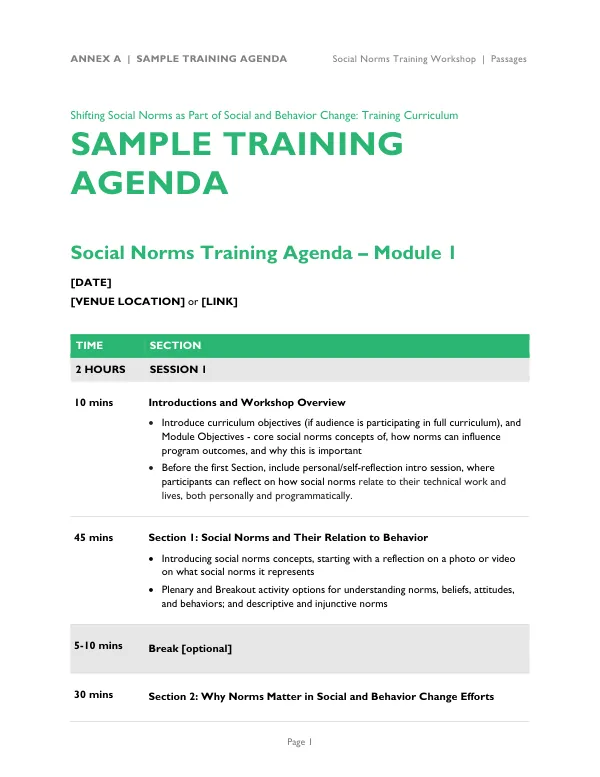
Social Norms Training Workshop Module 1 began on [DATE] at [VENUE LOCATION] or [LINK].
2 pages
Sign in to readA free account is required to download.
Abstract
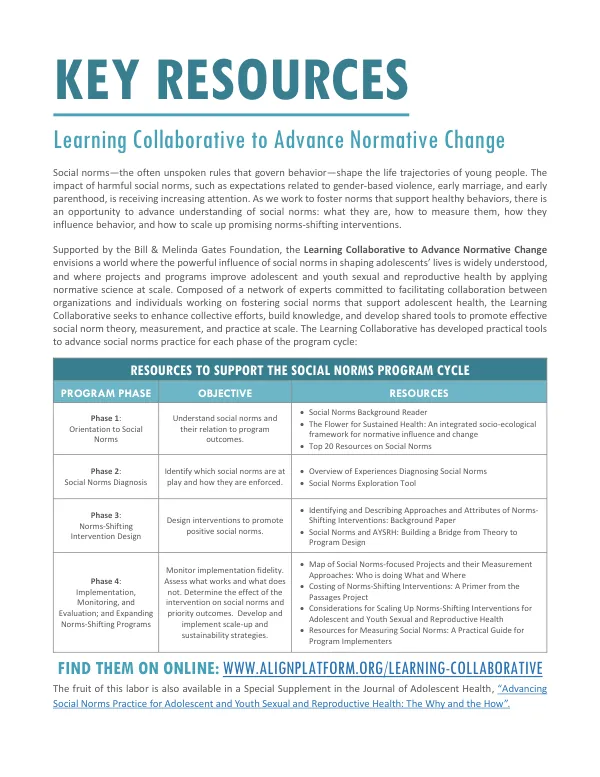
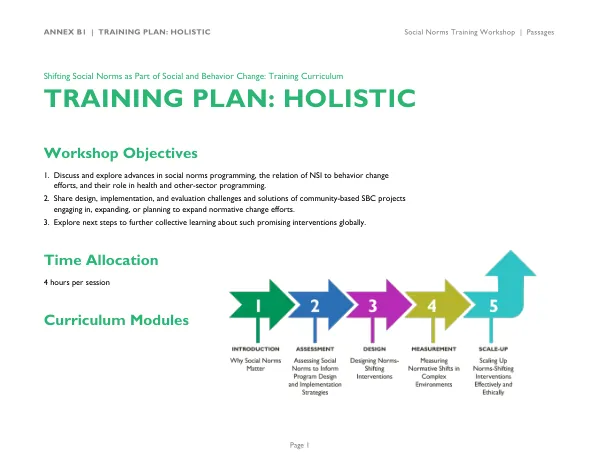
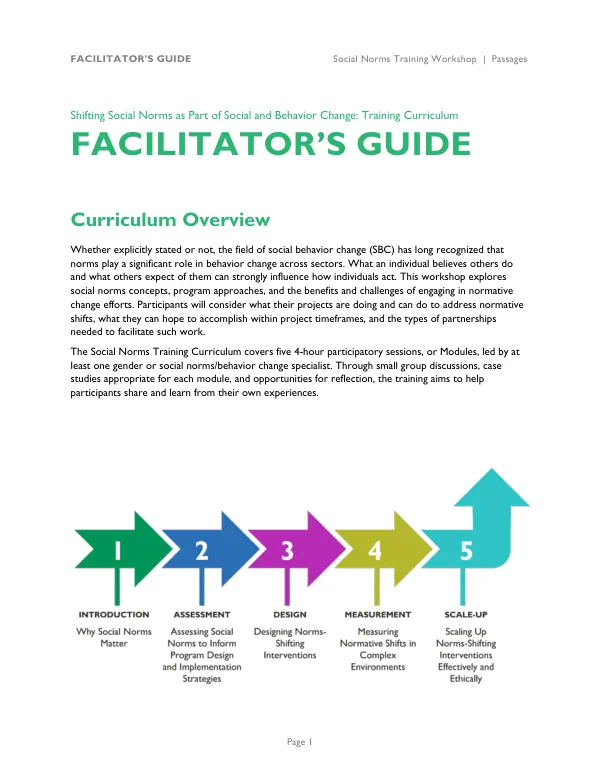
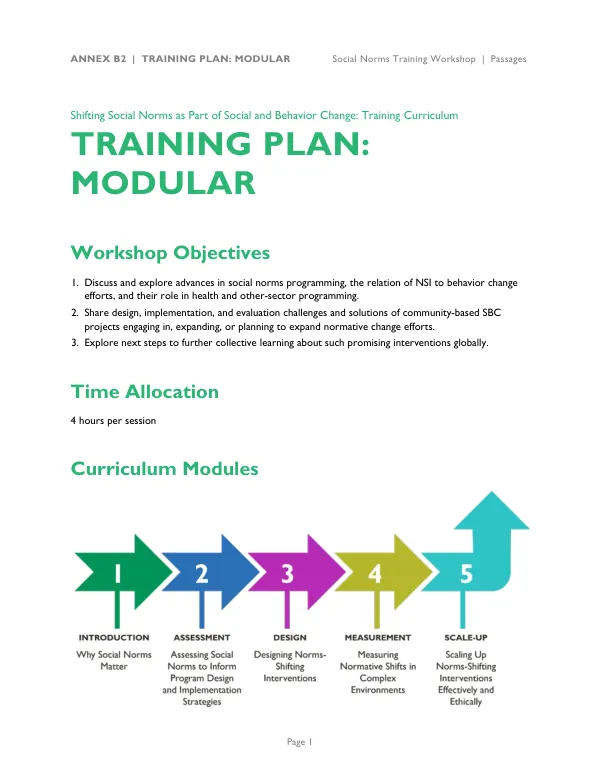
The workshop aimed to introduce core social norms concepts and their relation to behavior change efforts. The training agenda consisted of two sessions, each lasting two hours. Session 1 started with a 10-minute introduction and workshop overview, where participants were introduced to the curriculum objectives and module objectives. The session also included a personal reflection session, where participants could reflect on how social norms relate to their technical work and lives. The first section, lasting 45 minutes, focused on social norms and their relation to behavior. Participants were introduced to social norms concepts through a reflection on a photo or video and engaged in plenary and breakout activities to understand norms, beliefs, attitudes, and behaviors. Following a 5-10 minute break, the second section, lasting 30 minutes, explored why norms matter in social and behavior change efforts. Participants were introduced to three conceptual approaches on social norms and how norms influence health behaviors. The third section, lasting 30 minutes, discussed how social norms-shifting approaches fit into and bring additional value to social behavior change efforts. Two or more case studies were presented to illustrate the importance of social norms in behavior change interventions. Session 2 began with a 20-minute recap of the first section, focusing on social norms and their relation to behavior. Participants were introduced to the eight features of social norms and engaged in an activity to understand these features. The fourth section, lasting 50 minutes, explored theories of how norms influence behaviors. Participants were presented with different disciplines and theories that underpin how norms change leads to behavior change, and common elements across theories were discussed. The facilitator added optional slides to allow a deep dive into specific theories and activities to allow participants to reflect on how these theories apply to their own work. The final section, lasting 50 minutes, focused on developing and using program theories of change. Participants discussed why a clear theory of change is key for norms-shifting approaches and engaged in activities to work with their own or a sample theory of change. The facilitator elucidated how norms-shifting approaches will work and lead to desired outcomes.