WORLD WILDLIFE FUND INTERNATIONAL
TNRC Model Results Chains: Targeting Natural Resource Corruption
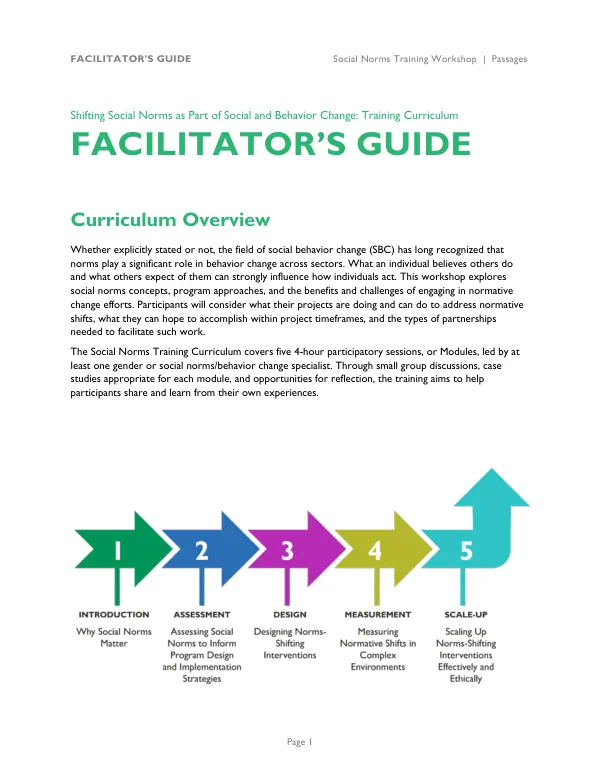
The TNRC Model Results Chains for anti-corruption efforts in conservation focus on leveraging social norms and behavior change to mitigate the impact of corruption on natural resource management.
2024 · 2 pages
Sign in to readA free account is required to download.
Abstract
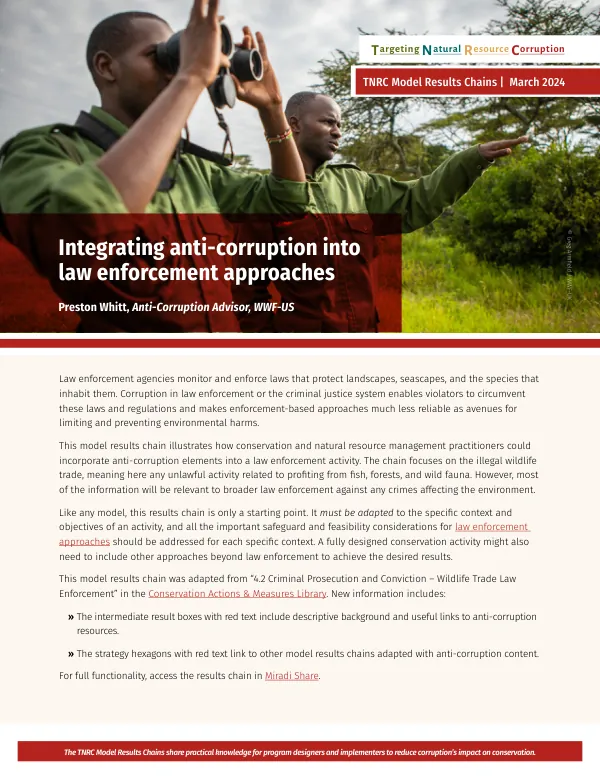
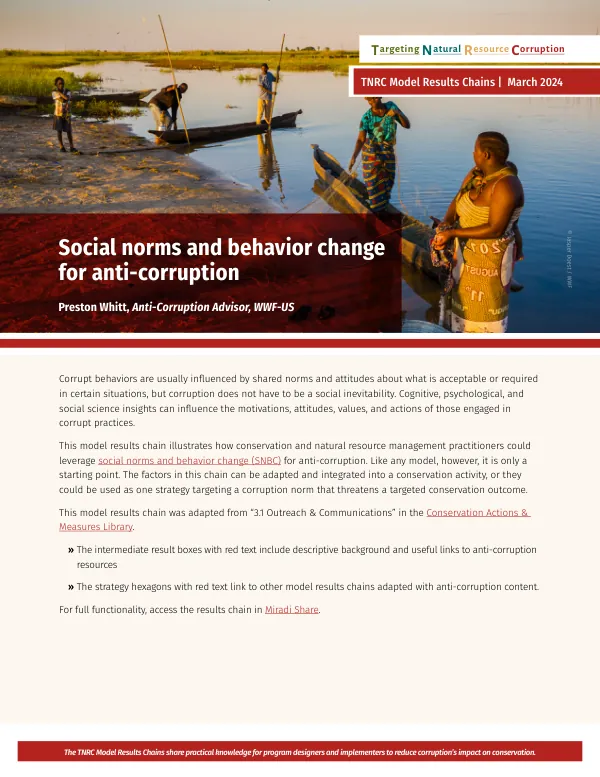
Corrupt behaviors are often influenced by shared attitudes and norms about what is acceptable or required in certain situations. However, corruption is not an inevitable outcome, and cognitive, psychological, and social science insights can be used to understand and address the motivations, attitudes, and actions of individuals involved in corrupt practices. The model results chain illustrates how conservation and natural resource management practitioners can use behavior change strategies to target corruption. This approach involves adapting and integrating various factors into conservation activities or using them as a strategy to address a specific corruption threat. The model is based on the concept of "3.1 Outreach & Communications" from the Conservation Actions & Library. The model results chain includes intermediate results boxes with red text that provide background information and links to anti-corruption resources. Additionally, the strategy hexagons with red text link to other model results chains that have been adapted with anti-corruption content. These resources can be accessed through Miradi Share for full functionality. The TNRC Model Results Chains are made possible by the support of the American people through the United States Agency for Development (USAID). The contents of the model results chain are the responsibility of the author(s) and do not necessarily reflect the views of USAID, the United States Government, or individual TNRC consortium members. The model results chain is owned by WWF and is protected by copyright. The WWF and the WWF logo are registered trademarks owned by the World Wildlife Fund. The model results chain is a valuable resource for conservation practitioners and can be used to inform and improve anti-corruption efforts in natural resource management. By understanding the factors that contribute to corruption, conservationists can develop targeted strategies to address these issues and promote more effective and sustainable conservation practices. The model results chain can be used to address a range of corruption threats, from bribery and extortion to bribery and embezzlement. By leveraging social norms and behavior change, conservation practitioners can create an environment in which corruption is less likely to occur. This approach can also help to build trust and cooperation among stakeholders, including local communities, government agencies, and private sector actors. The TNRC Model Results Chains are a valuable tool for conservation practitioners who are working to address corruption in natural resource management. By using this model, practitioners can develop targeted strategies to address corruption and promote more effective and sustainable conservation practices.