USAID
Training Plan: Holistic Social Norms Training Workshop
The Social Norms Training Workshop is a comprehensive training program designed to equip participants with the knowledge and skills necessary to design, implement, and evaluate social norms-shifting interventions.
3 pages
Sign in to readA free account is required to download.
Abstract
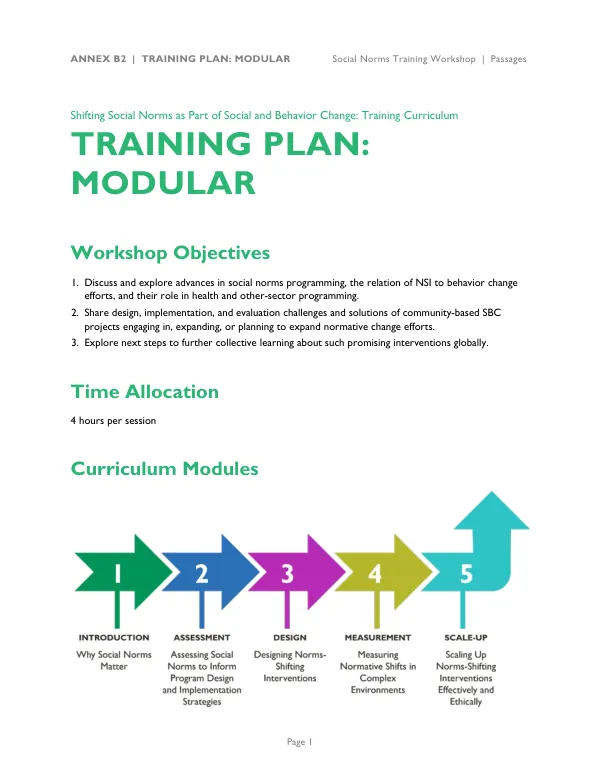
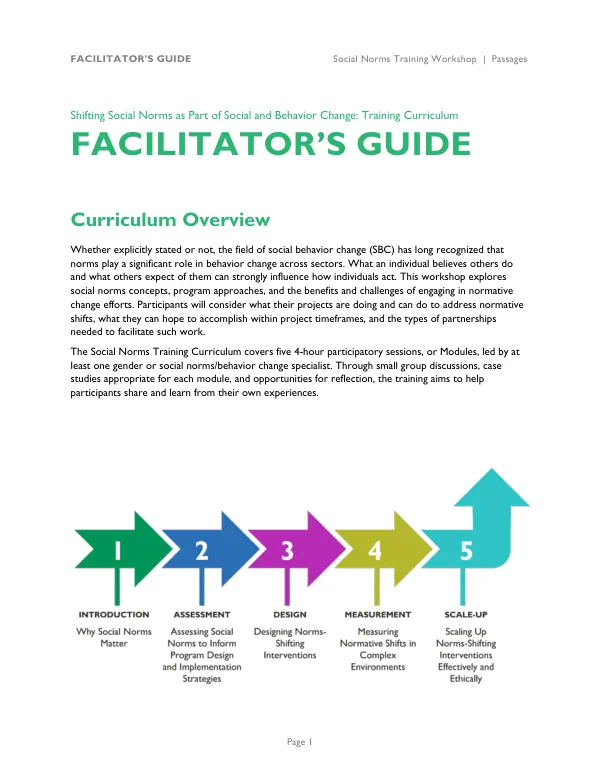
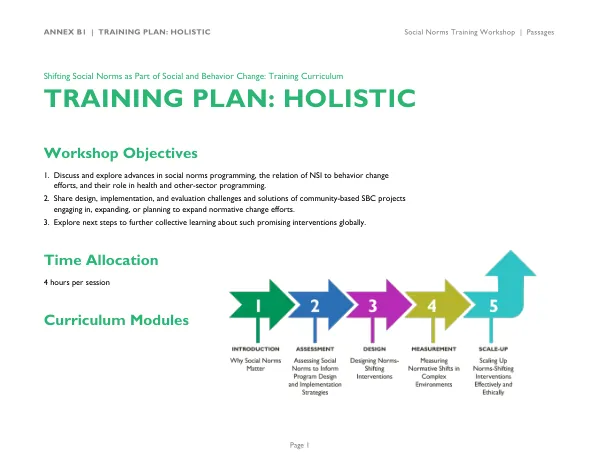
The workshop is structured around five modules, each focusing on a specific aspect of social norms and behavior change. Module 1, Introduction, sets the stage for the workshop by defining social norms and distinguishing them from attitudes, beliefs, and behaviors. Participants learn about the importance of normative influence within the socio-ecological framework for health and well-being. The module also explores how social norms influence health and other behaviors, and how research-informed and program-defined program theories of change situate normative influence on behavior. Module 2, Assessment, delves into the value of norms assessments for informing program design and implementation strategies. Participants learn how to identify reference groups and assess norms that influence behaviors, and how to integrate norms assessment findings into new or ongoing projects. The module also covers the use of participatory methods for gathering community-level information to identify reference groups and assess norms. Module 3, Design, focuses on designing norms-shifting interventions (NSI) and recognizes common characteristics of a community-based NSI. Participants learn about ethical considerations for NSI design and implementation, and discuss strategies to integrate social norms shifting into project design. The module also explores the differences between NSI and other social behavior change interventions. Module 4, Assessment, continues the discussion on assessing social norms to inform program design and implementation strategies. Participants learn about core elements of monitoring and learning to gauge and address signs of norms shifting at the program level, and distinguish among data gathering approaches, including types of indicators, for activity monitoring to track shifts in norms, diffusion effects, and the quality of implementation. Module 5, Scale-Up, explores the concepts and considerations that influence adaptation, expansion, and institutionalization of norms-shifting interventions. Participants learn about the temporal nature of scale-up and related technical and management issues to address, and define the seven Guideposts for designing and adapting NSI, monitoring implementation, diffusing new ideas and social shifts, and evaluating NSIs as they are scaled. Throughout the workshop, participants engage in various activities, including plenary discussions, group activities, and case studies, to apply the concepts and skills learned to their own projects. The workshop aims to equip participants with the knowledge and skills necessary to design, implement, and evaluate effective social norms-shifting interventions.