USAID DEC
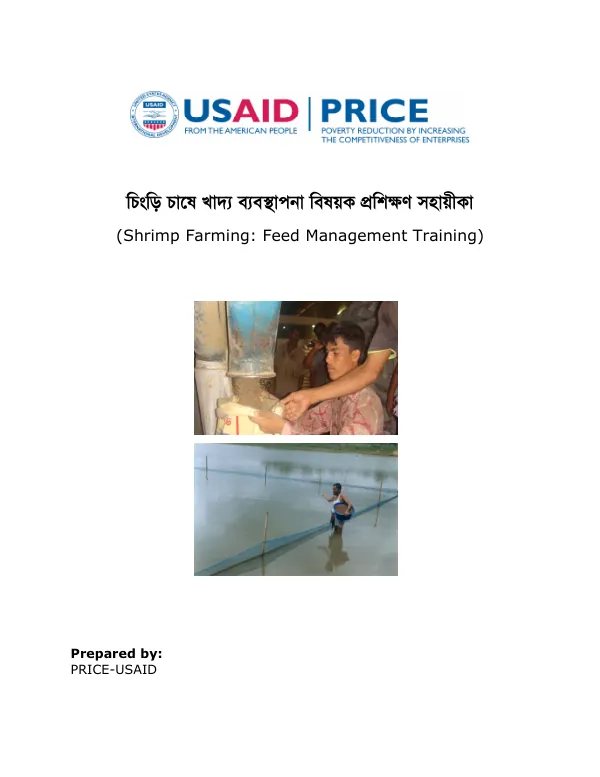
Shrimp Farming: Feed Management Training
Shrimp Farming: Feed Management Training The training program for shrimp farming feed management was conducted by PRICE-USAID.
14 pages
Sign in to readA free account is required to download.
Abstract
The program aimed to improve the knowledge and skills of shrimp farmers in managing feed for their farms. The training was conducted in several sessions, with each session focusing on different aspects of feed management. The first session, Awa‡ekb 1, began at 9:00 am and lasted for 45 minutes. The session covered the introduction to the training program and the importance of feed management in shrimp farming. The trainers emphasized the need for farmers to understand the nutritional requirements of shrimp and how to provide them with the right feed. The second session, Awa‡ekb 2, began at 11:00 am and lasted for 1-15 hours. The session covered the nutritional requirements of shrimp and the different types of feed available for shrimp farming. The trainers also discussed the importance of feed quality and how to ensure that the feed is fresh and of good quality. The third session, Awa‡ekb 3, began at 12:15 pm and lasted for 1-15 hours. The session covered the practical aspects of feed management, including how to prepare and distribute feed to the shrimp. The trainers also discussed the importance of monitoring the health of the shrimp and how to identify any signs of disease or stress. The fourth session, Awa‡ekb 4, began at 13:45 pm and lasted for 1 hour. The session covered the final aspects of feed management, including how to optimize feed usage and reduce waste. The trainers also discussed the importance of record-keeping and how to monitor the performance of the shrimp farm. Throughout the training program, the trainers emphasized the importance of feed management in shrimp farming and provided practical examples and case studies to illustrate the key concepts. The program also included interactive sessions, where farmers were encouraged to ask questions and share their experiences. The training program was attended by a total of 30 farmers, who were from different regions of the country. The program was conducted in a participatory manner, with the trainers encouraging the farmers to participate in discussions and activities. The program was also supported by local government officials and extension agents, who provided additional guidance and support to the farmers. The training program was evaluated using a combination of quantitative and qualitative methods. The quantitative methods included surveys and questionnaires, which were used to assess the knowledge and skills of the farmers before and after the training program. The qualitative methods included focus group discussions and case studies, which were used to assess the impact of the training program on the farmers' practices and outcomes. The results of the evaluation showed that the training program was effective in improving the knowledge and skills of the farmers in feed management. The farmers reported an increase in their knowledge and skills in feed management, and they also reported an improvement in their practices and outcomes. The evaluation also showed that the training program had a positive impact on the farmers' confidence and motivation to adopt new practices and technologies. Overall, the training program for shrimp farming feed management was successful in improving the knowledge and skills of the farmers in feed management. The program provided practical examples and case studies, and it was conducted in a participatory manner. The program also included interactive sessions, where farmers were encouraged to ask questions and share their experiences. The evaluation showed that the program was effective in improving the knowledge and skills of the farmers, and it had a positive impact on their practices and outcomes. The program also highlighted the importance of feed management in shrimp farming and the need for farmers to understand the nutritional requirements of shrimp and how to provide them with the right feed. The program also emphasized the importance of feed quality and how to ensure that the feed is fresh and of good quality. The training program was conducted in several sessions, with each session focusing on different aspects of feed management. The program was attended by a total of 30 farmers, who were from different regions of the country. The program was conducted in a participatory manner, with the trainers encouraging the farmers to participate in discussions and activities. The program also included interactive sessions, where farmers were encouraged to ask questions and share their experiences. The program was evaluated using a combination of quantitative and qualitative methods. The quantitative methods included surveys and questionnaires, which were used to assess the knowledge and skills of the farmers before and after the training program. The qualitative methods included focus group discussions and case studies, which were used to assess the impact of the training program on the farmers' practices and outcomes. The results of the evaluation showed that the training program was effective in improving the knowledge and skills of the farmers in feed management. The program also highlighted the importance of monitoring the health of the shrimp and how to identify any signs of disease or stress. The trainers also discussed the importance of record-keeping and how