USAID DEC
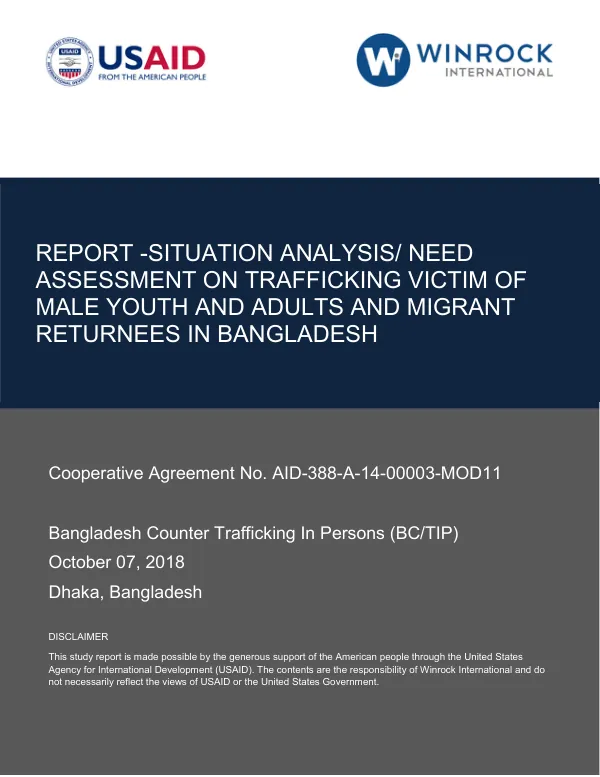
Situation Analysis/Need Assessment on Trafficking of Male Youth and Adult and Migrant Returnees in Bangladesh
Sign inUSAID
Situation Analysis/Need Assessment on Trafficking of Male Youth and Adult and Migrant Returnees in Bangladesh
In Bangladesh, a situation analysis and need assessment on trafficking of male youth and adults and migrant returnees was conducted in 2018.
2018 · 166 pages
Sign in to readA free account is required to download.
Abstract
The study aimed to understand the vulnerability of male migrants and returnees to trafficking, as well as the services and support available to them. The research was conducted under the Cooperative Agreement No. AID-388-A-14-00003-MOD11, with the Bangladesh Counter Trafficking In Persons (BC/TIP) program. The study found that male migrants and returnees in Bangladesh are vulnerable to trafficking due to various factors, including poverty, lack of education, and limited job opportunities. The research identified several key findings, including the importance of understanding vulnerability, the need for a mixed-methods approach to research, and the importance of considering the psychosocial needs of male survivors of human trafficking. The study also examined the constitutional, legal, and international obligations of the State of Bangladesh in addressing human trafficking. The research found that the country has several national plans and policies in place to address human trafficking, including the Seventh Five Year Plan on Accelerating Growth and Empowering Citizens and the national plans for the Sustainable Development Goals (SDGs). The study's methodology involved a mixed-methods approach, including a quantitative survey, focus group discussions, key informant interviews, and community consultations. The research found that male migrants and returnees in Bangladesh face several challenges, including limited access to services, stigma, and lack of awareness about available services. The study also examined the use of online communication and its possible link to violent extremism. The research found that male migrants and returnees in Bangladesh use social media and view radical propaganda, and that communication with someone on the internet is a common practice among this group. In conclusion, the study highlights the need for a comprehensive approach to addressing human trafficking among male migrants and returnees in Bangladesh. The research emphasizes the importance of understanding vulnerability, providing psychosocial support, and improving access to services for this vulnerable group.