USAID DEC
Small Business, Agriculture, and Livelihood Assistance (SALA) Project: Community Management of Acute Malnutrition (CMAM) Evaluation Case Study Report
Sign inADVENTIST DEVELOPMENT AND RELIEF AGENCY INTERNATIONAL
Small Business, Agriculture, and Livelihood Assistance (SALA) Project: Community Management of Acute Malnutrition (CMAM) Evaluation Case Study Report
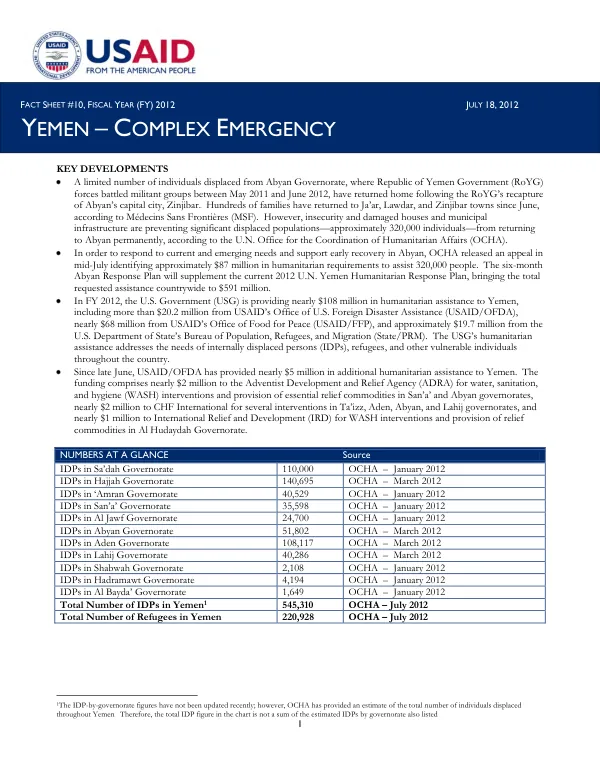
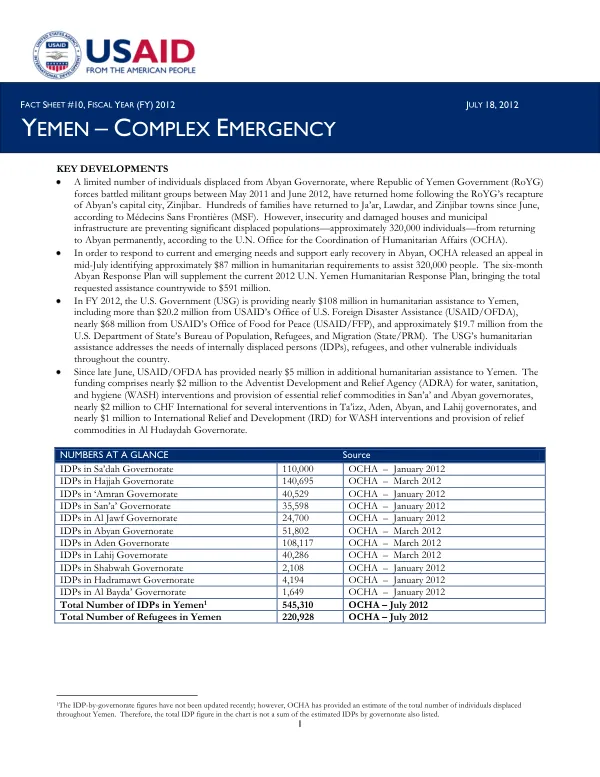
The Small Business, Agriculture, and Livelihood Assistance (SALA) project, implemented by the Adventist Development and Relief Agency (ADRA) Yemen, aimed to increase social and financial well-being among target populations through sustainable livelihood strategies, improved water and sanitation, and enhanced accessibility to nutrition services.
2019 · 175 pages
Sign in to readA free account is required to download.
Abstract
The project's Community Management of Acute Malnutrition (CMAM) component reached 50 health facilities and 5 mobile clinics, leveraging the services of 401 trained community nutrition volunteers and health surveillance teams to identify malnourished children under five and pregnant and lactating women. The CMAM approach employed by SALA entailed four components and aligned itself to national strategies and guidelines. The project prioritized children under five years and pregnant/lactating women in accordance with national level nutrition program priority guidelines and policies. Quality standards set by the Ministry of Health's Department of Nutrition were closely followed during project design. SALA devoted exceptional leadership and technical capacity in emergency settings, and the project was able to achieve most objectives amidst logistical and technical challenges. Beneficiaries reported better nutritional outcomes in children and pregnant and lactating women. Positive behavior change through better breastfeeding practices, improved storage of food, and hygiene in homes was also recorded. The program met set Sphere standards, with an ending fatality rate of 0.1% and a default rate of 4%. Community outreach, including screening, treatment, information management, and follow-up, worked well in the program. Mobile clinic teams and community nutrition volunteers reported good understanding of the processes required to conduct screening, treatment/referral, and follow-up, based on initial training received. The project's impact was significant, with reported positive experiences outweighing the negatives. The community level of participation indicated positive buy-in and high acceptability of the project locally. The level of knowledge and awareness among women and men in the communities improved. In terms of preventing and treating malnutrition in the targeted vulnerable and conflict-affected communities, SALA project targeted an area of need (nutrition) in Yemen and the approach was accepted in the communities. This contributed to its success in the communities, considering the prevailing economic situation. The project activities were beneficial and led to improved knowledge on nutrition, CMAM, and breastfeeding/IYCF; better health outcomes reported in children and pregnant and lactating women. Caregivers attest to having better skills and knowledge in addressing nutrition-related illnesses, as well as hygienic practices. The project targeted population in 7 districts in three governorates with an estimated population of 231,449. Of these, direct reach under MAM admission were 7,980 for PLWs and 5,743 CU5. The SAM admission was 2,490, as trainees were 401 volunteers/health workers. The indirect reach was 192,000 and 28,800 IDPs, a total of 220,800. Scaling up SALA CMAM could be possible through resourcing and integration with other child survival programs like MNCH, WASH, livelihoods, agro-pastoralism, etc., and partnership with the Ministry and other actors in the sector. This will enhance ease of access and wider coverage by all populations targeted. In terms of health service delivery, CMAM integration would be an effective approach to address malnutrition and child-related illnesses. Respondents perceived the project design as very replicable but acknowledged the need for improvement in data collection and reporting practices, particularly in remote areas.
Related documents